Digital Dental Practice Management: Improving Dental Workflow Efficiency
Running a dental practice involves more than patient care - it’s also about managing time-consuming admin tasks like appointment scheduling, NHS claims, and GDPR compliance. Many UK practices still rely on outdated systems, leading to errors, inefficiencies, and missed opportunities. Digital dental management systems, such as RemedicoGPT, simplify these processes by integrating everything into one platform, saving time and reducing mistakes.
Key benefits of digital systems:
- Smart scheduling: Avoid double-bookings with real-time calendar views.
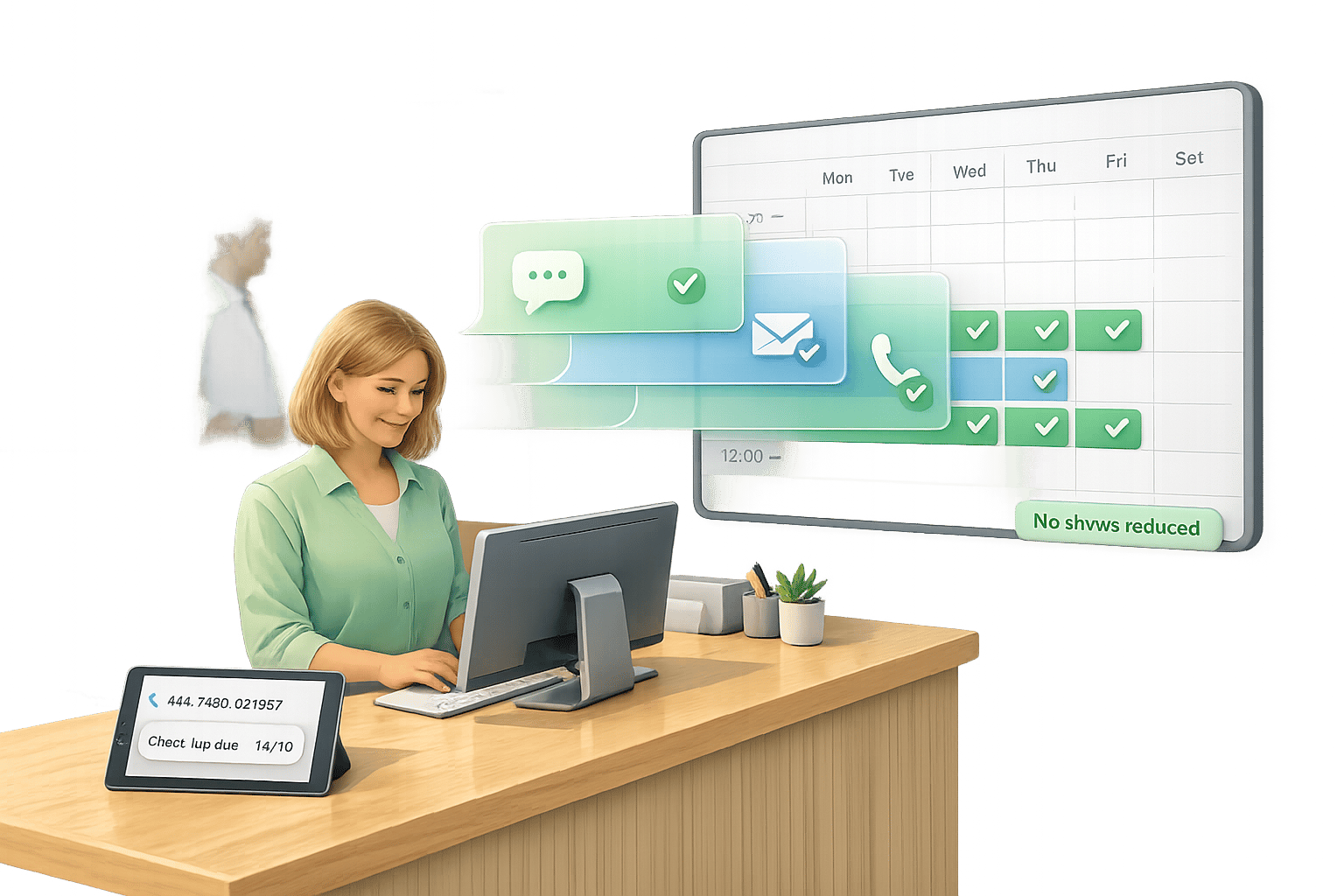
- Automated reminders: Reduce no-shows by 30–40%.
- Paperless records: Secure, GDPR-compliant cloud storage.
- Online booking: Cut front desk bottlenecks with patient self-service tools.
- Voice transcription: Save up to 30% of clinical teams’ time on notes.
Switching to digital tools not only streamlines operations but also ensures compliance with UK regulations like GDPR and CQC standards. However, avoid pitfalls like choosing non-compliant software, skipping staff training, or ignoring performance monitoring. With the right setup, these systems transform dental workflows, allowing teams to focus on patient care.
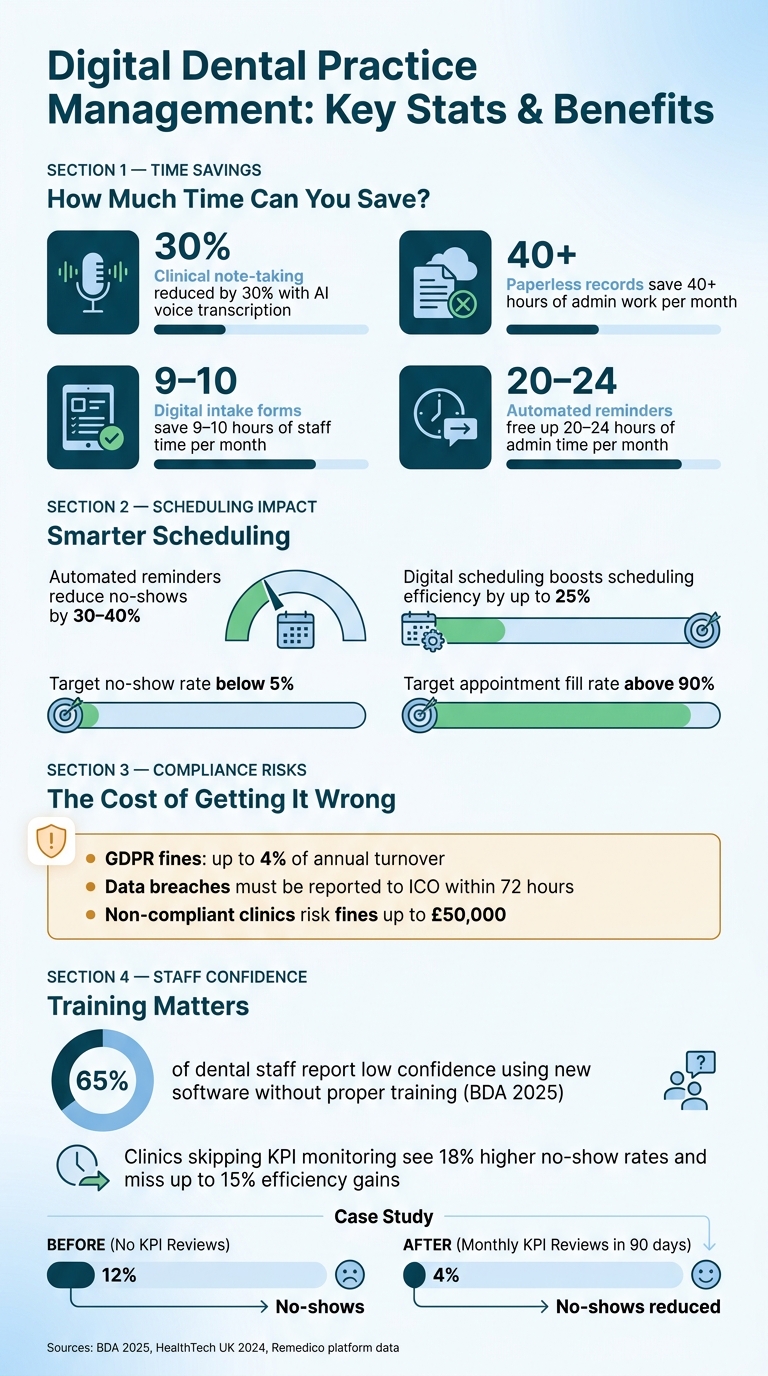
@figure {Digital Dental Practice Management: Key Stats & Benefits} :::
Digital Dental Practice Management: What It Is and Why It Matters
Digital dental practice management is all about bringing everything - scheduling, patient records, billing, compliance, and communication - into one system. It does away with the hassle of juggling spreadsheets, paper files, and disconnected tools. Imagine a receptionist no longer flipping through a paper diary while switching to separate billing software. Instead, they can access everything they need from one platform on any device with internet access. This streamlined approach simplifies daily tasks and creates a more efficient workflow.
In the UK, meeting requirements like CQC inspections, GDPR compliance, and NHS claims processing is non-negotiable. A digital management system integrates these into the practice’s daily operations, so they’re handled seamlessly rather than as an afterthought.
Key Features of Digital Dental Practice Management
- Smart scheduling: Drag-and-drop calendars that show multiple chairs and providers, making it easier to spot and fill gaps in the schedule.
- Automated reminders: Notifications sent via WhatsApp, SMS, or email to remind patients of upcoming appointments, helping reduce no-shows.
- Patient self-service: Online booking portals and digital forms allow patients to handle paperwork before their visit, cutting down on front desk queues.
- Paperless records: Digital consent forms, treatment plans, and invoices stored securely in the cloud with encrypted backups.
- Built-in compliance tools: Features designed to handle GDPR requirements and meet CQC standards effortlessly.
These tools not only organise the practice but also save time on repetitive tasks. For instance, platforms like Remedico’s Retention AI™ and Smart Calendar integrate these features to cut admin time and improve re-booking rates. Clinic owners and staff have rated these tools 4.9/5 for their impact [1].
How Digital Tools Fix Common Practice Problems
Administrative burdens can take up a surprising amount of time. Clinical teams, for example, might spend as much as 30% of their day typing compliant clinical notes [2]. AI-powered voice transcription tools solve this by allowing dentists to dictate their notes during or after consultations, with the system recording them accurately.
Data security is another key advantage. Cloud-based systems offer better protection than local servers, using encryption and backup features to ensure patient records remain secure and accessible whenever needed.
“The data we can capture to make great decisions makes it an integral partner to our business.” - Chetan Mathias, Principal Dentist, The Dental Place Warwick [2]
For smaller, independent practices, the benefits are hard to ignore. These systems reduce manual tasks, minimise errors, and provide a clear, transparent audit trail that stands up to CQC inspections - all without requiring a dedicated IT team.
How Digital Systems Improve Dental Workflow Efficiency
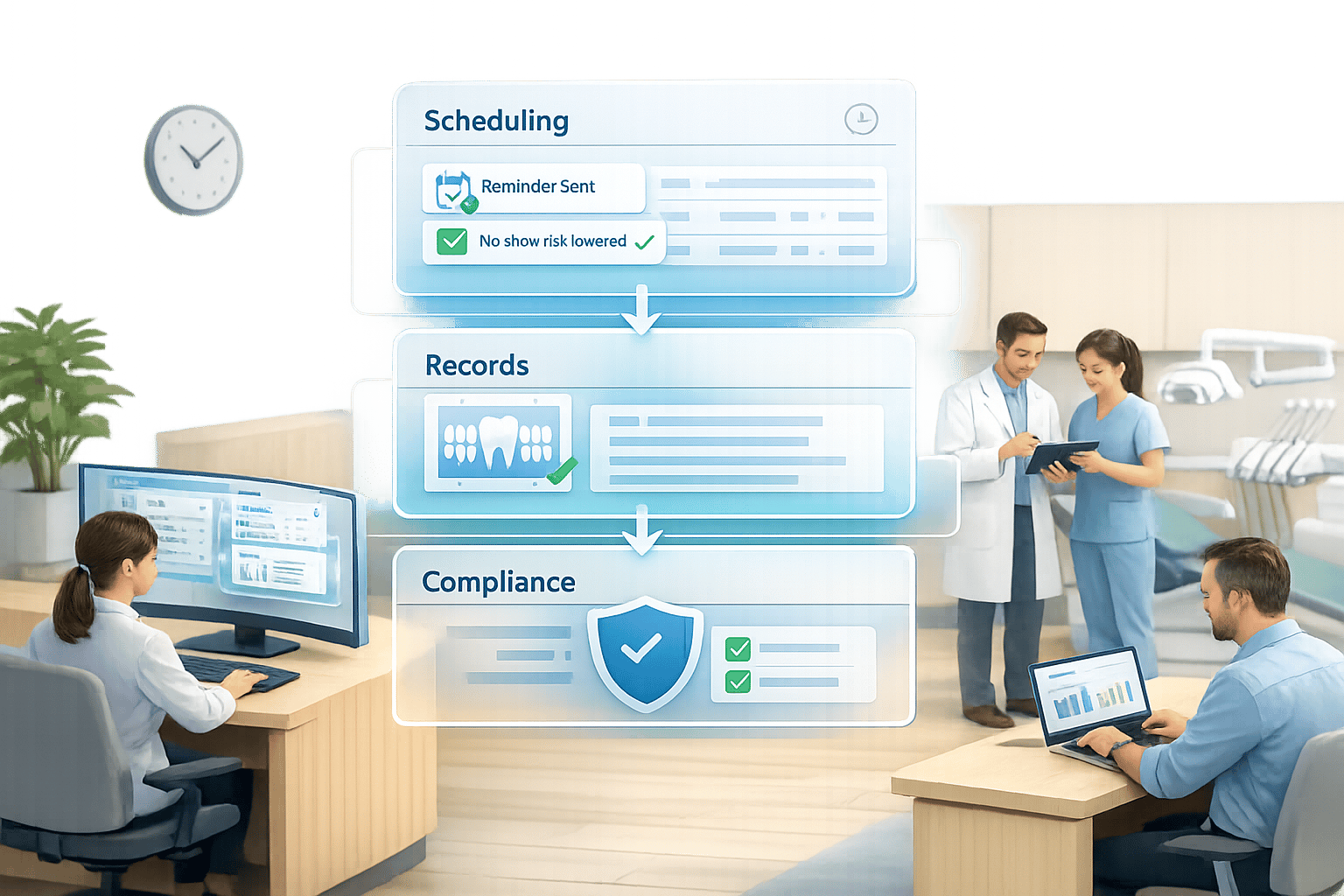
Managing scheduling, records, billing, and patient communication on a single platform eliminates many of the everyday challenges dental practices face. By connecting different departments, a unified system ensures seamless communication, leaving no detail overlooked - from the surgery room to the front desk.
Scheduling and Appointment Management Made Simpler
A digital calendar does more than just display appointments - it simplifies and automates the entire scheduling process. For example, Remedico’s Smart Calendar provides reception teams with a real-time overview of chair availability, provider schedules, and open slots. This makes it easy to fill gaps quickly while avoiding double bookings. Switching from manual scheduling to a centralised digital calendar can boost scheduling efficiency by up to 25%.
Automated reminders are another game-changer, reducing patient no-shows by 30–40%. This alone can free up 20–24 hours of admin time every month.
“One of the huge plus points is that patients can book themselves in with a patient portal. Also, the setup makes it easy for nurses to do charting and treatment plans.” - Dr. Toheed Hamid, Bristol Dental Sedation and Implant Clinic [2]
With smoother scheduling, patient movement within the clinic becomes more efficient, cutting down on front desk delays and enhancing the overall experience.
Better Patient Flow and Fewer Front Desk Bottlenecks
When a dentist updates a treatment plan, the front desk is instantly notified. This real-time synchronisation allows staff to immediately discuss next steps, arrange financing, or schedule follow-ups before the patient even leaves the surgery.
Remedico’s Patient Flow™ tracks every stage of the patient journey, from initial contact to post-treatment follow-up. Patients can complete digital intake forms on their own devices before arriving, eliminating issues like illegible handwriting and reducing manual data entry errors. This shift to digital forms saves staff an estimated 9–10 hours of work each month [1].
“Remedico has changed the way we deliver care. I have seen the shift in teamwork change as every doctor is now in the driver’s seat taking control over important daily admin work from updating patient diagnostics to explaining treatment plans, invoicing and monitoring their own progress.” - Dr. Saghi Helmi, General & Cosmetic Dentist, Vilafortuny Clinic [1]
Going Paperless: Records, Compliance, and Cloud Storage
Paperless management consolidates patient records, consent forms, treatment plans, and invoices into one secure digital system. This approach can save over 40 hours of administrative work each month [1].
With tools like RemedicoGPT™, voice or dictated notes are instantly converted into structured clinical records during or immediately after consultations. These records are automatically linked to the corresponding patient file, reducing the risk of misfiling and ensuring everything is audit-ready for inspections by the Care Quality Commission (CQC).
3 Common Mistakes Clinics Make When Adopting Digital Systems
Switching to a digital system can streamline operations, but many clinics find themselves struggling due to mistakes made during or after implementation. Here are three key missteps to watch out for when transitioning to digital systems.
Mistake 1: Choosing Software That Does Not Meet UK Compliance Standards
Neglecting compliance requirements can put patient data at risk and disrupt workflows. Many platforms, especially those designed for US or non-EU markets, may not adhere to UK regulations. They might store data on servers outside the UK or EU, lack audit trail capabilities, or fail to support GDPR consent management. This oversight can result in hefty fines under GDPR.
For instance, GDPR mandates that data breaches must be reported to the ICO within 72 hours. Non-compliance can lead to fines of up to 4% of annual turnover. A 2024 case involving a Manchester clinic highlights this risk. The clinic had opted for US-based software without GDPR-compliant server localisation. Following a data query, they received a CQC warning. They quickly transitioned to a UK-hosted system with compliance tools, enabling them to pass re-inspection within three months, cut administrative time by 25%, and avoid potential fines of up to £50,000 [3].
To ensure compliance, ask software vendors about data hosting, audit log functionality, and ICO registration. Platforms like Remedico, for example, use UK-hosted cloud storage with automated backups and built-in GDPR features, making compliance an integral part of daily operations.
Mistake 2: Skipping Staff Training During Setup
Even the best software won’t deliver results if your team doesn’t know how to use it effectively. According to a 2025 British Dental Association survey, 65% of dental staff reported low confidence in using new software without proper training [4].
Tailored, role-specific training is crucial to avoid workflow disruptions. For example, receptionists need hands-on practice with scheduling and communication tools, while clinical staff should focus on patient records, charting, and treatment planning. This ensures a seamless digital integration across the entire practice. A general overview often isn’t enough. Assigning “super-users” - staff members who receive in-depth training and support their colleagues - can significantly improve adoption rates and minimise issues after the software goes live.
Remedico addresses this by including free training as part of its standard package. Their interactive tutorials aim for 90% feature adoption within the first month, ensuring staff feel confident and capable from the start.
Mistake 3: Failing to Monitor Software Performance
After going live, many clinics overlook the importance of tracking key performance indicators (KPIs). A 2024 HealthTech UK study found that clinics neglecting regular KPI monitoring experienced 18% higher no-show rates and missed out on up to 15% efficiency gains [5].
It’s important to focus on metrics like no-show rates (aim for below 5%), appointment fill rates (target above 90%), and average patient wait times. Dr. Raj Singh’s clinic in Manchester is a great example: after introducing monthly KPI reviews, they reduced no-shows from 12% to 4% within just 90 days [5].
Monitoring these metrics is just as important as selecting the right software and training your team. Tools like Remedico’s Owner’s Dashboard make it easy by automatically surfacing these figures and flagging potential issues, such as rising no-show rates or underused appointment reminders, before they escalate into larger problems.
Key Takeaways
Digital dental practice management simplifies operations by bringing everything - appointments, records, billing, and performance data - into one unified system. This eliminates the hassle of juggling multiple disconnected tools and helps practices run more smoothly.
Here are some of the standout benefits:
- Automated reminders: These help cut down on missed appointments.
- Paperless records: A faster, more efficient way to manage patient information.
- Cloud access: Allows your team to work flexibly, no longer tied to a desk.
However, it’s crucial to steer clear of common mistakes. Using non-compliant software, neglecting role-specific training, or overlooking performance data can all hinder your practice. Thankfully, these issues are easy to address:
- Ensure software meets UK data residency and GDPR standards.
- Provide tailored training for receptionists and clinical staff.
- Regularly monitor key metrics to stay on track.
Did you know that, without AI tools, clinical teams might spend up to 30% of their time on manual note-taking [2]? Tools like RemedicoGPT™ solve this by turning voice input into structured treatment records, saving valuable time and effort.
Ultimately, digital practice management tools free your team from tedious tasks, allowing them to focus on delivering exceptional patient care.
FAQs
How long does it take to switch to digital practice management?
Switching to digital practice management can take anywhere from a few days to a few weeks. The timeline largely depends on how complex your current systems are and the amount of data involved. Taking a phased approach often works best. This might include steps like testing your data, running trial migrations, and ensuring staff are properly trained. For smaller practices, the process might be completed in just a few days, while larger clinics could need up to three weeks to fully integrate the system and train their teams. Proper preparation is crucial for making the transition as seamless as possible. :::
Will my patient data stay in the UK and meet GDPR rules?
Yes, your patient data will stay within the UK and adhere to GDPR regulations. Dental practice management systems, such as Remedico, store information on secure servers located in the UK or EU. They employ encryption, audit logs, and other safeguards to ensure your data is protected and compliant. :::
What KPIs should I track after going paperless?
After transitioning to a paperless system, it’s important to keep an eye on key performance indicators (KPIs) to gauge its impact. For instance, no-show rates often decrease thanks to automated reminders, while appointment cancellation rates can provide insight into patient engagement levels.
You should also monitor patient flow efficiency, including metrics like wait times, to evaluate how well the front desk is managing daily operations. Patient retention rates can highlight the effectiveness of personalised communication in maintaining patient loyalty.
On the administrative side, track the time saved on manual tasks and improvements in data accuracy. These metrics can help you assess reductions in errors and ensure compliance with regulations. :::