Dental Software Central Reporting for Multi-Branch UK Clinics
Managing multiple dental clinics without centralised reporting is inefficient and risky. It leads to wasted time, compliance failures, and financial losses. A 2024 UK audit found 35% of multi-branch practices struggle with incomplete reporting, risking fines up to £20,000 per breach. Additionally, fragmented systems cause billing errors costing £5,000–£10,000 annually and can jeopardise patient safety.
Centralised reporting software solves these issues by syncing patient records, appointments, and financial data across all locations in one live dashboard. This reduces admin time, improves compliance, and prevents costly mistakes. For example, a London-based group saved £15,000 annually by reducing appointment conflicts by 40%.
Key benefits include:
- Real-time insights: Track revenue, no-show rates, and overdue accounts instantly.
- Improved compliance: Automated audit trails meet GDC and CQC standards effortlessly.
- Streamlined operations: Role-based access ensures secure, efficient data handling.
Platforms like Remedico stand out for their real-time reporting, patient retention tools, and transparent pricing (£99 per doctor per month). With features like AI follow-ups and 3D treatment planning, clinics can save time, recover revenue, and avoid compliance risks. Switching to cloud-based systems can save a 10-branch organisation around £280,000 over three years.
What is Central Reporting in Dental Software?
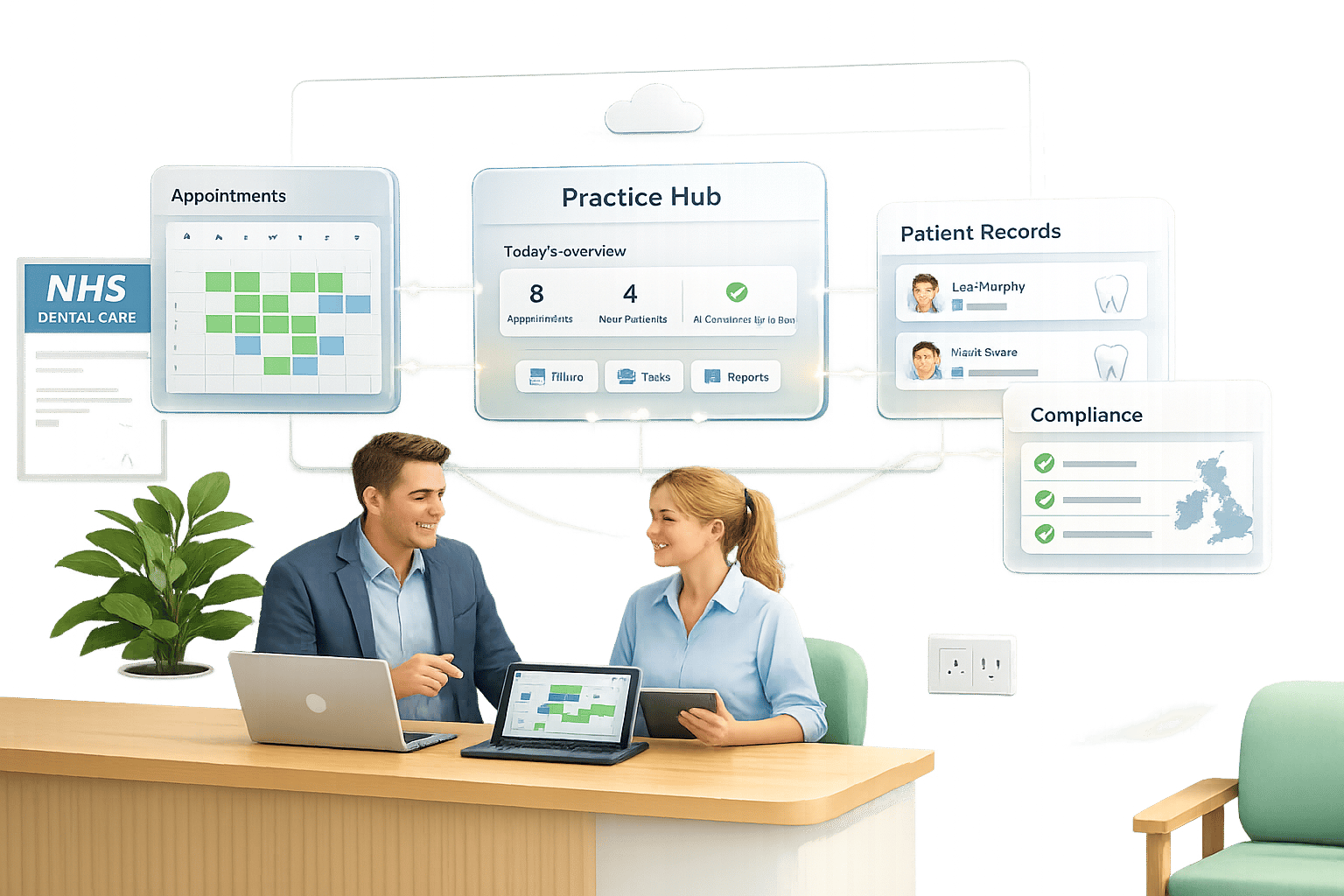
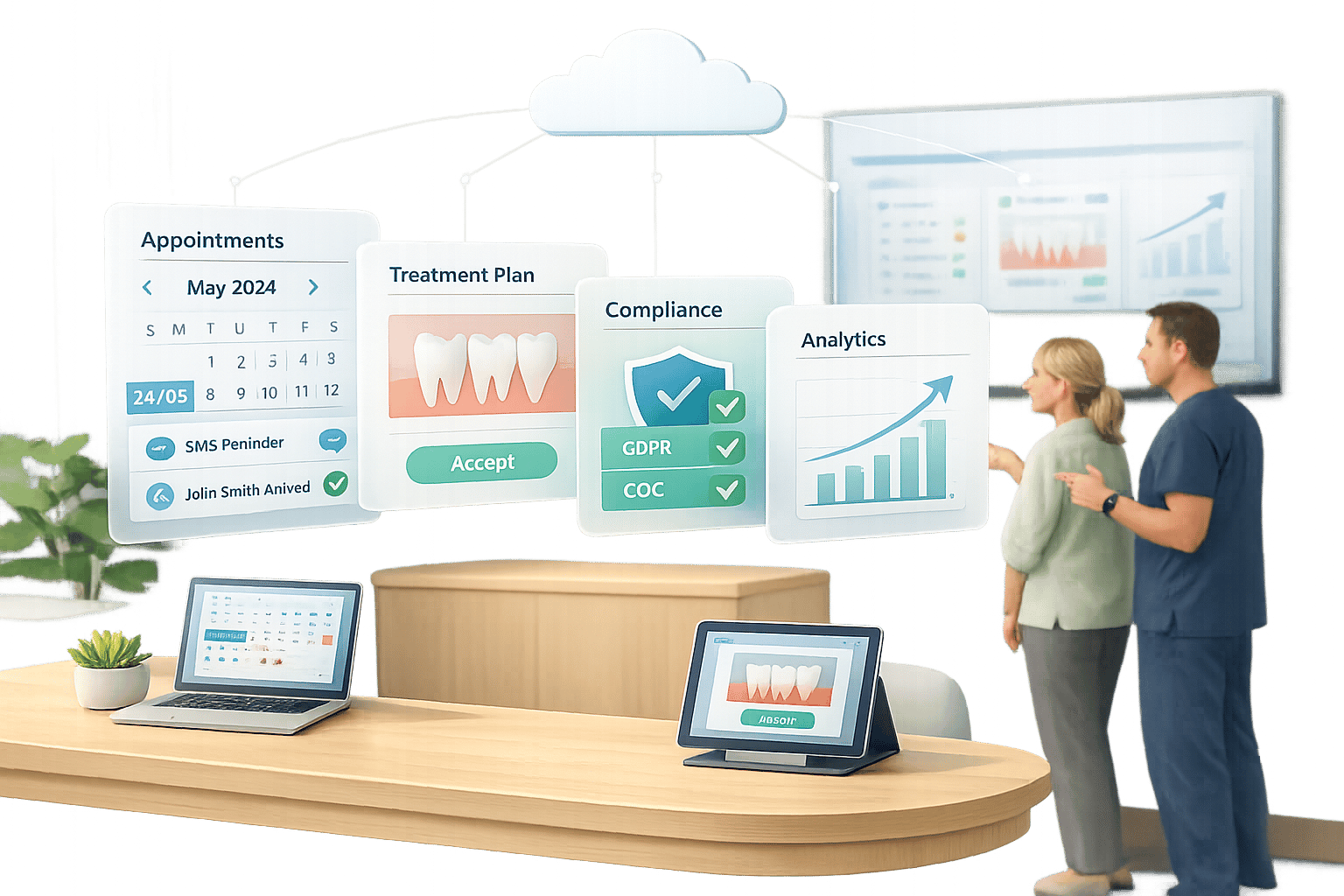
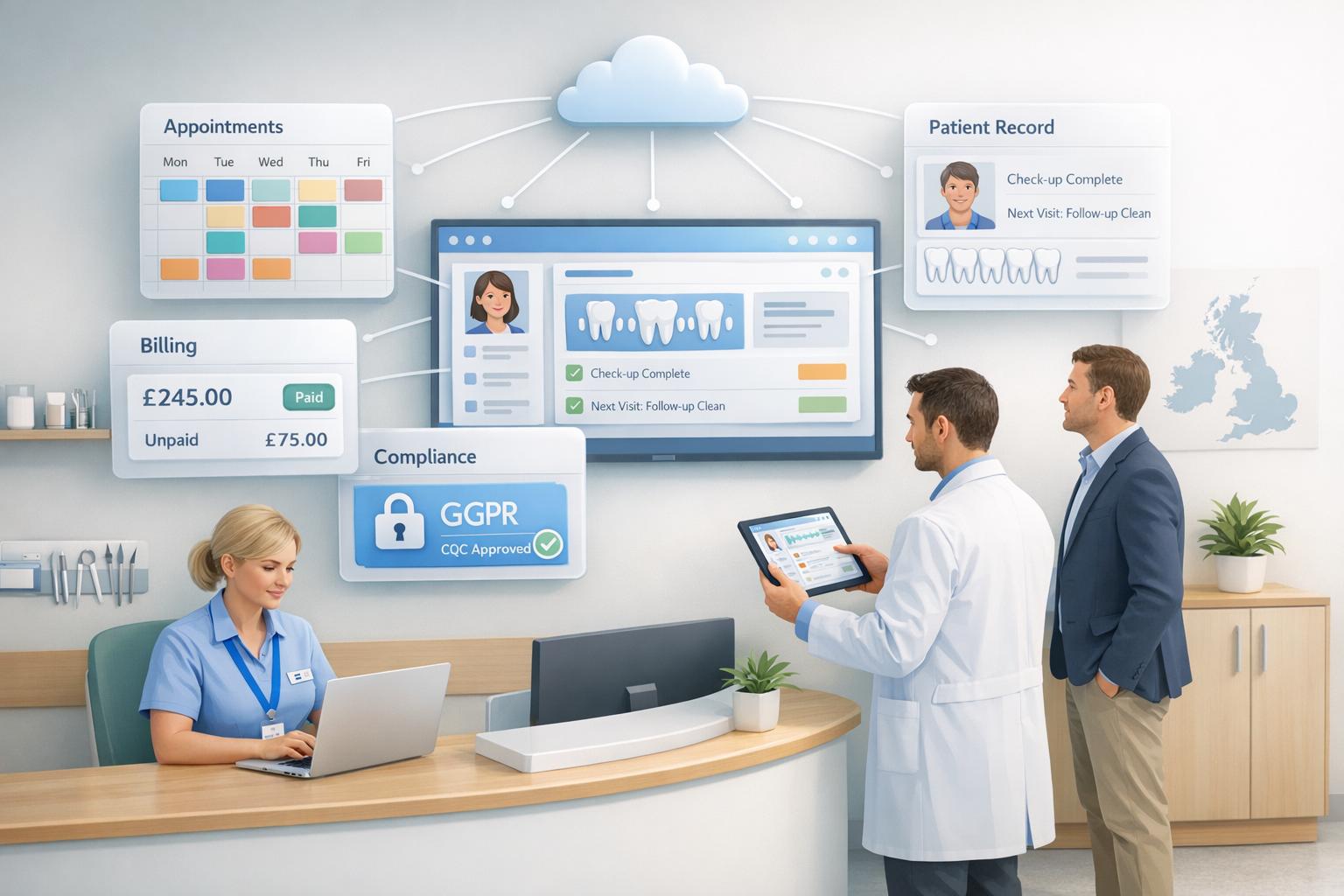
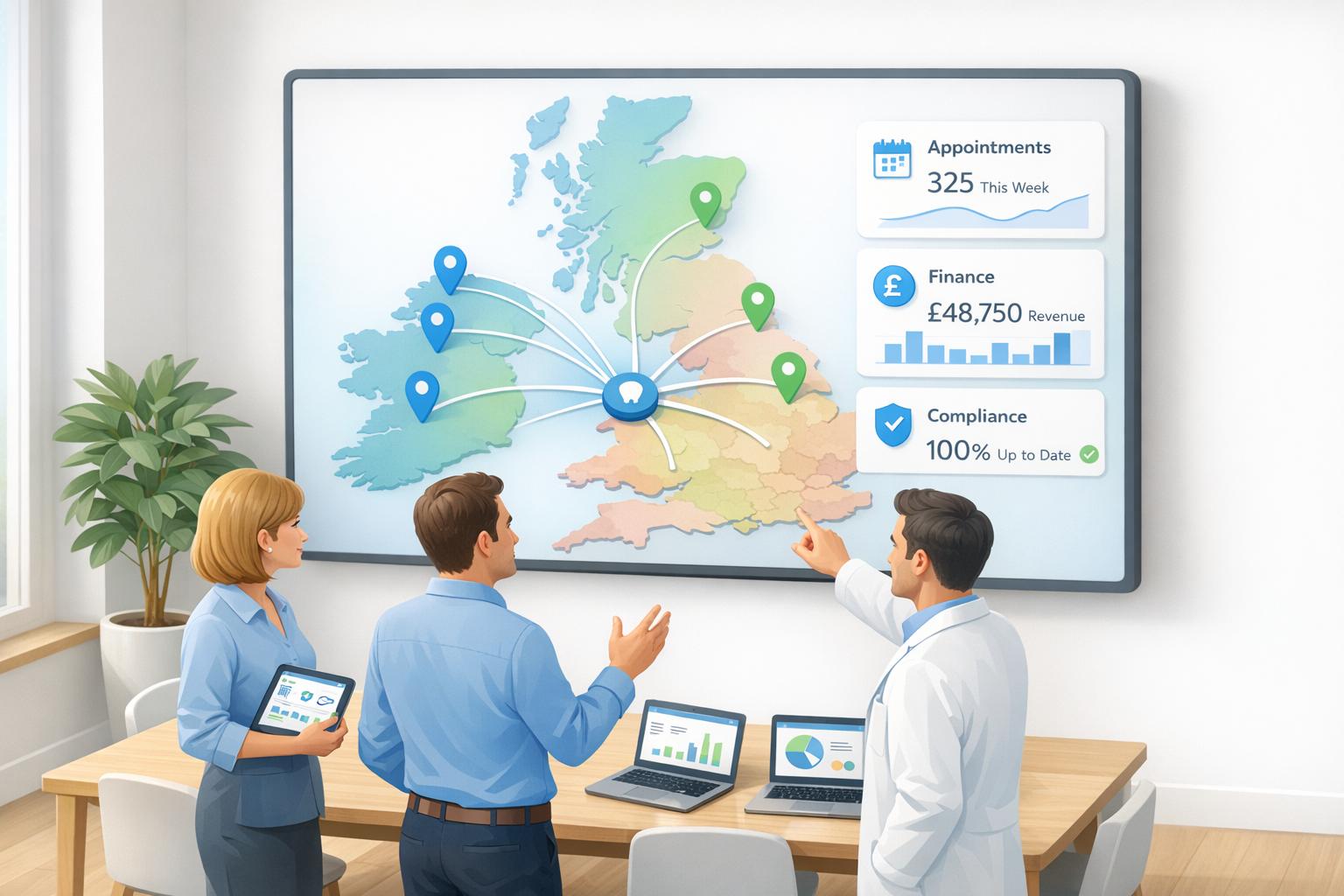
Central reporting brings together patient records, appointments, and financial data from multiple clinics into a single, live dashboard. It allows practice managers to access real-time information from one interface, eliminating the need for manual spreadsheets or emailing reports between locations. There’s also no need to maintain local servers at each site.
The system updates automatically across all branches. For example, if a receptionist in Manchester schedules a patient appointment, the central dashboard immediately reflects this change, enabling managers in London to see it. Dentists across locations can access complete patient histories, treatment notes, and billing records, ensuring they have all the information they need before starting treatment. This seamless connectivity helps avoid errors that could impact patient care.
“Dental practice management systems that automate the tracking and reporting of key metrics guarantee that the data is captured and usable.” - Deborah E. Bush
Core Features of Central Reporting
- Unified dashboards: These display live data from all branches on one screen, showing key metrics like daily revenue, appointment numbers, and unpaid invoices.
- Revenue tracking: Income can be analysed by branch, dentist, or treatment type, helping identify areas for improvement or further analysis.
- Patient data synchronisation: Clinical records, allergies, and treatment histories are accessible across all branches, reducing the chance of errors that could affect care.
- Role-based access control: Permissions are tailored to roles - receptionists might only see schedules, while practice managers have access to financial and operational data.
How Central Reporting Works Across Multiple Branches
The system automates data collection and reporting, simplifying multi-branch clinic management. It starts with staff entering appointments, treatment notes, or payments into the system at the clinic level. This information is then uploaded to secure cloud servers, often hosted on platforms like AWS. Within moments, the central dashboard updates to reflect the latest data.
To ensure consistency, the software applies standardised billing rules across all branches. This prevents revenue loss by avoiding discrepancies in pricing or missed charges. Each transaction is marked with a branch badge, making it easy to identify where the activity took place, even when records are shared.
Reports are automatically generated based on a schedule you choose, whether it’s daily cash flow summaries, weekly no-show rates, or monthly treatment acceptance rates. These reports are sent directly to your inbox, removing the need for manual data pulling. Managers can also customise views to compare metrics between branches, such as chair-time usage or the average value of patient visits.
sbb-itb-d8b42ea
Why UK Dental Groups Need Central Reporting
Operating without central reporting is like flying blind. Practice managers often spend countless hours chasing data from multiple branches, manually piecing together figures. As a result, issues like high no-show rates or low case acceptance can go unnoticed, causing revenue leaks and inefficiencies.
Problems Without Central Reporting
Disorganised data leaves you guessing instead of knowing. Each branch operates independently, keeping separate records, storing patient files locally, and tracking appointments in isolation. This fragmented system contributes to losses, with the average dental practice forfeiting around 9% of its production to uncollected revenues. Overdue accounts and unbilled treatments often slip through the cracks when manual tracking is the only option.
Manual reporting is time-consuming and error-prone. Without automation, someone must manually gather reports from each branch, reconcile discrepancies, and compile a summary. This laborious process not only wastes hours every week but also leads to missed opportunities - such as overdue accounts, which lose 7% of their value each month without a centralised system to manage them.
These challenges highlight how crucial it is to rethink clinic management.
Benefits of Central Reporting for UK Clinics
Real-time financial insights become instantly accessible. A centralised reporting system provides a clear view of collection rates, overdue accounts, and revenue for each branch. This transparency helps identify issues early - like a branch consistently underperforming in case acceptance - so you can address them before they affect your bottom line.
Compliance becomes effortless. Centralised systems automatically record every patient interaction, treatment note, and billing entry in one place. This creates audit trails that meet NHS and CQC requirements without the need for extra administrative effort. Generating compliance reports takes seconds instead of days.
Operational control improves across the board. With role-based access, team members can focus on what matters most - receptionists manage schedules, practice managers monitor financial data, and owners track KPIs across all branches. This unified approach allows for easy comparisons of metrics like chair-time utilisation, no-show rates, and treatment acceptance. Identifying where additional training or support is needed becomes much simpler.
“Dental practice management systems that automate the tracking and reporting of key metrics guarantee that the data is captured and usable.” - Deborah E. Bush
Comparing Multi-Site Dental Software for UK Clinics
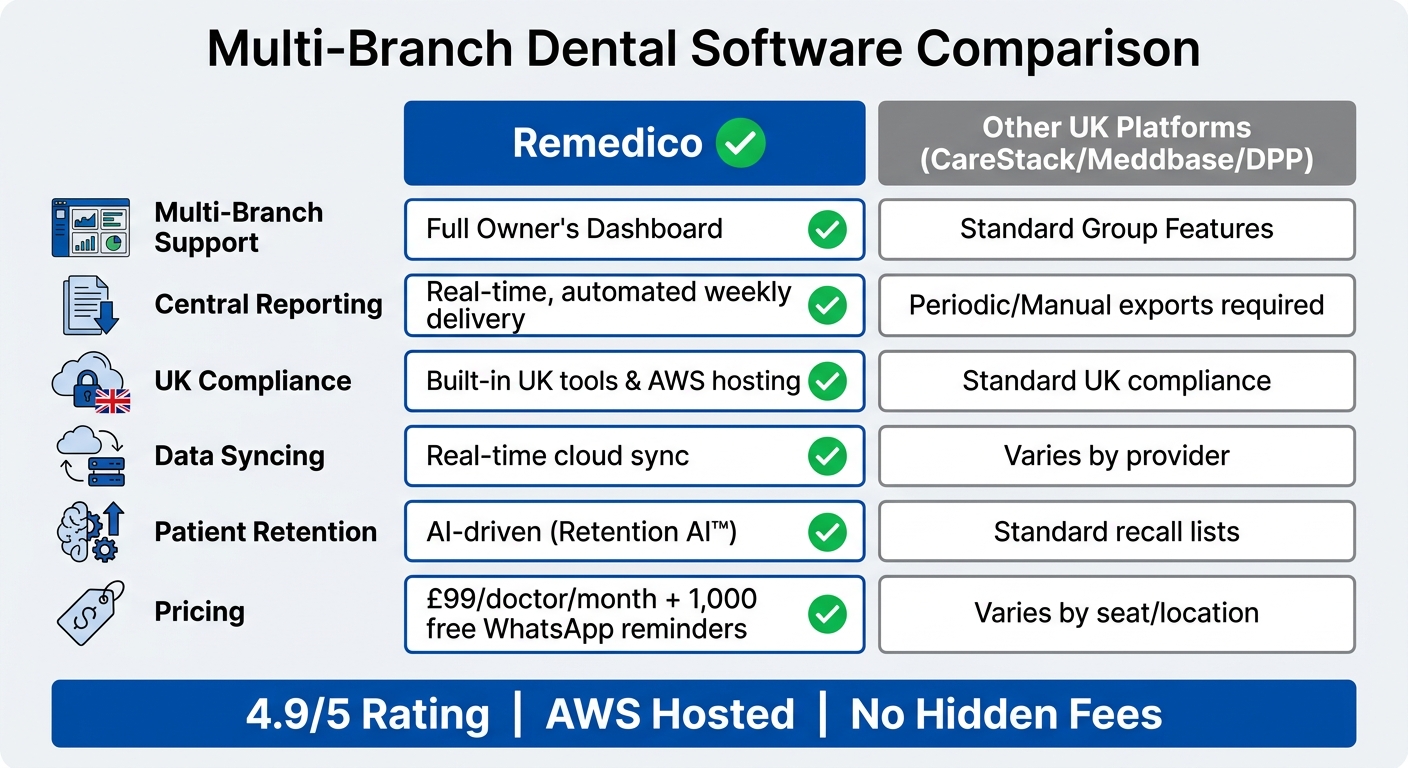
@figure {Multi-Branch Dental Software Comparison: Remedico vs UK Market Alternatives} :::
Software Comparison Table
Managing multiple dental clinics can be tricky, especially if your software requires manual exports or separate logins for each location. Thankfully, some platforms simplify this process by offering a unified view. The table below compares Remedico with other UK dental software options, focusing on features that matter most to group practices.
Feature | Remedico | CareStack / Meddbase / DPP (General UK Market) |
|---|---|---|
Multi-Branch Support | Full (Owner’s Dashboard) | Standard Group Features |
Central Reporting | Real-time, automated weekly delivery | Periodic/Manual Exports often required |
UK Compliance | Built-in UK tools & AWS hosting | Standard UK Compliance |
Data Syncing | Real-time cloud sync | Varies by provider |
Patient Retention | AI-driven (Retention AI™) | Standard recall lists |
Pricing | No hidden fees; 1,000 free WhatsApp reminders | Varies by seat/location |
This table highlights how Remedico stands out in key areas like real-time reporting, advanced patient retention, and transparent pricing. Built on AWS, it ensures secure, accessible data storage and has earned a stellar 4.9/5 rating from clinic owners and staff. It’s no surprise that Remedico has been a regular feature in the Startup & Innovation Zone for four years running.
Why Remedico Works Best for Multi-Branch Clinics
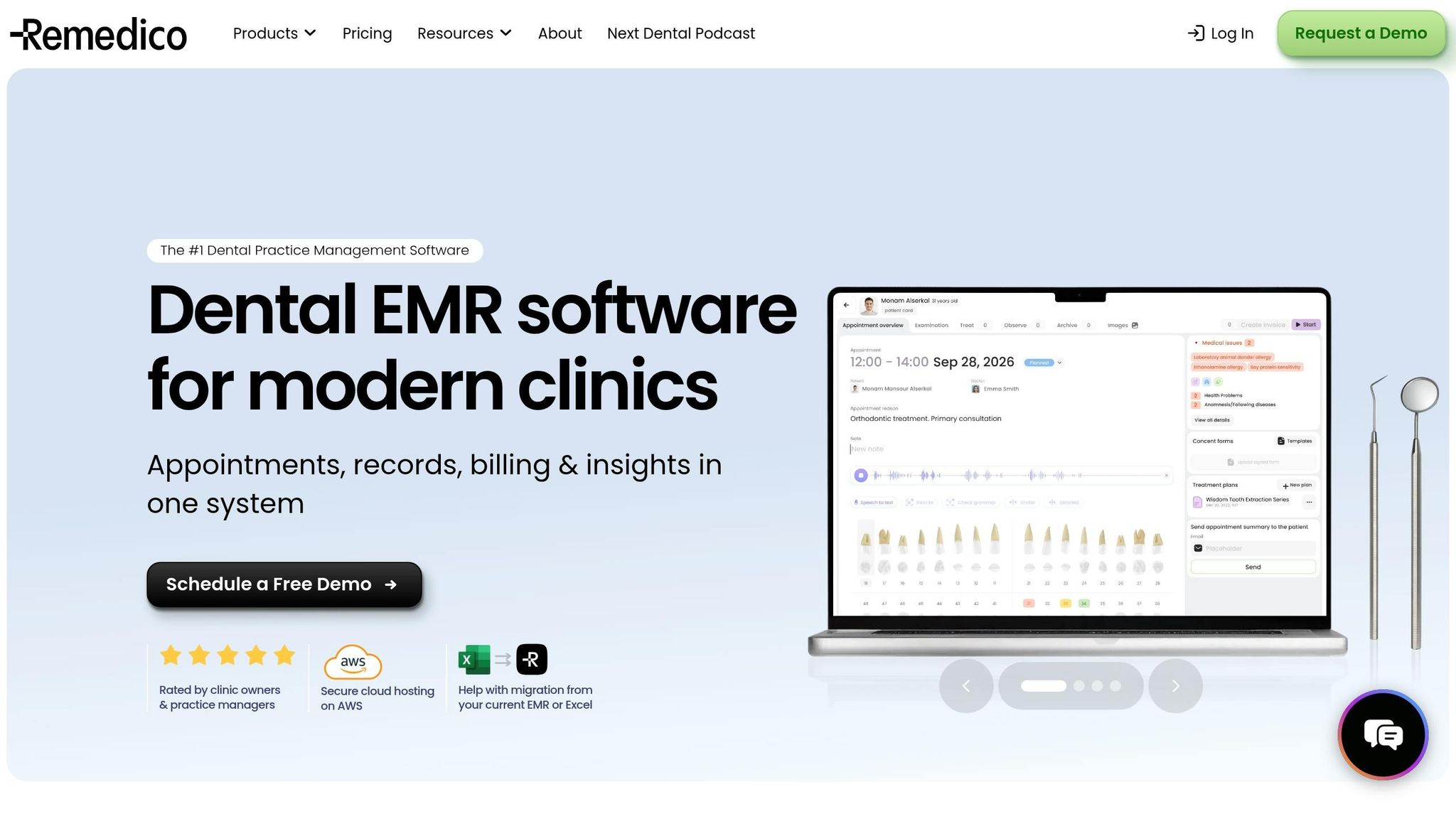
Beyond its technical strengths, Remedico’s Owner’s Dashboard offers a game-changing solution for managing multiple clinics. It consolidates all branch data into one view, showing real-time metrics like revenue, chair-time utilisation, and patient retention rates across locations. This level of visibility helps clinic owners quickly identify and address issues, such as high no-show rates or declining case acceptance at specific branches.
Remedico also tackles common challenges like admin overload and compliance risks. Here’s what you get:
- Retention AI™: Automatically follows up with patients who haven’t rebooked, with 1,000 free WhatsApp reminders included each month.
- 3D Treatment Planning: Boosts case acceptance by visually explaining procedures to patients.
- RemedicoGPT™: Simplifies paperwork, saving time for staff.
- Transparent Pricing: £99 per doctor per month with no hidden fees or extra charges for additional locations.
- Data Ownership: Full access to export patient records, appointments, and financial data anytime - no extra fees.
Switching to a new system can be daunting, but Remedico makes it stress-free with free setup and full data migration support. Whether you’re managing two branches or twenty, this platform is designed to save time, cut costs, and keep your clinics running smoothly.
3 Common Mistakes in Multi-Branch Dental Reporting
Managing multiple dental clinics without the right reporting tools can lead to costly mistakes. Many UK dental practices still rely on outdated methods, which can result in compliance risks, revenue loss, and stressed staff. Adopting a cloud-based central reporting system like Remedico can address these challenges. Here are three common mistakes that often hold back multi-branch practices - and how to resolve them.
Using Local Systems for Multi-Branch Data
When each branch tracks data separately, it creates isolated data silos. This forces clinic owners to manually compile numbers into spreadsheets, increasing the risk of human error and making it difficult to compare performance across locations.
This method also wastes time. Even losing just an hour a month to manual reporting adds up over the year, impacting revenue significantly. Without real-time insights into metrics like no-show rates or declining case acceptance, problems can go unnoticed until they’ve already caused financial damage.
Local servers also present challenges with GDPR compliance. They often lack encrypted backups and secure remote access, putting patient data at risk. Switching to a cloud-based platform like Remedico solves these issues by consolidating live data from all branches into a single dashboard. This provides instant access to key metrics such as revenue, retention, and utilisation. However, ineffective access management can further complicate matters.
Skipping Role-Based Access Controls
Weak access controls can lead to serious compliance and security risks. Without permissions tailored to specific roles, receptionists might see financial data they don’t need, and clinical staff could accidentally access sensitive records from other branches. This opens the door to GDPR violations, which could result in fines.
Operational mistakes are also more likely when access controls are lax. Staff could mishandle NHS claims, overlook charges, or create unnecessary write-offs by accessing or editing data outside their responsibilities.
Modern tools like Remedico address this by assigning role-specific permissions. Receptionists gain access to scheduling tools, dentists can view clinical records, and owners can monitor financial reports. This approach keeps data secure, reduces errors, and ensures compliance with UK privacy laws. Another issue arises when systems fail to sync data in real time.
Not Using Real-Time Data Syncing
When systems don’t sync instantly, decisions are often based on guesswork rather than facts. Without real-time updates, it’s hard to identify scheduling gaps, overdue recalls, or revenue shortfalls. By the time you notice these issues, they’ve likely already impacted your practice.
Cloud-based systems like Remedico solve this by syncing data automatically. This ensures live updates on revenue, retention, and chair utilisation across all branches. It eliminates unnecessary administrative tasks and helps recover revenue often lost with manual systems.
Key Takeaways
For multi-branch dental clinics in the UK, centralised reporting software offers a clear way to manage both finances and operations effectively. Fragmented data can drain time and resources, but with central reporting, practice owners gain access to live data across all locations through a single dashboard. This includes key metrics like revenue, patient retention, chair utilisation, and even individual dentist performance.
Cloud-based platforms, such as Remedico, address common challenges like disconnected data, poor access controls, and outdated reporting methods. By moving to a unified cloud-based system, a dental organisation with 10 locations could save around £280,000 over three years[1]. These savings highlight the value of real-time financial oversight through centralised reporting.
Practical examples reinforce these insights. Central reporting helps uncover missed revenue opportunities by tracking metrics like Annual Patient Value and collection rates. It also identifies areas where treatment planning or billing inefficiencies might be costing money.
“The data we can capture to make great decisions makes it an integral partner to our business.” - Chetan Mathias, Principal Dentist at The Dental Place Warwick[1]