Dental Software Pricing for Clinics: Avoid Hidden Fees and Overpaying
Choosing the right dental software for your UAE clinic requires understanding both visible and hidden costs. While subscription fees might seem straightforward, additional charges like setup, data migration, and training can significantly inflate expenses. Many clinics also face compliance costs for NABIDH and Riayati integration, which can be avoided by selecting compliant software from the start. Here’s what you need to know:
- Monthly Costs: AED 1,835 (USD 500) per provider is common, but extras like add-on modules and premium support can increase this.
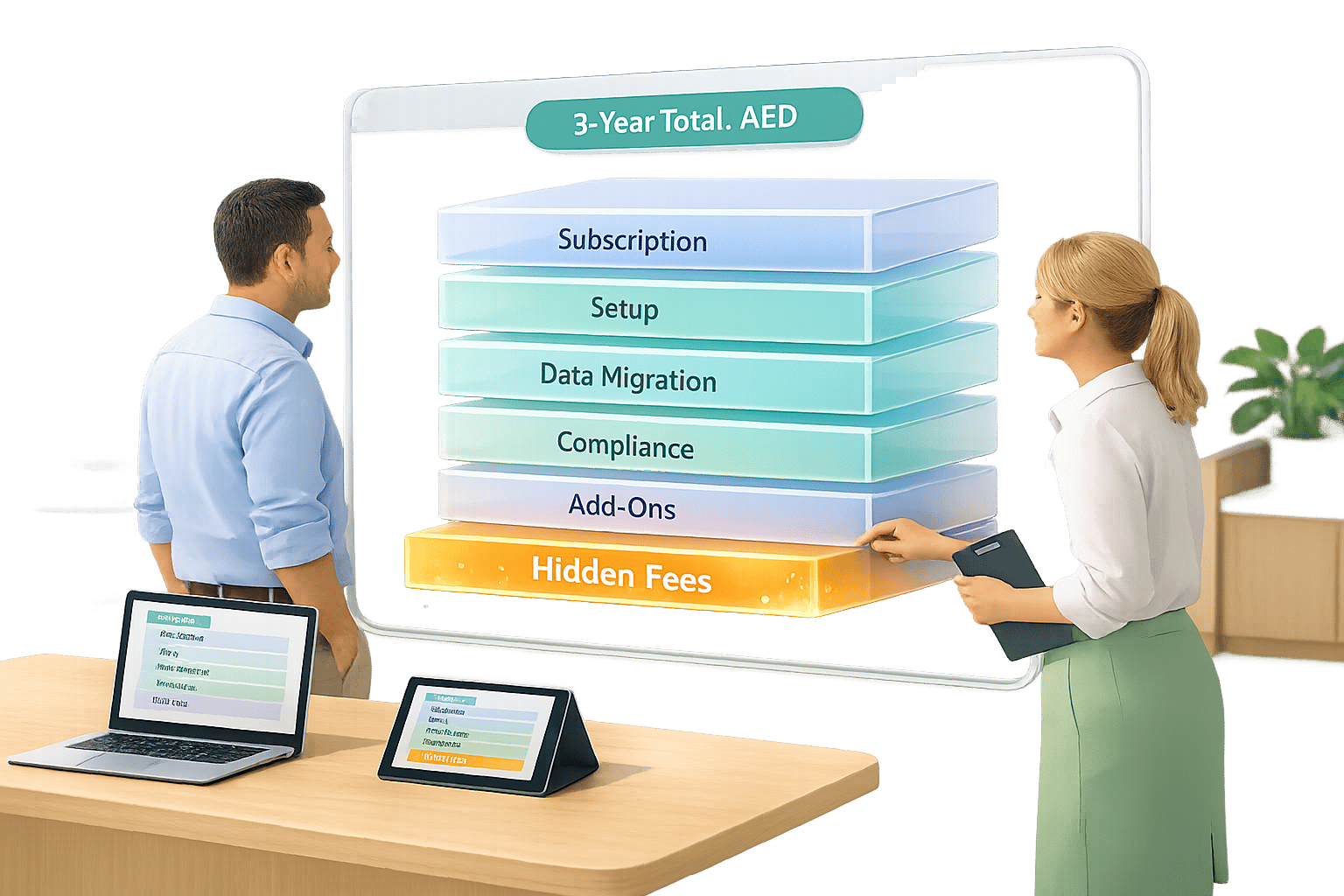
- Hidden Fees: Data migration (AED 110,000–183,500), training (AED 1,835–7,340), and productivity loss during transitions can double the initial budget.
- Pricing Models: Cloud-based options offer scalability, while on-premise systems demand high upfront investments. Flat-rate pricing is more predictable for growing clinics.
- Compliance: NABIDH-compliant software avoids fines and costly retrofits. Look for local data hosting to meet UAE regulations.
Key Tip: Ask vendors about all potential costs upfront - implementation, storage limits, and training fees - to avoid surprises. Flat-rate plans with compliance included, like Remedico, often provide the best long-term value.
Dental Practice Management Software Buying Guide
This guide was developed by the Remedico team to help clinic owners navigate the complex landscape of dental software procurement.
sbb-itb-d8b42ea
Common Pricing Models for Dental Software
@figure {3-Year Total Cost Comparison of Dental Software for UAE Clinics} :::
Getting a handle on how dental software providers structure their fees can save you from unexpected costs. With the market expanding quickly [2], understanding these pricing models is crucial, especially for clinics in the UAE. Most practices now choose between cloud-based subscriptions and on-premise licenses, each with its own impact on long-term expenses. These models lay the groundwork for evaluating other cost factors.
Cloud-based vs. On-premise Pricing
Cloud-based software operates on a subscription basis, eliminating the need for upfront hardware investments. For instance, Remedico hosts data locally on AWS me-central-1, ensuring compliance with NABIDH and Riayati standards [1]. These subscriptions often include perks like automatic updates, data backups, and customer support.
On the other hand, on-premise systems require hefty initial license fees, ranging from AED 4,404 (USD 1,200) to over AED 1,836,000 (USD 500,000) [3]. Plus, you’ll need to budget for physical servers and IT staff to manage them. Upgrades and support come with additional charges. While cloud-based options provide smoother cash flow and easier scalability for multi-branch operations, on-premise solutions demand a larger upfront commitment.
Flat-rate vs. Per-user Pricing
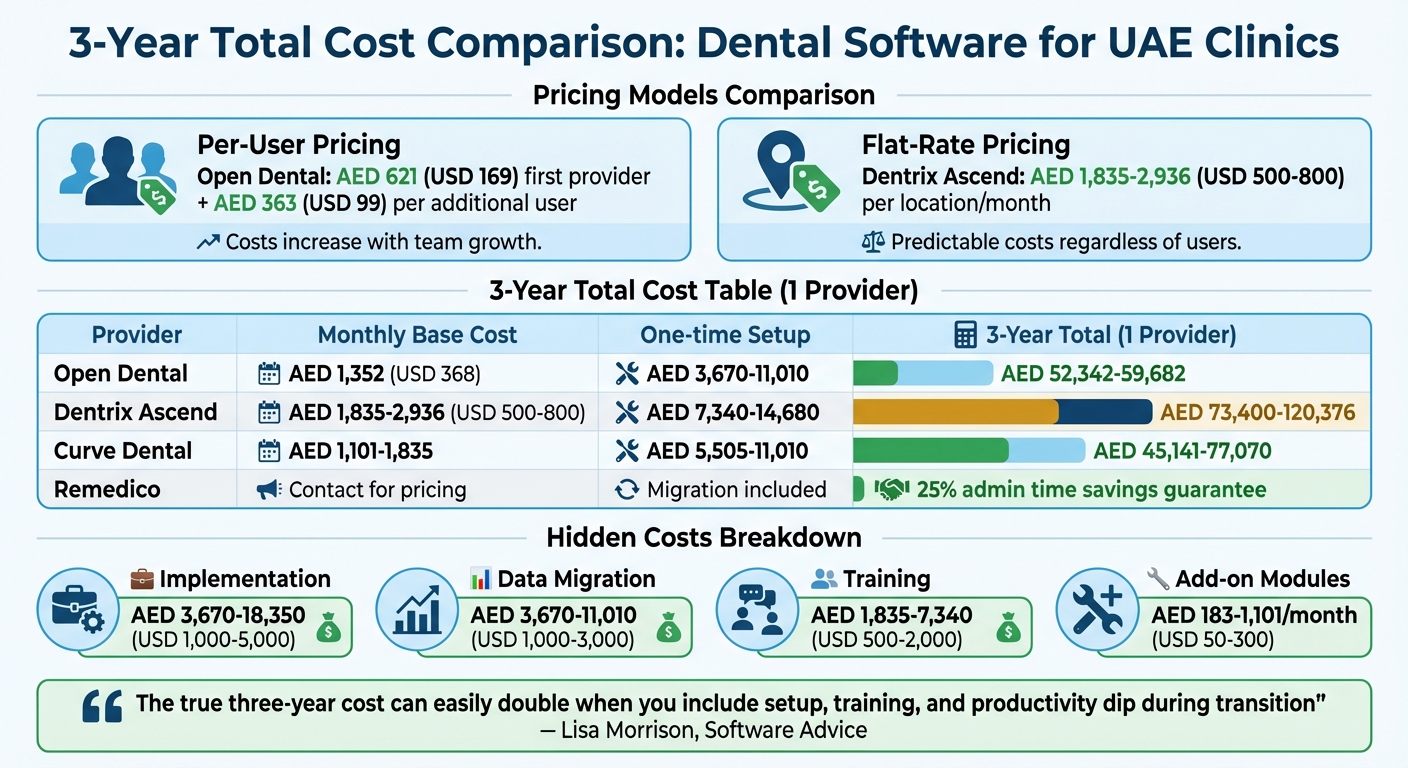
Per-user pricing charges you based on the number of users, such as dentists or hygienists, accessing the system. For example, Open Dental costs AED 621 (USD 169) for the first provider and AED 363 (USD 99) for each additional user. This model works well for solo practices but can quickly become expensive for larger teams [2].
Flat-rate pricing, on the other hand, charges a fixed monthly fee per location, regardless of how many users log in. Dentrix Ascend follows this model, with rates between AED 1,835 and AED 2,936 (USD 500–800) per month per location [2]. For clinics planning to expand or hire more staff, flat-rate pricing can help maintain predictable expenses. Remedico also adopts a flat-rate model, appealing to practices seeking cost stability.
3-Year Total Cost Comparison
When calculating the total cost of ownership, it’s not just about the monthly fees. Initial setup and migration costs can significantly affect your overall investment. Implementation fees typically range from AED 3,670 to AED 18,350 (USD 1,000–5,000), while data migration costs fall between AED 3,670 and AED 11,010 (USD 1,000–3,000). Training adds another AED 1,835 to AED 7,340 (USD 500–2,000) [2]. Additional features like advanced analytics or patient engagement modules can cost AED 183–1,101 (USD 50–300) per month [2]. Over three years, these costs can add up, making it essential to consider the full picture.
Provider | Monthly Base Cost | One-time Setup | 3-Year Total (1 Provider) |
|---|---|---|---|
Open Dental | AED 1,352 (USD 368) | AED 3,670–11,010 | AED 52,342–59,682 |
Dentrix Ascend | AED 1,835–2,936 (USD 500–800) | AED 7,340–14,680 | AED 73,400–120,376 |
Curve Dental | AED 1,101–1,835 | AED 5,505–11,010 | AED 45,141–77,070 |
Remedico | Contact for UAE pricing | Migration included | 25% admin time reduction guarantee or free consulting [1] |
“The cost of an EMR is more than just the license fee. Be sure to factor in data migration, training and staff productivity costs when planning your budget.”
While most practices allocate around AED 1,835 (USD 500) per provider per month [3], the true three-year cost can easily double when you include setup, training, and the productivity dip during the transition.
How to Spot and Avoid Hidden Fees
When evaluating dental software pricing, it’s crucial to dig deeper than the advertised monthly fee. Often, the real costs are hidden in additional charges that can significantly increase your overall investment.
Common Hidden Fees in Dental Software
Many dental software providers tack on extra fees beyond the base subscription, which can quickly add up over a three-year period. Here’s what to watch out for:
- Implementation and setup fees: These cover the installation and custom configuration of the software for your clinic.
- Data migration costs: Transferring patient records from Excel spreadsheets or an outdated EMR system can vary greatly depending on the complexity and the vendor [2,3].
- Training expenses: If training isn’t included in the base price, you may face additional charges. Costs can escalate quickly for larger teams, especially if fees are charged per session or per staff member [2].
- Add-on modules: Features like advanced analytics, patient engagement tools, or imaging integration often come at an extra monthly cost, ranging from AED 183 to AED 1,101 (USD 50–300) per module [2].
- Premium support: Enhanced support options, such as extended phone hours or priority assistance, frequently require an additional monthly fee [3].
- Integration and storage fees: Connecting third-party services or specific imaging hardware may incur extra costs. Cloud-based systems might also charge for exceeding data storage limits, while on-premise systems could require additional IT resources for server maintenance.
Questions to Ask Before Buying
To avoid unexpected charges, make sure to ask your vendor these critical questions before signing any contract:
- Are all essential modules included in the quoted price? Some basic plans may exclude key features like clinical charting or imaging, forcing you to upgrade [2].
- What is the one-time fee for migrating existing patient records? Request a detailed, written estimate based on your data size.
- Are there extra costs for adding new staff or providers? Per-user pricing models can become expensive as your team grows [2].
- What are the fees for exceeding data storage limits? Get a clear understanding of storage caps and associated costs upfront.
- Does the monthly fee cover updates, patches, and NABIDH/Riayati compliance? For UAE clinics, these should be part of the standard service [1].
- What is the cost to export my data in a standard format if I cancel the service? Some vendors charge exit fees or use proprietary formats [1].
- Is the training fee a flat rate, or is it charged per person? Ensure the cost covers your entire team.
By addressing these points, you can avoid unpleasant surprises and keep your expenses under control.
Why Flat-Rate Pricing Works Better for UAE Clinics
Flat-rate pricing offers a straightforward and predictable cost structure, making it a great fit for clinics in the UAE. This model charges a fixed monthly fee per doctor, ensuring your expenses remain stable even as your practice grows.
Take Remedico, for example. They charge AED 363 (USD 99) per doctor per month, with no hidden setup fees, migration costs, or vendor lock-in [1]. Their package includes 100GB of secure storage, 1,000 free WhatsApp reminders, and 24/7 priority support - at no extra charge. Plus, if their software doesn’t save your team at least 25% of admin time in the first month, they offer free consulting [1].
This transparent pricing approach eliminates guesswork and unexpected costs, making it easier to budget and scale your clinic’s operations effectively.
Real-World Example: How One Clinic Cut Software Costs
Case study: A Dubai clinic’s switch to Remedico
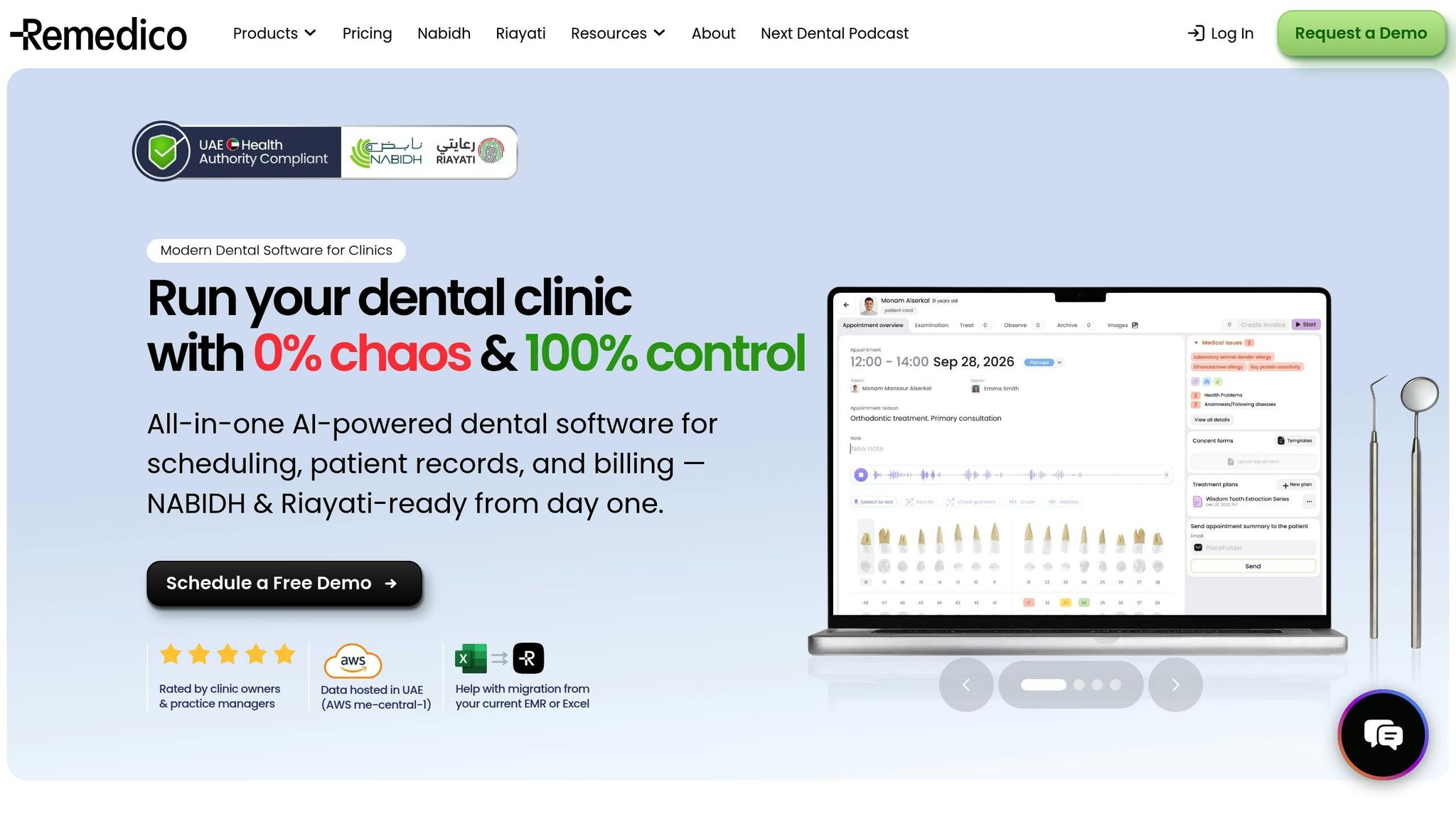
Dr. Enas, who runs a dental practice in Dubai, used to rely on paper records and spreadsheets to manage appointments and billing. Her team spent over 20 hours each month manually sending appointment reminders via WhatsApp and phone calls. On top of that, they dedicated another 9–10 hours every month to digital filing, which made tracking follow-ups a challenge. This inefficient system led to wasted time, missed appointments, and lost revenue.
After switching to Remedico, the clinic saw a dramatic improvement, saving over 40 administrative hours each month - equivalent to an entire workweek. Tasks like appointment reminders were automated through WhatsApp, and digital consent forms replaced the need for paper filing. The “Observe reminders” feature also helped retain patients by sending automatic nudges for their next visit [1].
“Remedico has helped us with the work flow by creating simple and creative software… the use of ‘Observe reminders’ significantly boosted patient retention rate.” - Dr. Enas [1]
The cost? Just AED 363 (USD 99) per doctor per month, with no setup fees, data migration charges, or hidden costs for NABIDH compliance. For Dr. Enas, the time saved on administration more than justified the subscription cost, allowing her staff to focus on delivering better patient care.
Long-term savings with NABIDH-compliant software
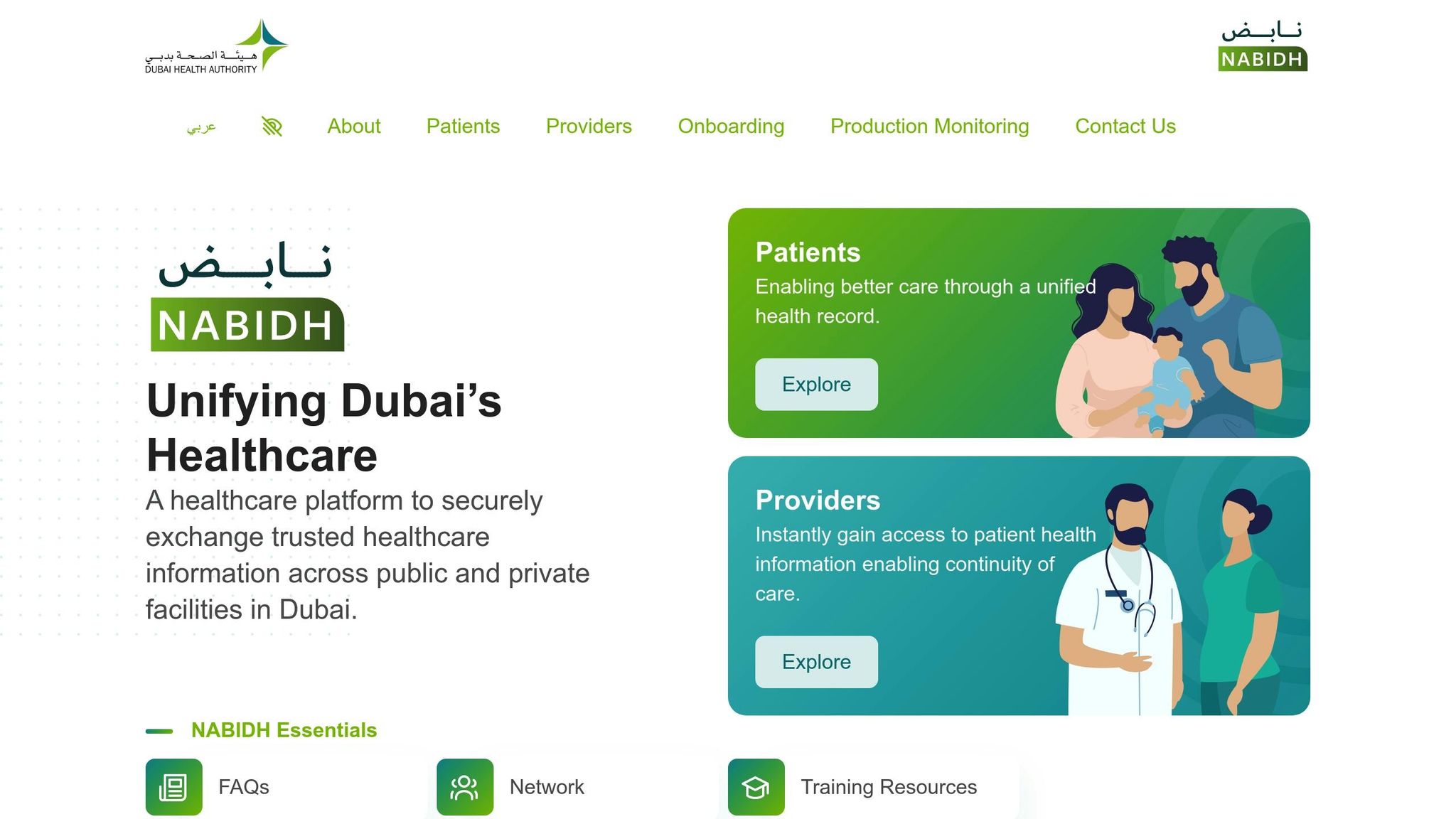
The benefits didn’t stop at saving time. By choosing Remedico, which was NABIDH-ready from the start, Dr. Enas’s clinic avoided potential fines and the need to hire third-party consultants for compliance updates. The software’s local data hosting on AWS (me-central-1) in the UAE ensured full compliance with government health data regulations, without requiring additional infrastructure costs [1].
Over three years, this decision saved the clinic an estimated AED 18,000–36,000 (USD 5,000–10,000) in compliance-related expenses that other practices incurred when upgrading outdated systems. Automated reporting features also spared the clinic another 6–8 hours monthly in preparing government submissions [1]. With a flat-rate, all-inclusive pricing model, Dr. Enas’s practice managed to maintain predictable costs while scaling up its operations effectively.
Key Takeaways: Choosing Cost-Effective Dental Software
Understanding the main cost factors and pricing structures is crucial when selecting dental software that fits your needs and budget.
Total Cost Calculation
The monthly subscription fee is just one piece of the puzzle. You’ll also need to factor in additional costs such as:
- Implementation fees: AED 3,700–18,500
- Data migration: AED 3,700–11,000
- Staff training: AED 1,800–7,400
- Add-on modules: Features like 3D charting or WhatsApp reminders often come at an extra cost[2].
Think long-term by projecting expenses over three years. If you’re planning to expand your team, keep in mind that per-user pricing - starting at AED 730 per provider - can quickly rise to AED 2,200 monthly as you add more users[2]. Additionally, don’t overlook temporary productivity losses; many clinics see a drop in patient numbers for up to three months as staff adapt to new workflows[3].
Taking all these factors into account ensures a clear picture of your financial commitment and helps you choose a pricing model that’s easy to manage.
Choose Flat-Rate, All-Inclusive Plans
Per-user pricing might seem appealing initially, but costs can spiral as your team grows. Flat-rate plans, on the other hand, offer stability and predictability. Even if you add more doctors, hygienists, or open another clinic, your budget remains steady. These plans often include features like NABIDH integration, automated reminders, and 3D charting - tools that might come with extra charges under other pricing models[2].
Flat-rate pricing keeps your budgeting straightforward, no matter how your practice evolves.
Once you’ve settled on a pricing model, the next step is ensuring compliance to avoid expensive adjustments down the line.
Pick NABIDH-Compliant Software for UAE Clinics
Opting for software that is NABIDH-compliant from the start can save you from costly emergency upgrades or compliance audits later. Hosting data on AWS me-central-1 servers within the UAE ensures adherence to national data residency laws and eliminates the need for expensive server migrations in the future[1].
Ensure your software provider offers local data hosting and includes NABIDH and Riayati integration in their base package, rather than as optional extras[1]. This approach locks in compliance while keeping future upgrade costs at bay.
FAQs
Are there hidden fees in dental software pricing, and how can I avoid them?
Hidden fees can sometimes be an issue when selecting dental software. These fees might sneak in as charges for extra users, data migration, training sessions, customer support, or even mandatory system upgrades. On top of that, certain features like managing multiple branches or accessing advanced analytics might come with additional costs.
To steer clear of any unwelcome surprises, it’s wise to request a detailed breakdown of costs upfront. Seek out providers who are upfront about their pricing and offer clear subscription plans without hidden extras. Opting for software with transparent pricing can help your clinic avoid unnecessary expenses over time. :::
Why is flat-rate pricing a good option for growing dental clinics?
Flat-rate pricing works perfectly for expanding dental clinics. Why? It provides a straightforward, predictable fee that covers all users and features, making financial planning much easier. This pricing model removes the hassle of surprise costs, like charges based on the number of doctors or specific features, as your clinic grows. It’s a smart way to scale your operations without the stress of hidden fees or complicated pricing changes. :::
What is NABIDH compliance, and why does it matter for dental clinics in the UAE?
Adhering to NABIDH compliance is essential for dental clinics in the UAE as it ensures alignment with the Dubai Health Authority (DHA) regulations. This compliance guarantees that patient data is managed securely and confidentially, shielding clinics from potential legal complications.
Beyond legal protection, NABIDH compliance enhances operational efficiency by facilitating seamless integration with Dubai’s healthcare network. This connectivity reduces errors, streamlines workflows, and ultimately boosts the quality of patient care. By staying compliant, your clinic not only safeguards its reputation but also strengthens patient trust - an invaluable asset in the healthcare sector. :::