Dental Practice Management: Key Strategies for Efficient Clinics
Managing a dental clinic can be overwhelming without the right systems in place. From scheduling and billing to patient records and staff coordination, inefficiencies can lead to revenue loss, patient dissatisfaction, and employee burnout. In the UAE and MENA regions, these challenges are heightened by economic pressures and staffing shortages. Here’s what you need to know:
- Automated scheduling reduces no-shows and double bookings, saving up to 24 admin hours monthly.
- Digital tools streamline billing, improve cash flow, and enhance treatment acceptance rates (target: 70%–90%).
- Clear staff roles and communication prevent delays, reduce turnover, and improve patient care.
- Integrated software combines scheduling, billing, and compliance, saving time and reducing errors.
- Compliance with UAE regulations like NABIDH and Riayati is critical for data security and operational alignment.
Switching from manual processes to digital systems can save over 40 admin hours monthly, improve patient retention, and allow clinics to focus on what matters most - delivering quality care. By adopting tools that automate reminders, centralize records, and simplify workflows, clinics can overcome common pitfalls and operate more efficiently.
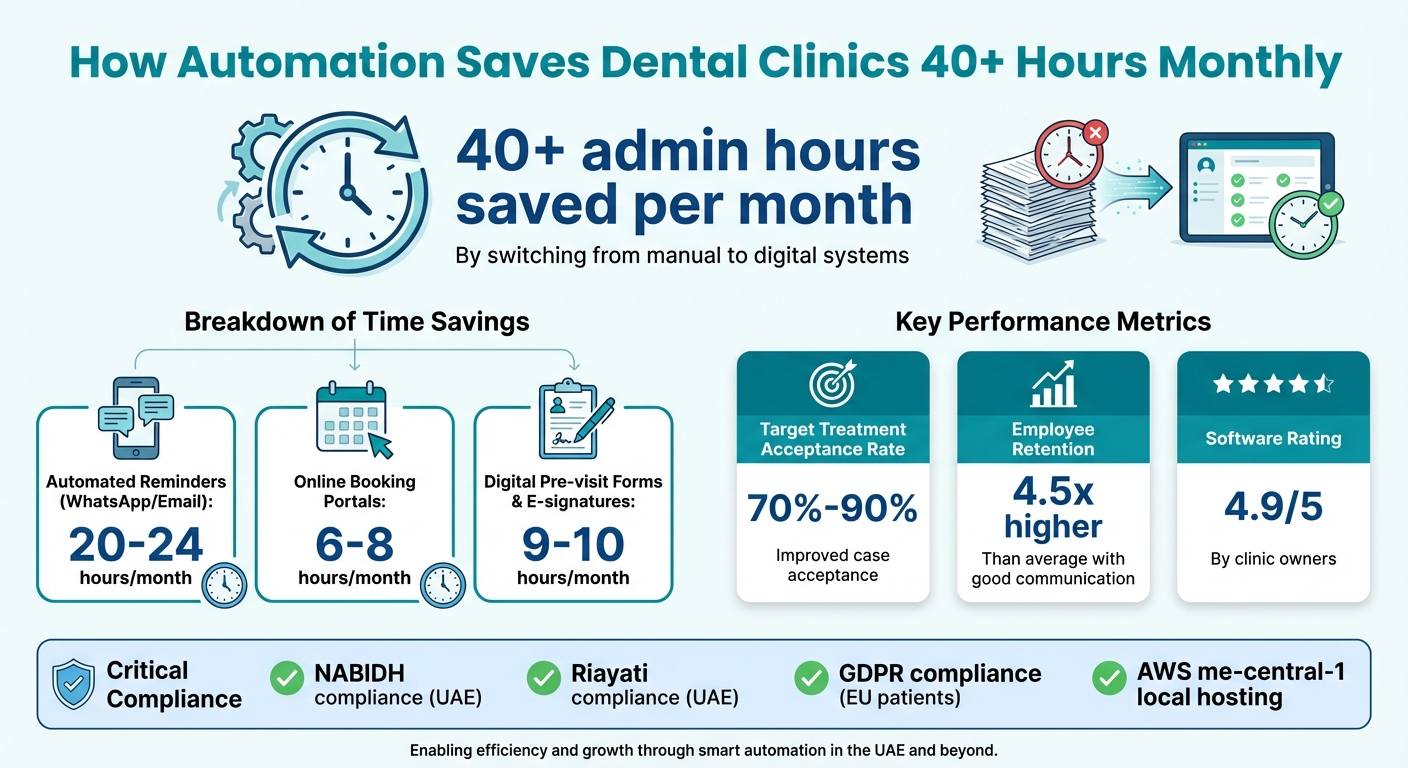
@figure {Time Savings from Dental Practice Automation: Monthly Admin Hours Reduced} :::
Top 10 Best Dental Practice Management Systems in 2025
Core Strategies for Running an Efficient Dental Clinic
Running a successful dental clinic is all about finding the right balance between exceptional patient care, well-organised schedules, accurate financial management, and clear staff responsibilities. These elements not only streamline daily operations but also create a better experience for patients.
Improving Appointment Scheduling and Patient Flow
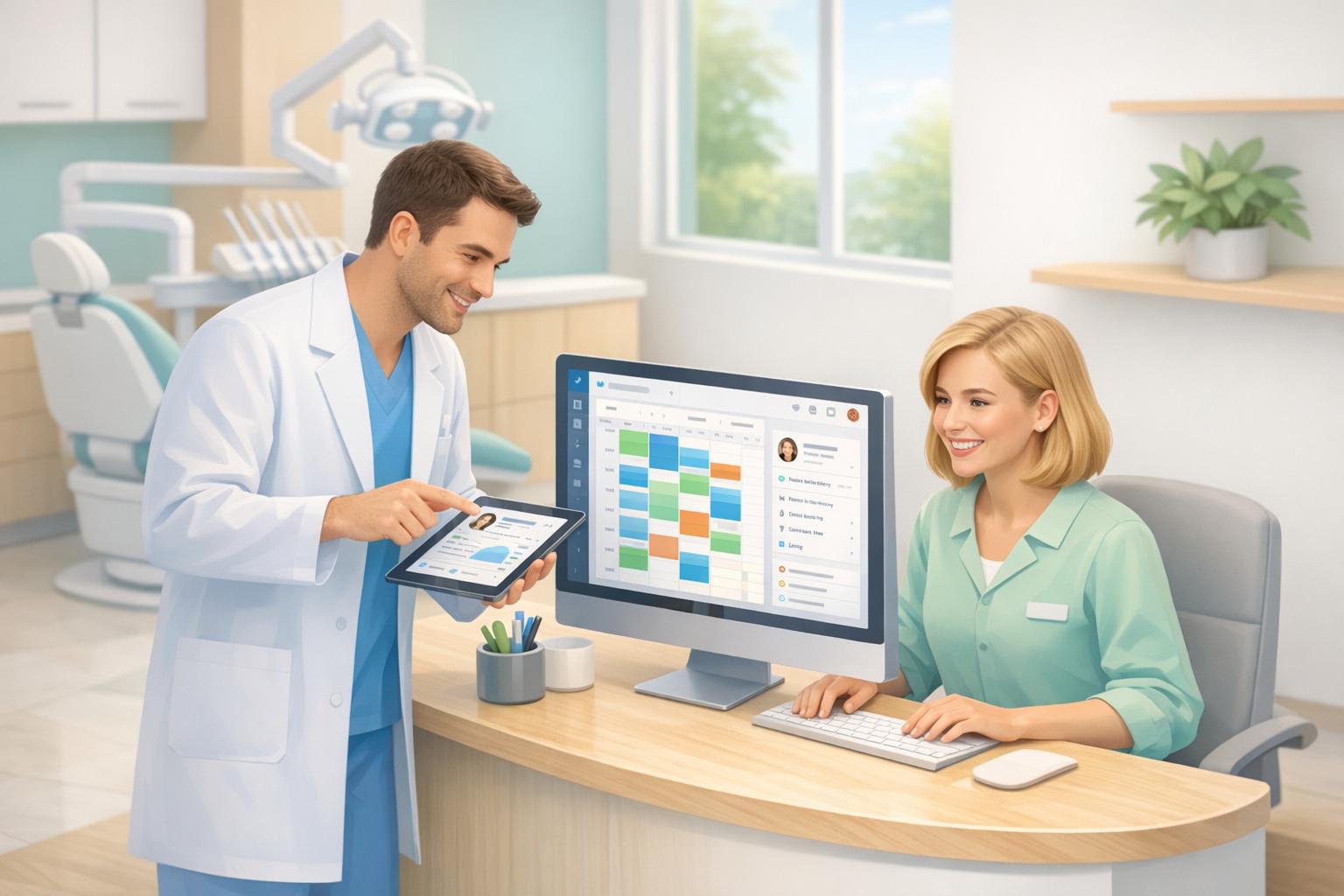
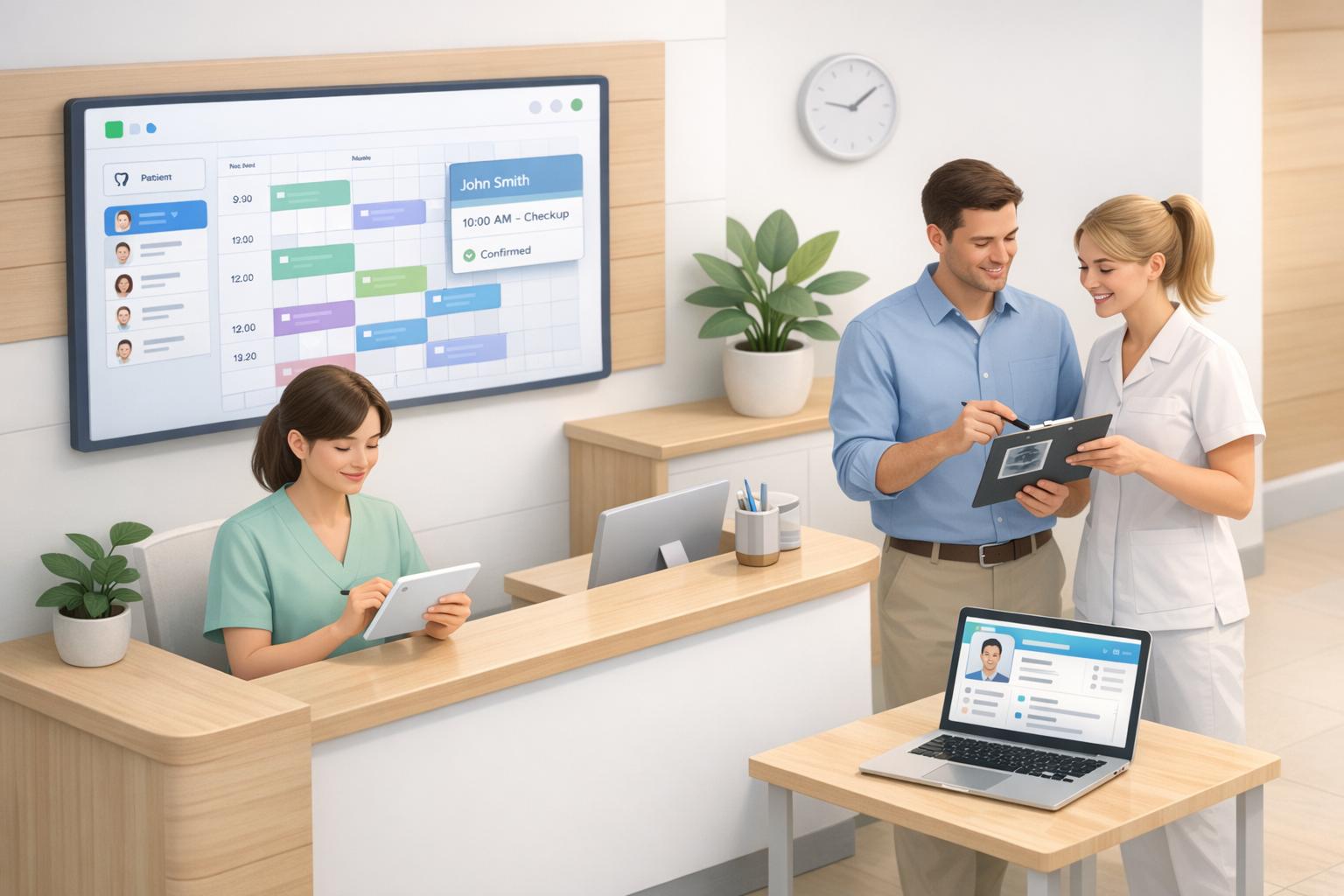
An efficient scheduling system is the backbone of a well-run clinic. Using a centralised smart calendar allows receptionists to view all available chairs and providers in one place. This makes it easy to spot gaps in the schedule and rearrange appointments with a simple drag-and-drop feature, ensuring no time slots go to waste [1]. Double bookings are avoided, and schedules stay optimised.
Automated reminders sent via WhatsApp and email save clinics around 20–24 admin hours per month, offering instant confirmations and reducing no-shows [1]. Online booking portals further enhance convenience by letting patients request appointments directly. These requests seamlessly integrate into the clinic’s calendar, cutting down on back-and-forth communication and freeing up 6–8 hours monthly [1].
Digital pre-visit forms and e-signatures also play a significant role by directly updating patient records. This reduces waiting times and saves another 9–10 admin hours per month [1]. Meanwhile, AI-powered tools like RemedicoGPT automate follow-ups, ensuring that patients return for needed treatments without the staff having to manually track them.
“Remedico has helped us with the work flow by creating simple and creative software… the use of ‘Observe reminders’ significantly boosted patient retention rate.” - Dr. Enas [1]
Streamlining patient flow naturally ties into effective financial management.
Managing Finances and Treatment Acceptance
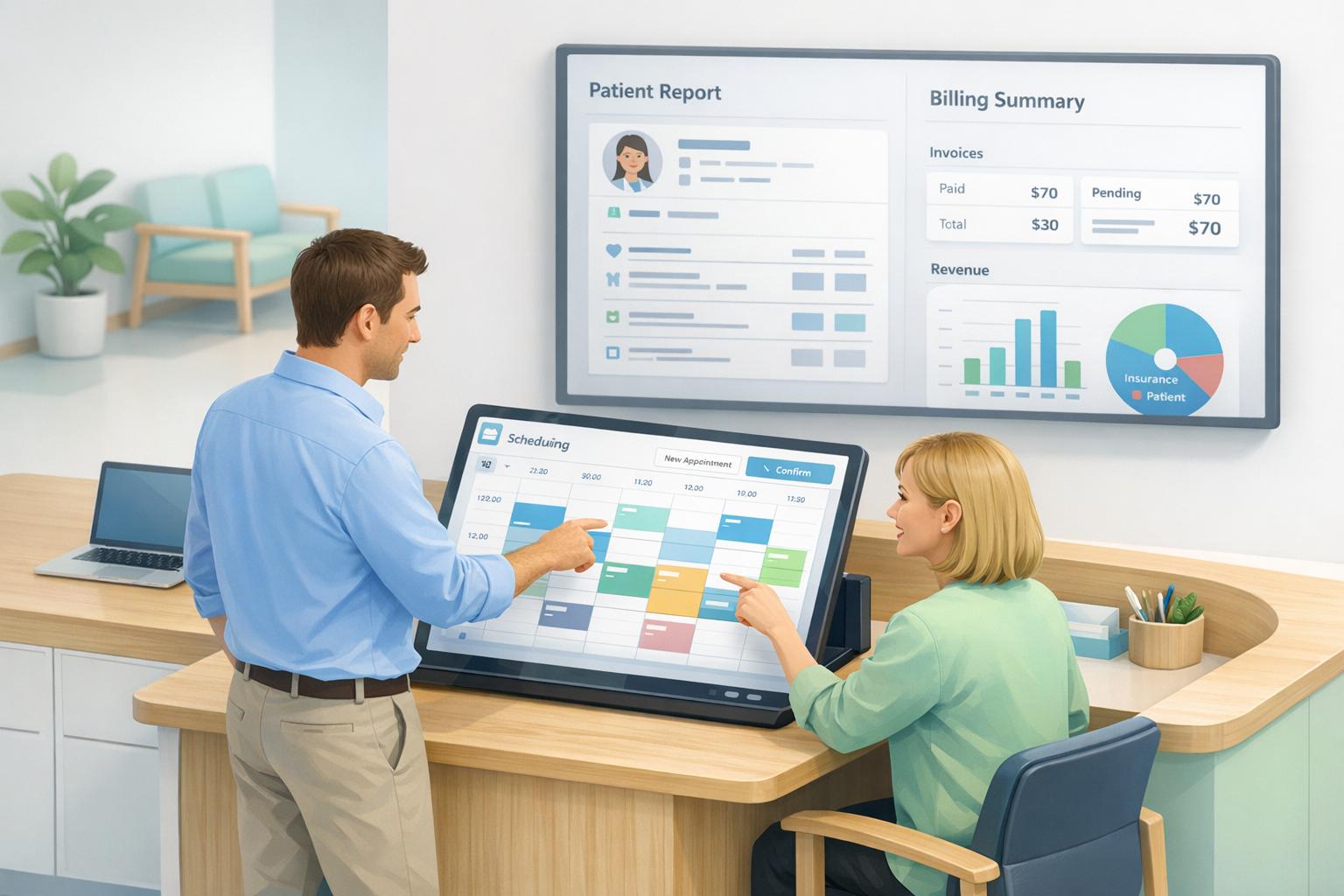
Keeping a close eye on real-time revenue is essential for avoiding billing mistakes and unpaid invoices. Modern accounting tools like QuickBooks or software integrated with practice management systems eliminate tedious manual data entry while providing quick financial insights [3][6]. Clinics should focus on three key reports:
- Dental Production Reports: Track expected revenue.
- Write-off Reports: Measure actual collectable amounts.
- Collections Reports: Monitor cash flow and accounts receivable [4].
A treatment acceptance rate between 70% and 90% is a hallmark of a thriving practice [6]. Achieving this requires clear communication with patients, using visual aids to explain procedures and emphasising the long-term health benefits of treatments [5]. Offering flexible payment options, such as third-party financing or in-house payment plans, can make costly treatments more accessible and remove financial hurdles [3][5].
To keep personal and business finances separate, clinics should maintain dedicated accounts and credit cards for the practice. This approach not only protects personal assets but also simplifies tax preparation [3]. Weekly reviews of account ageing reports help address overdue payments promptly, while maintaining a cash reserve for at least three months of expenses ensures financial stability [3].
A strong financial foundation supports better teamwork and operational efficiency.
Coordinating Staff and Clarifying Roles
Clear communication and well-defined responsibilities are key to keeping a clinic running smoothly. For instance, when dental assistants inform office managers about complex procedures or anxious patients, managers can adjust the schedule to prevent overbooking and reduce patient wait times [7]. This level of coordination ensures seamless operations.
Inventory management also benefits from open communication. Staff should report supply needs, such as instruments or materials, to avoid disruptions during procedures [7]. Assigning specific roles - like having office managers oversee compliance and UAE health data integration and dental assistants focus on chairside tasks - minimises errors and keeps the clinic functioning at high standards [7].
Regular team meetings provide an opportunity for staff to address potential issues before they escalate [9]. Using the 5 Cs - Clear, Correct, Concise, Complete, and Cohesive - for internal communication helps prevent misunderstandings and ensures everyone is on the same page [10]. Clinics that prioritise effective communication see employee retention rates 4.5 times higher than average [8].
“A well-organised workflow minimises delays, allowing the dental team to focus more on providing exceptional care than dealing with administrative setbacks.” - Jennifer Anthony, CDA, FAADOM [7]
How Technology Improves Practice Management
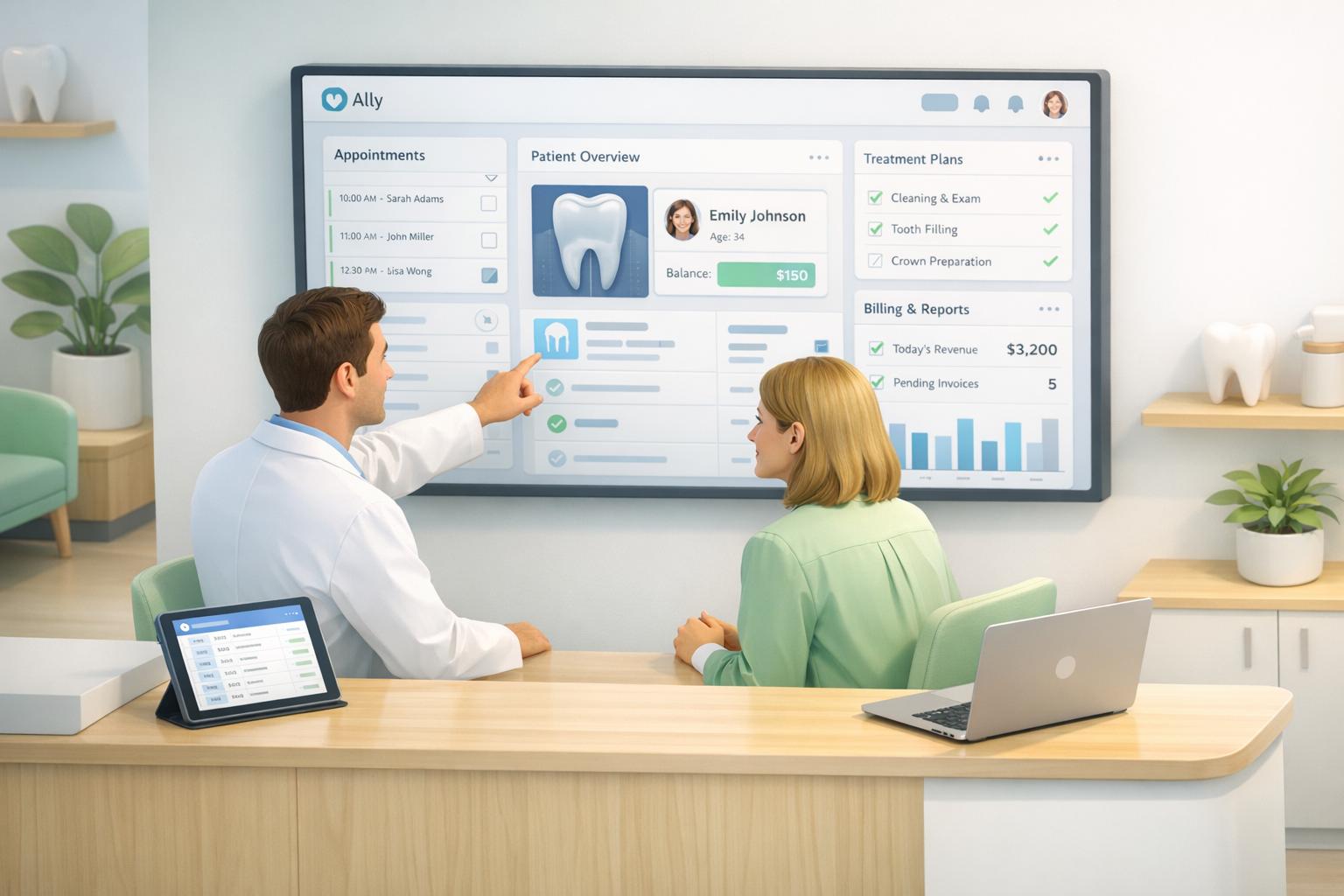
Today’s software solutions simplify practice management by reducing reliance on manual tasks. Instead of juggling spreadsheets, paper forms, and disconnected tools, clinic owners can now handle scheduling, billing, records, and compliance within a single system. This streamlined setup not only improves control over daily operations but also allows staff to dedicate more time to patient care. By connecting these tasks, clinics can achieve better overall performance.
What to Look for in Practice Management Software
When choosing practice management software, it’s essential to focus on features that enhance efficiency. Look for tools that integrate scheduling with online booking and intake forms. Billing features should automate payment posting and verify insurance eligibility seamlessly. Patient communication systems, such as secure portals, are also crucial for maintaining trust and accessibility. Real-time dashboards provide valuable insights into metrics like clean claim rates, accounts receivable cycles, and treatment acceptance rates, giving clinic owners a clear view of their financial health [2][12].
In the UAE, compliance with local regulations is critical. Software should ensure data is hosted within the region to meet health authority requirements [1]. Systems offering “day one” integration with NABIDH and Riayati are particularly advantageous, along with features like role-based permissions, detailed audit logs, and e-prescription modules [1][11].
Using Automation to Reduce Manual Work
Automation is a game-changer for clinics, particularly in handling payments and records. Secure online portals can process payments while providing clear cost estimates, and AI-driven tools can instantly update patient records by performing eligibility checks and claims scrubbing [2]. This eliminates the need for staff to manually post payments or verify insurance details. Clinics that adopt these systems often see higher clean claim rates, quicker reimbursements, and significantly lower denial rates [2].
Unified systems also optimise workflows by linking scheduling and billing, which helps minimise delays in accounts receivable. For example, some dental groups have successfully expanded from a single location to multiple branches by using standardised technology that provides real-time insights across all sites [2][12]. With automation handling routine tasks, staff can focus more on patient care, reinforcing the clinic’s dedication to quality service.
Meeting NABIDH, Riayati, and GDPR Requirements
Compliance plays a vital role in maintaining a secure and efficient digital practice. Adhering to regulations not only protects clinics from penalties but also ensures secure data sharing with health systems. In the UAE, compliance with NABIDH and Riayati involves secure data handling, audit-ready records, and automated reporting for health authorities. For clinics serving EU patients, GDPR requires stringent data protection, consent management, and breach reporting.
Modern software simplifies these challenges by offering encrypted storage, automated consent tracking, access logs, and data export tools. E-signature capabilities ensure that consent forms are securely saved to patient records, creating a paperless and audit-ready trail. Role-based permissions restrict access to sensitive information, while comprehensive audit logs monitor system activity, reducing the burden of manual compliance tasks [1].
sbb-itb-d8b42ea
3 Common Mistakes in Dental Practice Management
Running a dental clinic is no small feat, and even small missteps can snowball into wasted time, financial losses, and eroded patient trust. Here are three common pitfalls that can disrupt workflows and impact the quality of care.
Using Disconnected Systems That Don’t Communicate
Many clinics rely on separate tools for scheduling, billing, and patient records, which often means entering the same data multiple times. This lack of integration not only wastes time but also increases the chances of errors. Studies suggest that fragmented systems can eat up over 40 hours of administrative time each month and lead to issues like misplaced patient files and unrecorded consent forms [1]. On top of that, manual follow-ups for recalls and reminders can add another 20–24 hours of work monthly [1].
For multi-branch clinics, the problem becomes even more pronounced. Fragmented systems make it harder to monitor performance in real time and to comply with NABIDH and Riayati regulations in the UAE [1].
“Remedico has changed the way we deliver care, I have seen the shift in teamwork change as every doctor is now in the driver’s seat taking control over important daily admin work from updating patient diagnostics to explaining treatment plans, invoicing and monitoring their own progress.” - Dr. Saghi Helmi, General & Cosmetic Dentist, Vilafortuny Clinic [1]
Switching to integrated systems can solve these issues by connecting scheduling, charting, billing, and compliance tools. This allows information to flow seamlessly across departments, saving time and reducing errors.
Sticking to Paper Instead of Embracing Digital Tools
Despite the growing availability of digital solutions, some clinics still cling to paper-based systems. Tasks like filing, scanning, and manually tracking records consume valuable hours that could be better spent elsewhere. Beyond the inefficiency, manual processes can’t keep up with the expectations of today’s patients, who increasingly prefer online booking, digital forms, and quick responses.
Practices that resist digital transformation risk falling behind competitors. Modern practice management software, rated 4.9/5 by clinic owners, shows that transitioning to digital doesn’t have to be daunting. Providers often offer dedicated migration support and ensure local data hosting, such as AWS me-central-1 in the UAE, to address security concerns [1].
By adopting digital tools, clinics can automate repetitive tasks, streamline operations, and better meet patient expectations.
Skipping Staff Training and Clear Communication
A well-trained team is the backbone of any successful clinic. Without proper training, staff may duplicate tasks, misinterpret priorities, and slow down patient care [13][14]. This is especially true in cases where practice managers are promoted from clinical roles without sufficient preparation in delegation or communication.
Poor communication can lead to costly errors, reduced productivity, and even malpractice claims or regulatory penalties [10]. Misunderstandings - no matter how minor - can hurt team morale and patient satisfaction [14].
To tackle this, clinics should update training materials at least twice a year to stay current with new techniques and technologies [15]. Regular team huddles and one-on-one meetings can help align individual responsibilities with the clinic’s overall goals [17]. When introducing new software or workflows, take the time to guide staff through the process and encourage questions.
“You need to be precise with your language, because if you’re not, then the other person will be left to fill in the blanks and draw their own conclusion.” - Tiffany Olson, Speech Communication Expert [16]
Investing in ongoing staff training and fostering open communication can create a cohesive, efficient team that’s ready to handle any challenge.
Key Takeaways
Here’s a quick recap of the main strategies covered:
Efficient management, advanced tools, and skilled staff are the foundation of a thriving clinic. Clinics using outdated or disconnected systems - like paper records - spend over 40 admin hours every month on manual tasks. In contrast, those with integrated platforms reclaim that time, focusing instead on patient care and clinic growth [1].
Automation can be a game-changer. Features like WhatsApp reminders save 20–24 admin hours each month, simplify booking processes by cutting 6–8 hours, and AI-driven follow-ups enhance both patient retention and treatment acceptance [1].
Compliance is non-negotiable in the UAE. Regulations like NABIDH requirements and Riayati require secure and accessible patient records. With data hosted locally on AWS me-central-1, Remedico reduces the burden of manual compliance, keeping your clinic aligned with these standards [1].
A well-trained team and intuitive tools lead to better results. Clearly defined roles, regular training sessions, and a user-friendly platform improve productivity and team morale. Remedico combines centralised operations, AI-powered automation, 3D treatment planning, and built-in compliance features into one system. Rated 4.9/5 by clinic owners, it helps you manage smarter, not harder [1].
FAQs
How does automated scheduling help make dental clinics more efficient?
Automated scheduling takes the hassle out of managing appointments by cutting down on manual booking efforts and lowering no-show rates. In fact, it can help your clinic reduce missed appointments by up to 30%, all while freeing up precious staff hours every month.
With smoother patient bookings and automated reminders, your team can dedicate more time to providing quality care and boosting the clinic’s overall efficiency. :::
What advantages does integrated software offer for managing a dental practice?
Integrated dental practice software brings all essential functions - like appointment scheduling, billing, record management, and inventory tracking - into a single platform. This not only simplifies daily operations but also reduces administrative tasks, minimises errors, and ensures appointments aren’t overlooked.
By organising processes more efficiently, the software supports compliance with local regulations and boosts patient satisfaction, which can directly improve retention rates. Plus, it offers a comprehensive view of your clinic’s performance, enabling smarter and more informed business decisions. :::
Why is compliance with UAE regulations like NABIDH and Riayati important for my dental clinic?
Compliance with UAE regulations like NABIDH and Riayati is crucial for keeping your clinic within the legal framework while ensuring patient data remains secure. Adhering to these standards not only shields your clinic from potential fines or penalties but also strengthens patient trust by showing your dedication to safeguarding their information and upholding ethical practices.
On top of that, staying compliant makes audits less stressful and helps streamline daily operations. This means you can concentrate on providing top-notch care without the added worry of regulatory challenges. :::