Dental Charting Software: Streamline Patient Records and Appointments
Paper records are holding your dental clinic back. They lead to misplaced files, slow workflows, and compliance risks, especially with UAE regulations like Riayati requiring digital HL7 data formats. Dental charting software solves these problems by digitising patient records, automating admin tasks, and ensuring compliance.
Key Benefits of Switching:
- Access patient records instantly across branches via cloud-based systems.
- Save over 40 hours/month with automated reminders, online booking, and digital consent forms.
- Boost treatment acceptance rates with 3D visual charts and AI-powered tools.
- Ensure compliance with UAE standards like NABIDH and Riayati, while storing data securely on local servers.
This software not only improves efficiency but also enhances patient care by providing clear, accessible records and visual tools that simplify treatment explanations. Whether you’re managing a single clinic or multiple branches, digital charting is the future of dental practice management.
Open Dental Hacks Part 1: Essential Treatment Planning & Charting Tips
What Is Dental Charting Software and Why It Matters
Dental charting software is a digital solution that replaces traditional paper records with a visual chart of a patient’s teeth and gums [4]. Instead of shuffling through folders or trying to interpret handwritten notes, your team can instantly access patient histories, treatment plans, and X-rays from any cloud-connected device.
This software seamlessly connects clinical and billing tasks. Dentists can document diagnoses, planned treatments, and completed procedures directly on a 3D chart during an appointment [1]. Once a procedure is completed, the system automatically generates an invoice based on the work done, which streamlines billing and minimises errors.
For clinics in the UAE, reducing paperwork and meeting compliance standards is critical. Platforms like Riayati, which links over 90,000 healthcare providers across 3,057 medical facilities [2], require data in standardised formats such as HL7. Digital charting software handles these requirements automatically, saving clinics from manual formatting and submission to national registries. These capabilities enhance both clinical and administrative workflows.
Main Features of Dental Charting Software
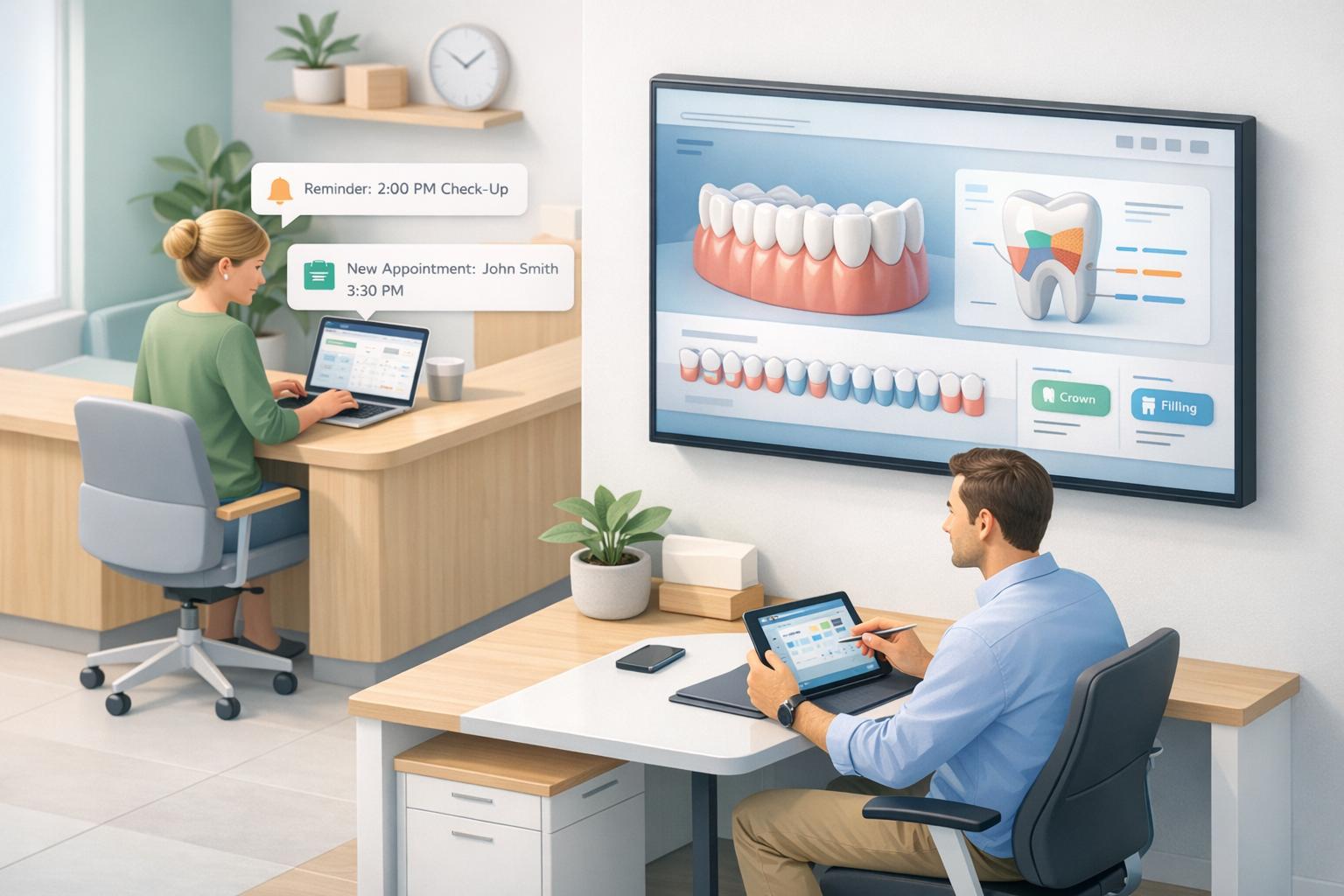
One standout feature is 3D visual charting, which provides a clear view of teeth, roots, and imaging [1]. Dentists can mark conditions, planned procedures, and completed treatments directly on the chart during visits. This visual approach not only simplifies record-keeping but also helps patients understand why treatments, like crowns or root canals, are necessary - often leading to higher acceptance rates.
Another key feature is AI-powered clinical notes, which turn spoken or typed inputs into structured records during appointments [1]. By enabling dentists to speak naturally, the software organises treatment steps, patient history, and allergy details, saving time while maintaining a personal connection with the patient.
Integration with diagnostic tools is another benefit. This includes emerging AI-powered diagnostic tools that allow for preliminary assessments via smartphone. X-rays and scans are automatically uploaded to the patient’s file, centralising data and removing the need for manual uploads [4].
The software also includes automated reminders sent via WhatsApp or email, reducing no-shows and minimising the need for staff follow-ups [1]. Clinics report saving 20–24 hours per month on appointment reminders, while digital consent forms save an additional 9–10 hours by eliminating manual paperwork.
Meeting Compliance Requirements
Beyond improving efficiency, dental charting software ensures compliance with national standards. In the UAE, connecting to Health Information Exchanges like NABIDH (Dubai) and Riayati (Northern Emirates) is mandatory [2]. The software simplifies this process by managing HL7 formatting and securely transmitting data - removing the burden of extra paperwork and manual data entry.
“Our full Riayati compliance means that dental clinics no longer need to compromise between having exceptional practice management software and meeting regulatory requirements.” - Nataliia Romanova, Founder and CEO, Remedico.app [2]
Data residency is another important consideration. UAE regulations require health data to be stored locally, which is why clinics need software hosted on local servers, such as AWS me-central-1 [1]. This setup ensures compliance with local health standards and protects patient data through robust encryption.
For clinics operating in the MENA region or the EU, the software must also comply with GDPR requirements [1]. Choosing a system that supports multiple regulatory frameworks from the outset can save practices from having to switch platforms as they grow.
Key Benefits of Digital Dental Charting for Clinics
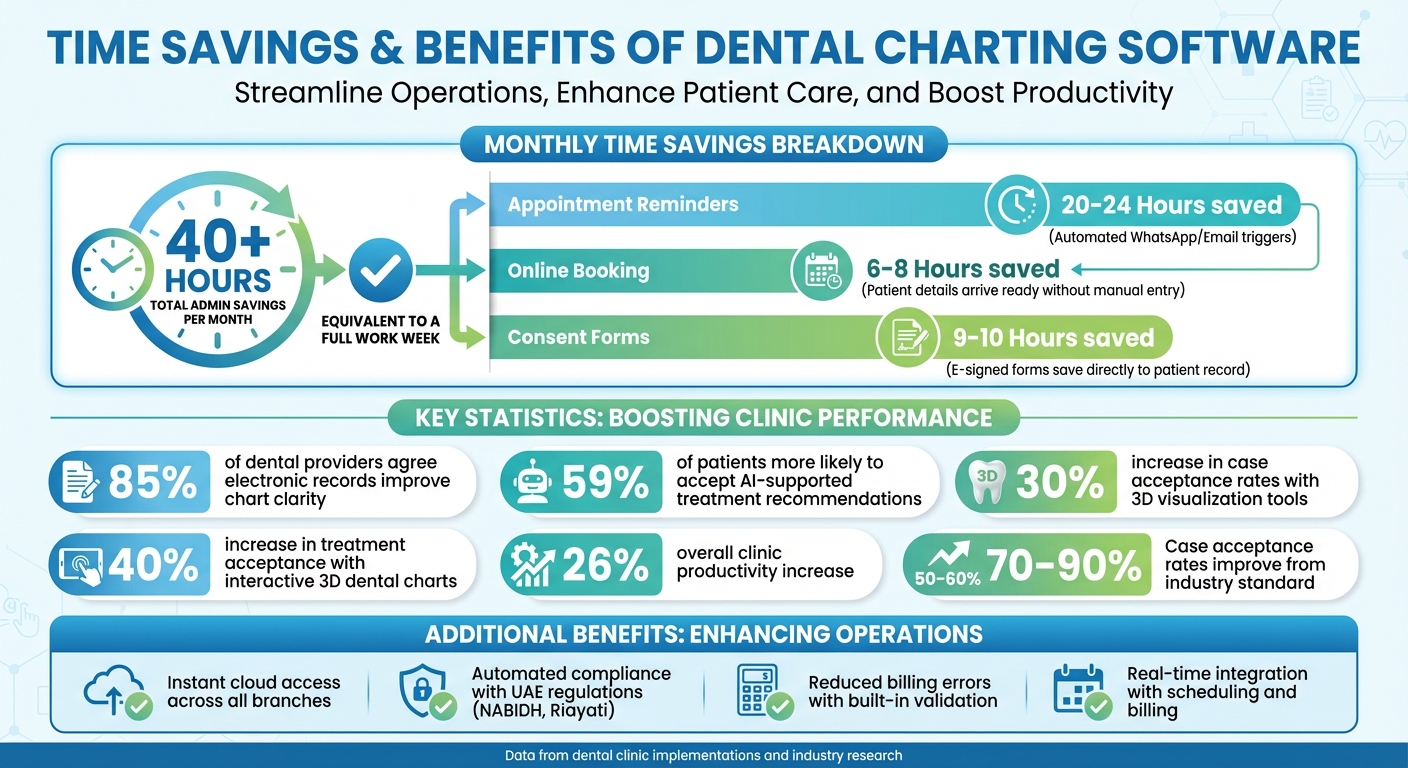
@figure {Time Savings and Benefits of Dental Charting Software} :::
Instant Access to Patient Records
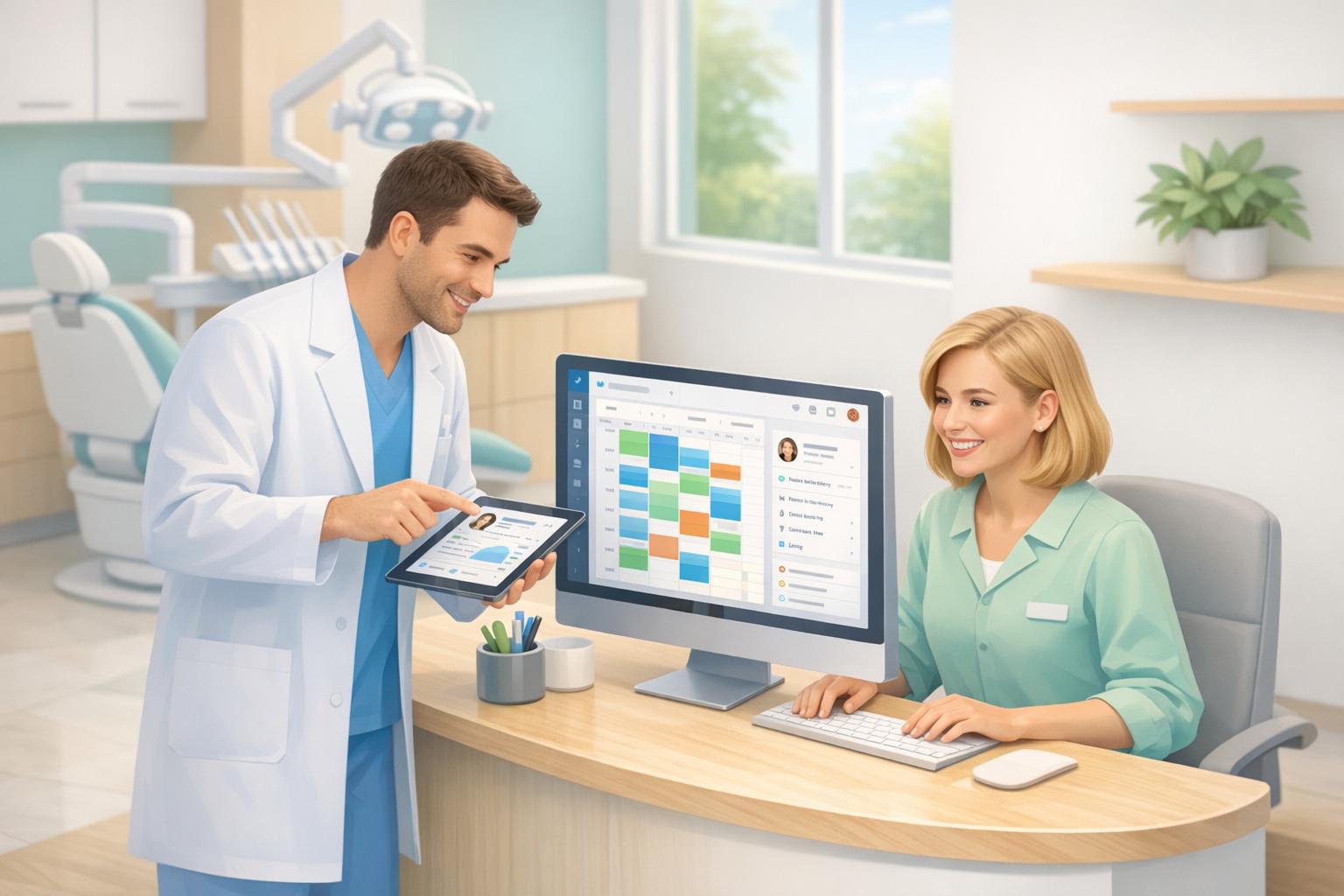
With digital dental charting, your team can instantly access a patient’s complete history - everything from past treatments and X-rays to allergies and notes - on any cloud-connected device. Whether a patient visits your clinic in Dubai or stops by your Sharjah branch, their full record is ready to review before they even sit down.
A notable 85% of dental providers agree that electronic records improve the clarity of patient charts, eliminating the risks tied to misreading handwritten notes [7]. Clear and standardised records not only reduce medico-legal risks but also make it easier for specialists to collaborate on complex cases.
This instant access ensures fewer errors and smoother appointment workflows.
Fewer Mistakes in Records and Billing
Digital systems are designed with built-in checks to flag errors, such as mismatched diagnosis codes or missing data [5]. These safeguards catch issues early, preventing claim denials and billing confusion.
Once a procedure is completed, the system can generate an invoice automatically. This seamless link between clinical and billing processes ensures every service is accounted for, reducing the risk of “lost claims” or reimbursement delays [6][8].
Voice-activated charting adds another layer of precision. Hygienists can record periodontal exams in real-time, directly at the chairside, without having to rely on memory later - a common source of errors [6].
“Our hygienists can let Voice do more of the work, so they focus on our patients’ needs and questions.” - Amanda Bell, Business Manager & Owner, Bell Family Dentistry [6]
These accurate, real-time records also help improve scheduling efficiency.
Connecting Charts to Appointment Calendars
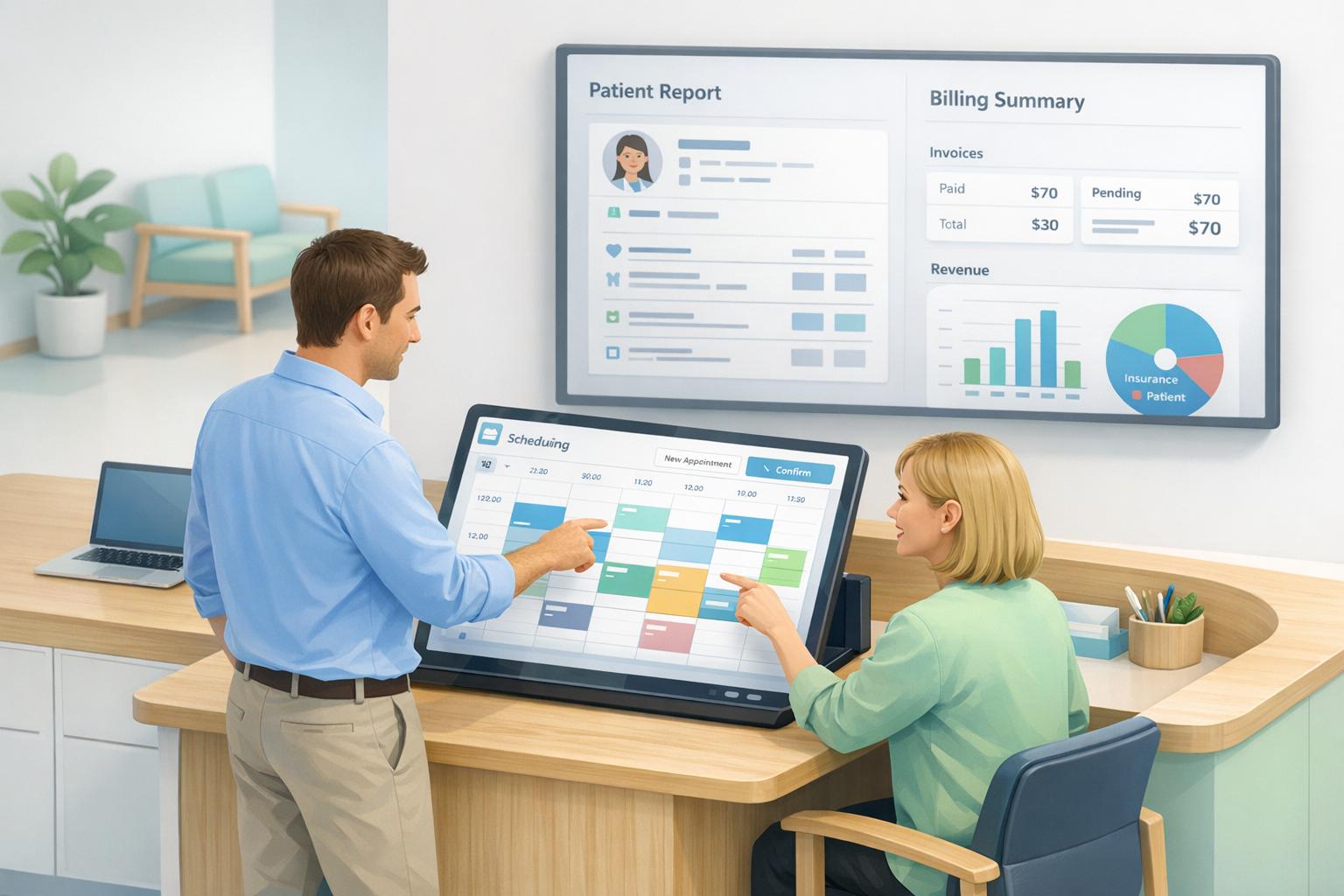
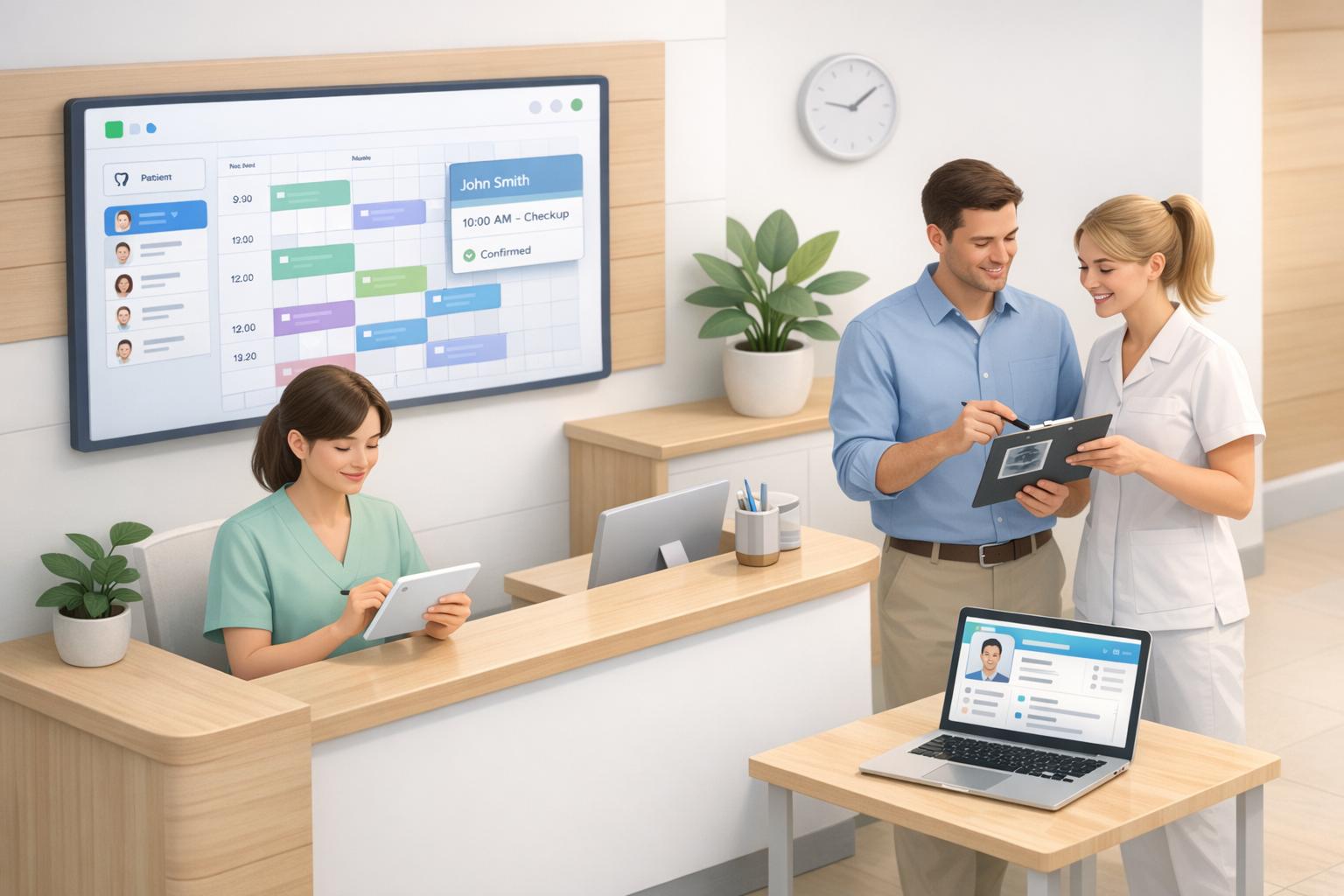
When patient records are linked directly to your scheduling tool, receptionists can view all available chairs and providers in one place. They can easily drag appointments into free slots, identify gaps, and manage patient flow without the risk of double-booking or missed appointments [1].
Features like automated reminders and online booking save time and reduce scheduling conflicts. For example, automated systems can free up over 26 hours of admin work every month [1]. Doctors can also update diagnostics, treatment plans, and invoices directly from the patient record, all while managing their schedules [1][2].
This integration creates a seamless system where clinical data and appointment management work hand in hand.
Admin Task | Time Saved Per Month | Benefit of Integration |
|---|---|---|
Appointment Reminders | 20–24 Hours | Automated WhatsApp/Email triggers from the schedule [1] |
Online Booking | 6–8 Hours | Patient details arrive ready for review without manual entry [1] |
Consent Forms | 9–10 Hours | E-signed forms save directly to the patient record [1] |
Total Admin Savings | 40+ Hours | A full week of admin time freed up every month [1] |
How Dental Charting Software Improves Patient Retention and Treatment Acceptance
Digital dental charting software goes beyond just keeping accurate records; it plays a key role in improving patient retention and increasing treatment acceptance.
Visual Tools That Help Patients Understand Treatment
Patients are far more likely to agree to treatment when they can clearly see and understand their dental issues. Modern dental charting software offers 3D tooth charts that display teeth, roots, and imaging, making it easier for patients to grasp the problem at hand. Dentists can use colour-coded visuals and interactive diagrams to illustrate these issues effectively.
Here’s a compelling statistic: 59% of patients are more inclined to accept treatments supported by AI-driven diagnostics [9]. For example, when software integrates AI-powered radiograph analysis to highlight issues like caries or bone loss in real-time, patients get objective visual proof instead of relying solely on verbal explanations. This builds trust and eliminates doubts about the necessity of treatment.
Clinics utilising cloud-based treatment planning tools with 3D visualisation have reported a 30% increase in case acceptance rates [10]. Dr. Heather Frodge, a dentist who uses such tools, shared her experience:
“For patients, treatment planning has been wonderful. They can see exactly what we need to do. It has increased treatment plan acceptance.” - Dr. Heather Frodge, Dentist [10]
Additionally, side-by-side comparisons of historical and current charts help patients see their progress over time. This turns abstract recommendations into concrete, actionable decisions. These visual aids not only simplify treatment plans but also encourage timely follow-ups.
Automated Reminders That Keep Patients Coming Back
Clear visual communication is just one part of the equation. Dental charting software also helps retain patients through automated reminders, ensuring they stay engaged with their care. Automated recall systems send WhatsApp, SMS, and email notifications directly from the patient record, preventing patients from falling through the cracks. These systems can save clinics 20–24 hours of administrative work every month [1].
AI-powered tools take it a step further. Features like “Observe reminders” identify patients who are due for follow-ups or have pending treatments and automatically reach out to re-engage them.
“Remedico has helped us with the work flow… [the use of ‘Observe reminders’] significantly boosted patient retention rate.” - Dr. Enas [1]
Automated systems also streamline same-day treatment acceptance. Visual plans and educational materials can be sent directly to a patient’s inbox or portal, allowing them to review the information at their convenience. Patients can even approve care plans with eSignatures from their mobile devices or laptops, making it easier to commit while the consultation is still fresh in their minds. This seamless process removes barriers and encourages prompt decision-making.
Features to Look for in Multi-Branch Dental Charting Software
When running multi-branch dental clinics, having the right software isn’t just a convenience - it’s essential. A well-designed system ensures smooth operations by preventing issues like duplicate records, scheduling conflicts, and compliance risks. Here are key features to consider:
Cloud Access Across All Locations
A cloud-based system allows all branches to access a single, centralised database. This means staff can instantly retrieve patient histories, X-rays, and schedules from any location, day or night. For example, Remedico hosts its data on AWS me-central-1 servers in the UAE, ensuring compliance with NABIDH and Riayati regulations[1]. This eliminates data silos and keeps records consistent across branches.
Customisable Charts and Data Fields
Dental specialists often use different notation systems depending on their expertise. Look for software that accommodates Palmer, Universal, and FDI notations with configurable fields. Remedico’s 3D Dental Chart is a great example - it adapts to various specialties and tracks critical metrics like gum pocket measurements. For reference, healthy gum pockets typically range between 1 and 3 millimetres. This flexibility allows each branch to tailor the system to its specific needs[11].
Customisation is just the start. When charting integrates seamlessly with other tools like scheduling and billing, it boosts overall efficiency.
Integration with Scheduling and Billing Systems
A strong integration between charting software, calendars, and billing systems can save countless hours. For instance, Remedico links its 3D charts to the Smart Calendar, showing real-time availability for appointments. It also automates tasks like invoicing, claim tracking, and QR payments. Clinics using this setup report saving over 40 administrative hours each month[1].
“Remedico has changed the way we deliver care… every doctor is now in the driver’s seat taking control over important daily admin work from updating patient diagnostics to explaining treatment plans.” - Dr. Saghi Helmi, General & Cosmetic Dentist, Vilafortuny Clinic[1]
Real-World Example: Clinics Using Dental Charting Software
Multi-Branch Clinic in Dubai Cuts Administrative Workload
A multi-branch dental group in Dubai transitioned from paper-based records to Remedico’s cloud-based platform, slashing over 40 hours of administrative tasks every month. This significant time-saving is thanks to features like automated appointment reminders, digital consent forms, and streamlined scheduling processes [1]. Additionally, the clinic’s management dashboard now provides real-time performance tracking across all branches, ensuring uniform clinical standards and secure, role-based access to maintain consistent treatment protocols [1].
These improvements not only simplify daily operations but also foster better communication between staff and patients.
Enhanced Patient Understanding with 3D Dental Charts
Beyond administrative efficiency, digital charting has revolutionised how patients understand and accept treatment plans. The use of interactive 3D dental charts in treatment planning has significantly improved patient engagement. Research indicates that these visual tools can increase treatment acceptance rates by up to 40%, while overall clinic productivity can see a rise of 26% [13]. Typically, case acceptance rates in the industry hover around 50% to 60%, but clinics using visual communication for treatment plans often achieve acceptance rates between 70% and 90% [12][14].
Key Takeaways
Why Digital Charting Is Necessary for Modern Clinics
Switching to digital charting can significantly minimise errors thanks to features like validation prompts and standardised symbols [5][15]. With cloud-based systems, your team can access patient histories instantly from any device with internet access, ensuring smoother coordination between doctors and front desk staff [5][15].
On average, clinics save over 40 hours each month. Automated tools, such as AI-powered clinic assistants and WhatsApp reminders, cut down manual tasks by 20–24 hours, while digital consent forms save an additional 9–10 hours [1].
Using software compliant with NABIDH and Riayati guidelines means your clinic benefits from encrypted data and secure access controls. This not only protects patient information but also reduces the risk of fines [5][2].
These advantages go beyond just saving time - they lower the chances of errors, ease administrative burdens, and position your clinic for future growth.
Choosing Software That Supports Growth
When selecting software, prioritise platforms offering cloud access across all your branches. This allows you to oversee multiple locations from a single dashboard [5][1]. Opt for systems with customisable charts and data fields that fit your clinic’s specific processes instead of relying on generic templates.
Integration is crucial. Your dental charting software should seamlessly connect with scheduling and billing systems to eliminate duplicate data entry [5][3]. Additionally, visual tools like 3D dental charts can enhance patient understanding of treatment plans, boosting acceptance rates [1][2]. Choose software that incorporates these tools for both clinical use and patient engagement.
FAQs
How can dental charting software enhance patient care?
Dental charting software plays a key role in improving patient care by providing precise, digital records that are simple to access and update. This makes it easier for dentists to diagnose conditions accurately, develop effective treatment strategies, and track patient progress over time.
It also enhances communication with patients by offering visual aids to explain treatment plans, helping them understand their options and building trust. On top of that, it minimises errors in record-keeping, ensuring every patient receives top-quality care. :::
Is this dental charting software compliant with UAE health regulations?
Remedico’s dental charting software is built to align perfectly with UAE health regulations, including Riayati, DHA, and NABIDH standards. This means your clinic can manage patient records effortlessly while staying fully compliant with local laws. With these frameworks in place, you can concentrate on providing top-quality care without the stress of navigating compliance issues. :::
What key features should I look for in dental charting software?
When selecting dental charting software, prioritise features that improve workflow, precision, and compliance. Opt for tools with integration options that seamlessly connect with imaging devices, billing systems, scheduling platforms, and inventory management. This ensures all patient data is centralised, making it easier to manage and access. Features like customisable charting templates and an interactive visual interface are also key, as they allow you to adapt workflows to your clinic’s specific needs. With these tools, you can annotate images effortlessly and access detailed patient records in one place.
Choosing software with cloud-based access adds another layer of convenience, offering secure, anytime availability of patient information while adhering to UAE’s stringent data-security standards. Additionally, features such as automated appointment reminders (via SMS or WhatsApp), billing integration, and compliance tools can help reduce missed appointments and simplify daily tasks. These functionalities not only save time but also ensure smoother operations across your clinic. :::