Private Dental Practice Software UK: How It Supports Growth
Private dental practices in the UK face challenges like admin overload, patient no-shows, and compliance risks. Software solutions designed for private practices address these issues by automating tasks, improving patient communication, and ensuring regulatory compliance. Here’s what you need to know:
- Admin Efficiency: Automates scheduling, billing, and patient records, reducing admin time by up to 40%.
- Reduced No-Shows: AI-powered reminders cut missed appointments by up to 30%.
- Improved Case Acceptance: Tools like 3D charts increase treatment acceptance rates by 25–30%.
- Regulatory Compliance: Features like GDPR audit logs and secure cloud storage simplify meeting CQC standards.
- Revenue Growth: Clinics using these tools report revenue boosts of 15–18% within months.
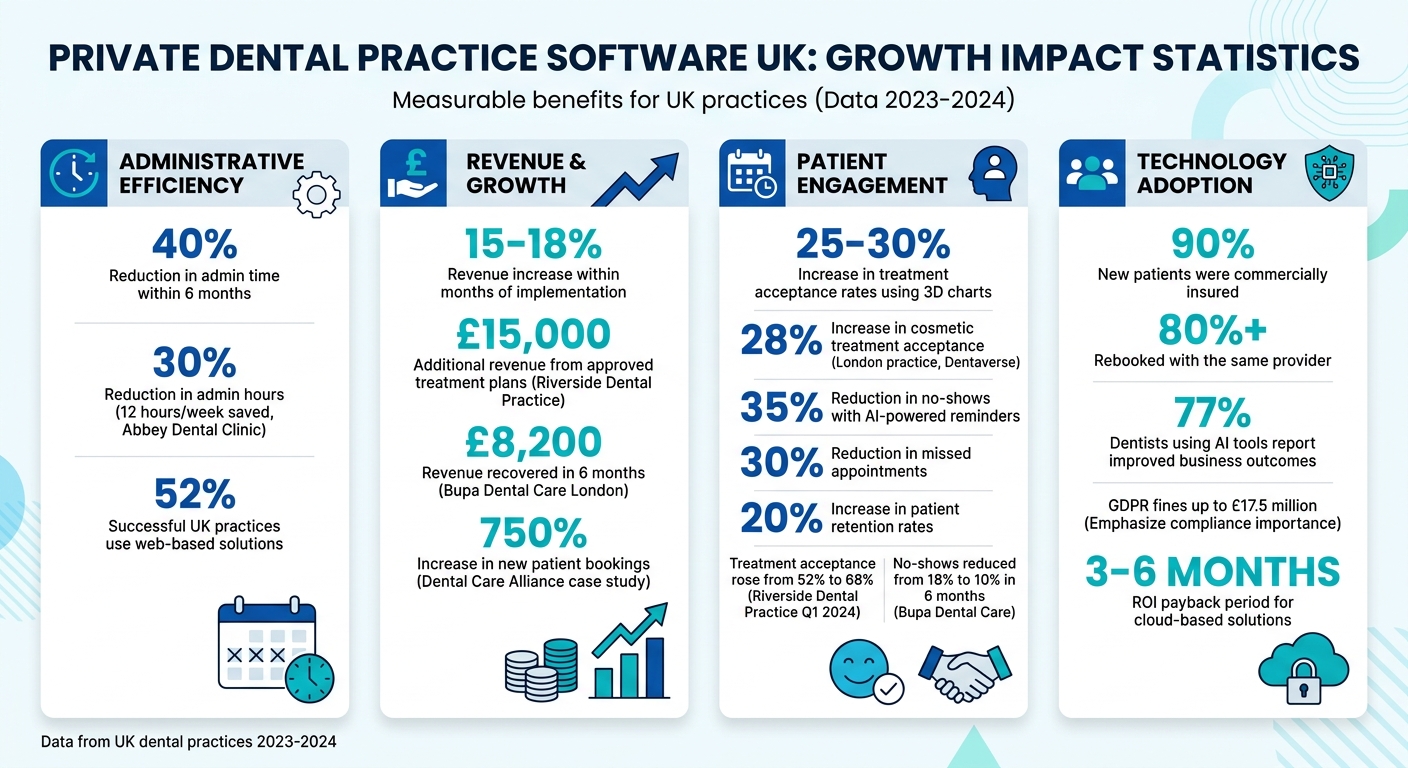
@figure {Private Dental Practice Software Impact: Key Statistics and ROI Metrics for UK Practices} :::
Top 10 Best Dental Clinic Management Systems in 2026
sbb-itb-d8b42ea
What Private Dental Practice Software Does and Why It Matters
Private dental practice software is designed to handle the clinical, administrative, and financial needs of dental practices. Unlike NHS-focused systems, which are centred on claims processing and government billing, private software emphasises fee-per-item billing, improving patient experience, and supporting revenue growth [6][8]. Many systems in the UK are “hybrid”, meaning they can manage both NHS and private patients, thanks to features like “NHS transference”, which helps track different billing streams [6][7].
Running a private dental practice is as much about business management as it is about patient care. This is where private dental practice software becomes indispensable. As Private Practice Software UK explains:
“When you are in private practice it is your business and it is not always easy for health professionals to wear their business hat” [6].
Main Features of Private Dental Practice Software
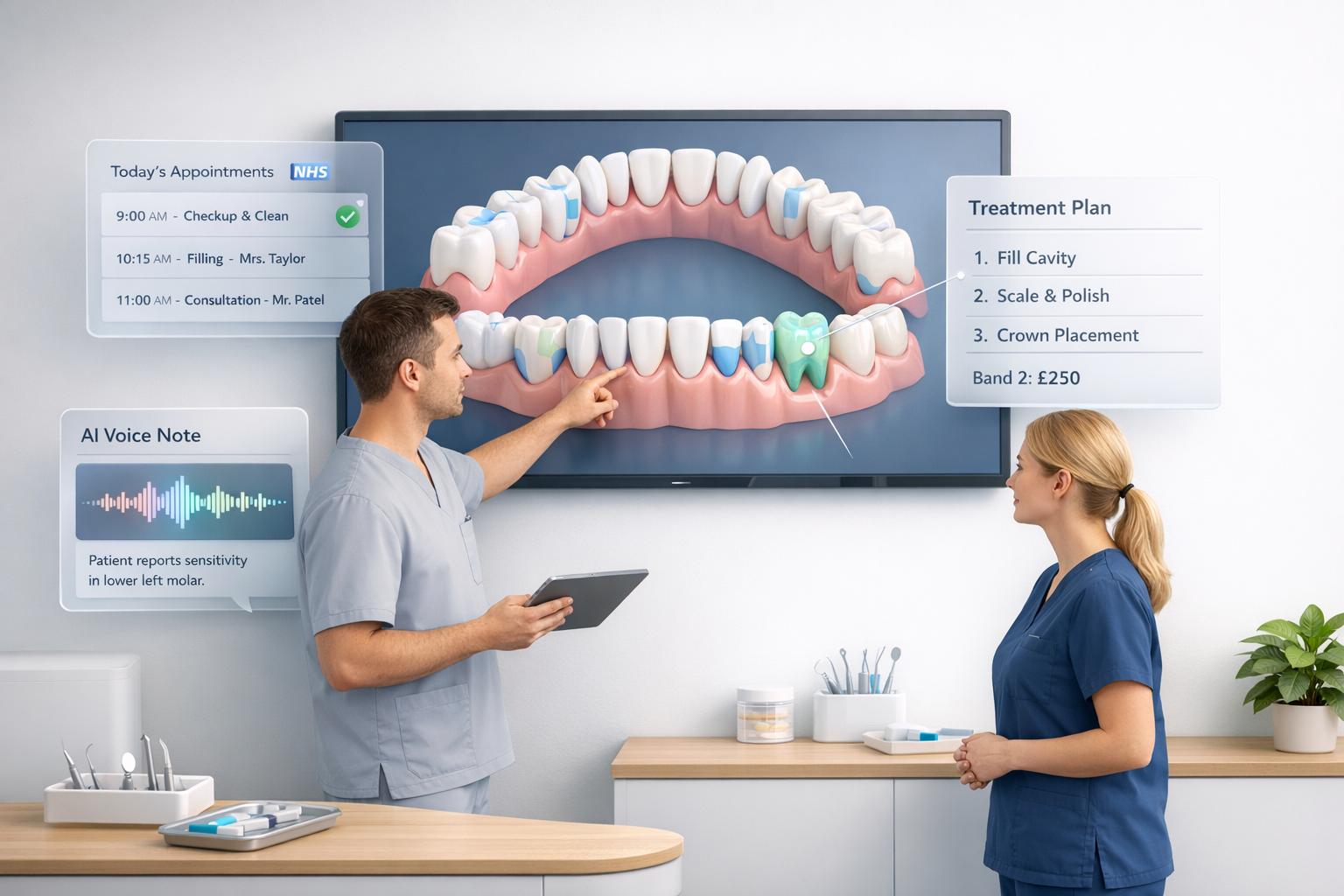
Key features of private dental practice software include tools for scheduling, billing, patient communication, and clinical workflows. For example, multi-provider scheduling, 3D charting, digital imaging, and patient engagement tools like WhatsApp reminders and online booking are commonly integrated [8][2]. Some systems also offer AI-powered voice-to-notes tools, allowing dentists to dictate clinical notes during appointments. These notes are then automatically formatted into treatment histories, allergy alerts, and more, reducing manual data entry and freeing up time to focus on patients [2].
Visual tools like 3D charting and imaging enhance patient understanding by providing a clear view of diagnoses and treatment plans. This transparency not only improves communication but also leads to higher case acceptance rates and increased revenue [2]. Cloud-based systems take integration further by combining scheduling, billing, and patient records into a single platform. This eliminates the need for manual backups and reduces IT costs, while also providing performance tracking features to monitor key metrics and high-value treatment plans [7][1].
A real-world example of the impact of such integrations comes from Dental Care Alliance, a network of over 400 practices. Between 2023 and 2024, they implemented Zocdoc integrated with Denticon software, resulting in a staggering 750% increase in new patient bookings. By late 2024, 90% of these patients were commercially insured, and over 80% rebooked with the same provider, illustrating strong patient loyalty and sustained revenue growth [7][1].
In addition to streamlining operations, these features ensure practices stay compliant with regulatory standards.
Meeting GDPR and CQC Requirements in UK Practices
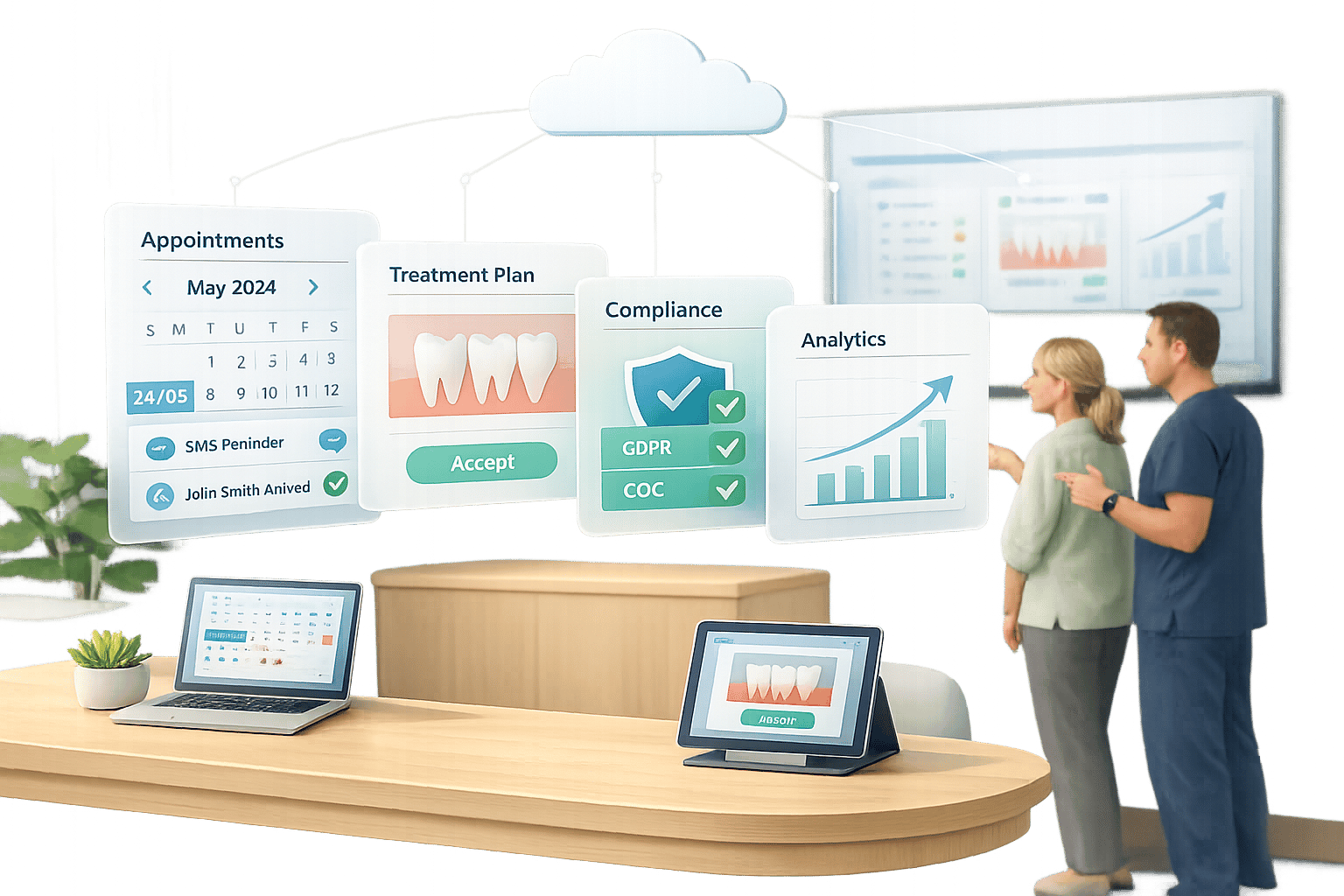
Private dental practice software also helps practices meet UK regulations, such as GDPR and CQC requirements, through advanced encryption, UK-based data storage, and automated audit logs [8]. Cloud-based systems offer automatic updates and built-in security measures, reducing risks associated with manual backups or hardware failures [8][1].
To simplify CQC inspections and avoid hefty GDPR fines - up to £17.5 million - practices should ensure their software includes automated audit logs and data residency features [3][4]. Trusted providers often include transparent pricing and staff training to help practices make the most of their software [6].
How Private Dental Practice Software Drives Growth
Private dental practice software is a game-changer for growth, streamlining operations and improving patient engagement. Growth in this sector boils down to three crucial factors: spending less time on admin, increasing patient acceptance of treatments, and minimising missed appointments. Purpose-built software directly addresses all three, helping practices thrive.
Reducing Admin Time with Automated Tools
Administrative tasks like scheduling and billing can consume hours of valuable time. Tools like Smart Calendar simplify diary management, resolving conflicts in real time and cutting manual scheduling by up to 40%, according to practice benchmarks [3][4]. This allows reception teams to spend more time focusing on patient care.
Automated billing systems handle invoices, payments, and balance tracking seamlessly [5]. This eliminates hours of paperwork daily. Advanced scheduling features powered by AI fill appointment gaps with waitlisted patients and predict busy periods using historical data, ensuring staff time is used efficiently [3].
By automating these time-consuming tasks, practices can redirect their efforts towards improving patient experiences and treatment planning.
Increasing Treatment Acceptance with Visual Tools
Visual aids make a big difference when explaining complex treatment plans. Tools like 3D Dental Charts simplify the process, showing patients detailed visuals of implants, orthodontics, or restorations. This clarity has been shown to boost treatment acceptance rates by 25–30% [5]. Dentaverse® takes it a step further, offering virtual reality previews of post-treatment outcomes, which helps patients envision the results and commit more confidently to high-value plans [3][4].
For example, a London-based dental practice using Dentaverse® reported a 28% increase in cosmetic treatment acceptance after incorporating 3D simulations into consultations [4]. Similarly, Riverside Dental Practice in Manchester saw their acceptance rate rise from 52% to 68% in Q1 2024 by using Exact Dental’s 3D charting, leading to an additional £15,000 in revenue from approved plans [Exact Software UK Case Studies, 2024].
These tools don’t just improve acceptance rates - they also help build trust and encourage patients to return for ongoing care.
Reducing No-Shows and Improving Patient Retention
Missed appointments can be a major revenue drain. Retention AI™ combats this by analysing patient behaviours, such as past attendance and response patterns, to send personalised reminders through SMS, email, or app notifications 48–72 hours before appointments. This has reduced no-shows by 35% in UK private practices [5]. It also flags patients who may be at risk of dropping off, allowing staff to follow up with proactive calls [3].
Automated reminders also streamline recall scheduling, fostering stronger patient relationships and increasing retention rates by 20%. This boosts lifetime patient value as patients return for repeat treatments [4]. For example, Bupa Dental Care’s London practice used Dentally’s automated reminders and Smart Calendar to cut no-shows from 18% to 10% in just six months during 2023, recovering £8,200 in revenue for 2,500 private patients [Dentally Case Study, 2023]. Meanwhile, Abbey Dental Clinic in Bristol reduced admin hours by 30% (saving 12 hours per week) in 2024 with Practice Plan Software’s automated tools, leading to an 18% increase in revenue [Practice Plan Annual Report, 2024].
3 Common Mistakes When Choosing Private Practice Software
Choosing the wrong software can lead to wasted time, lost revenue, and a host of hidden costs for your practice. Many clinics fall into avoidable traps that hinder growth and drain resources. Let’s look at three frequent mistakes and how to steer clear of them.
Choosing Based on Price Alone
Opting for software solely because it’s cheap can backfire. Older, low-cost on-premise systems often come with unexpected expenses, such as IT maintenance, manual backups, and hardware repairs. These costs quickly outweigh the benefits of modern cloud-based systems [1].
But the real issue goes beyond money. Budget software often lacks advanced features like AI-powered reminders or 3D treatment planning, which can lead to higher patient no-show rates and lower case acceptance. This means spending more staff time to generate less revenue - a phenomenon experts refer to as “profit drains” [1].
“Every month you delay switching costs you money in inefficiency, lost opportunities, and competitive disadvantage.” - Nataliia Romanova, CEO, Remedico [1]
Modern cloud-based solutions often pay for themselves in just 3–6 months, thanks to improved efficiency and better patient outcomes [1]. Beyond cost, it’s vital to consider whether the software can grow with your practice.
Ignoring Growth and Integration Needs
Another common error is overlooking the importance of scalability. Cheap systems rarely grow with your practice, forcing expensive and disruptive upgrades down the line. This is especially challenging when competing with larger dental groups that use advanced, integrated patient management systems [1].
The best platforms combine practice management tools with patient relationship features such as automated insurance verification, smart reminders, and analytics dashboards. Over 52% of successful UK practices have already switched to web-based solutions for scheduling and billing, avoiding the costs of maintaining physical hardware [1]. Patient communication tools, a rapidly expanding segment growing at 14.5% annually, are now essential for staying competitive [1].
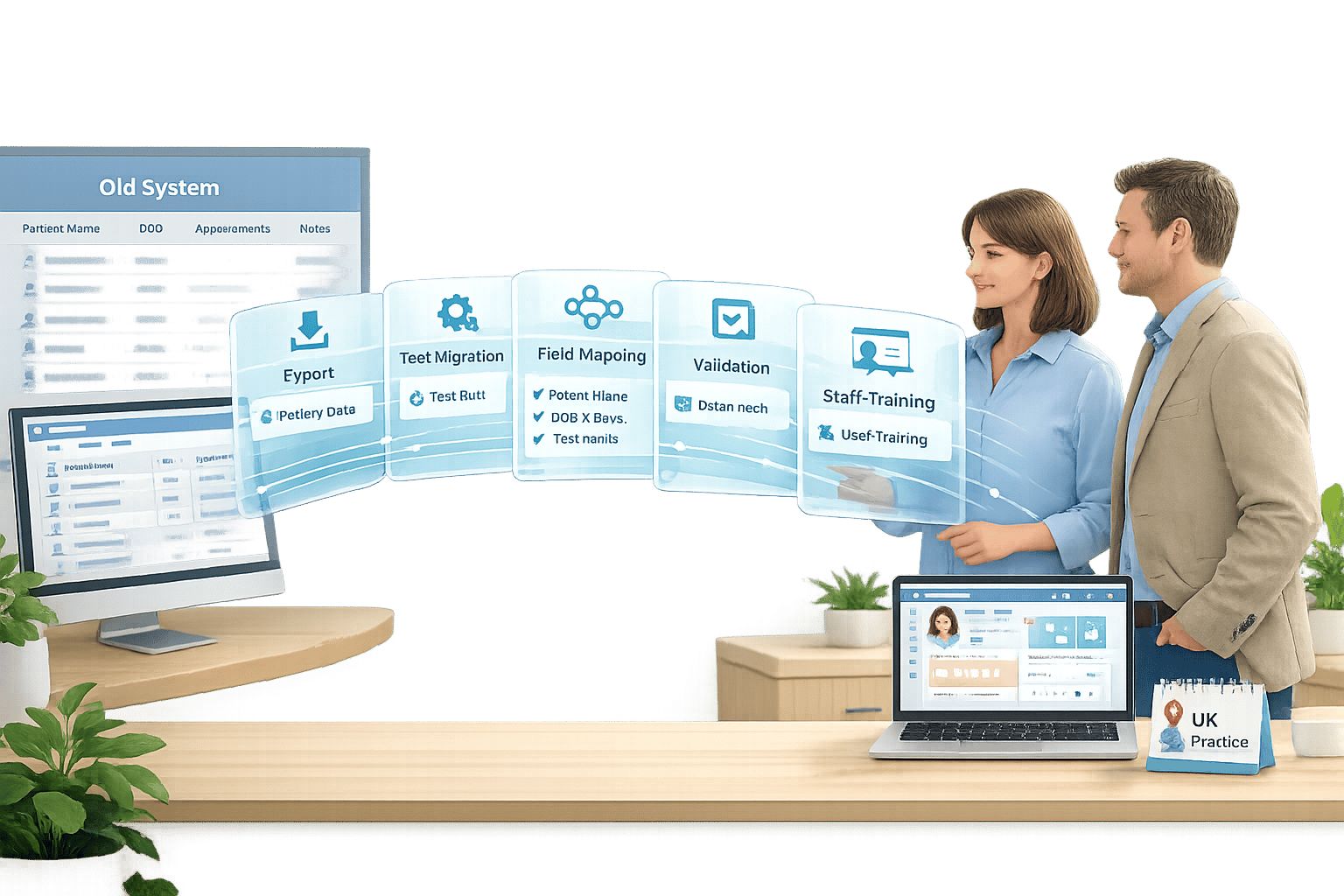
Cloud-based systems are designed to handle increased patient numbers without the need for costly consultant visits for updates. Ensure the software integrates seamlessly with your existing systems and offers migration support for transferring data from spreadsheets or older EMRs [2]. However, even the best software won’t succeed without proper staff training.
Skipping Staff Training and Usability Checks
No matter how advanced the software is, it won’t deliver results if your team doesn’t know how to use it effectively. Skipping training can prevent staff from using the software to its full potential, leading to inefficiencies and manual workarounds [10].
“Solutions that marry robust functionalities with ease of use accelerate clinical adoption.” - Research and Markets [10]
To avoid this, involve a diverse group - dentists, receptionists, and managers - in the decision-making process [10]. Request live demonstrations to evaluate the software’s usability and ensure it aligns with your clinic’s workflows [2]. Tailored training programmes are far more effective than generic manuals, as they address the specific needs of your practice [10].
Look for vendors that provide comprehensive onboarding, data migration support, and ongoing training services [2][10]. Practices that implement cloud-based systems with proper training can reduce administrative workloads by 40% within six months [1]. Investing in staff readiness is just as important as choosing the right software.
Key Points for Choosing Private Dental Practice Software
When selecting dental practice software, focus on three main priorities: supporting growth, ensuring regulatory compliance, and allowing for scalability. These aspects not only streamline daily tasks but also set the foundation for long-term success.
Pick Features That Support Growth
Choose tools that help boost revenue and minimise wasted time. Features like visual treatment planning and automated reminders can improve case acceptance rates and reduce missed appointments. Systems with voice-to-text clinical notes and automated invoice scanning can cut administrative tasks by up to 40% within six months [1].
The best platforms combine practice management with patient relationship tools. Look for options that offer online booking, digital consent forms, and real-time revenue tracking - all accessible from a single interface. Cloud-based solutions ensure your practice stays agile and competitive in a fast-changing market.
Check for GDPR Compliance and Data Security
It’s essential that your software complies with UK regulations, such as GDPR, without requiring constant manual updates. Cloud-based systems hosted on secure platforms like AWS automatically update to meet regulatory requirements, including GDPR and CQC standards [9]. Request written assurances from vendors on data security and confirm they offer encrypted storage and automated backups [2][9].
Digital forms and preloaded document libraries simplify compliance by maintaining clear audit trails. Practices adopting these tools can go entirely paperless, reducing storage costs and making regulatory checks smoother [2][9]. Once compliance needs are met, focus on scalability to future-proof your system.
Select Software That Scales and Is Easy to Use
Choose a platform that grows with your practice, accommodating multi-site operations and increasing patient numbers without requiring expensive upgrades [1][11]. Notably, 77% of dentists using AI tools report improved business outcomes and higher patient satisfaction [1].
Ease of use is just as important as functionality. Arrange live demos for your entire team - dentists, receptionists, and managers - to ensure the system meets everyone’s needs. Confirm that the vendor offers data migration assistance and customised training [2][11]. Highly rated systems like Remedico, which scores 4.9/5 from clinic owners, demonstrate that software can be both powerful and user-friendly [2].
FAQs
Can private dental practice software handle both NHS and private billing?
Modern private dental practice software in the UK is designed to handle both NHS and private billing seamlessly. Systems like Remedico bring everything together by managing NHS claims and private invoices on a single platform. With features like automated billing, real-time insurance checks, and integrated treatment planning, these tools make it easier to manage different fee structures. This not only helps improve cash flow but also ensures compliance - perfect for practices catering to both NHS and private patients or looking to grow their private services. :::
How quickly does cloud dental software pay for itself in a UK practice?
Cloud dental software in UK practices often recoups its costs within just 3 to 6 months. This quick return on investment comes down to a few key benefits: improved efficiency, less time spent on admin tasks, and more effective revenue management. For private practices, it’s a practical way to streamline operations and manage costs. :::
What should I ask a vendor about GDPR and CQC compliance?
When evaluating a vendor, it’s essential to dig into their data security practices and how they handle sensitive patient information. Ask about features like automated audit trails, secure data storage, and e-signatures to ensure the software aligns with GDPR requirements.
Additionally, check if the system supports CQC compliance by offering tools for documentation, data export options, and being prepared for audits. Don’t forget to inquire about their approach to regular security assessments and confirm how they guarantee that your practice maintains full ownership of its data. :::