Grow Dental Practice UK: Strategies to Improve Patient Retention
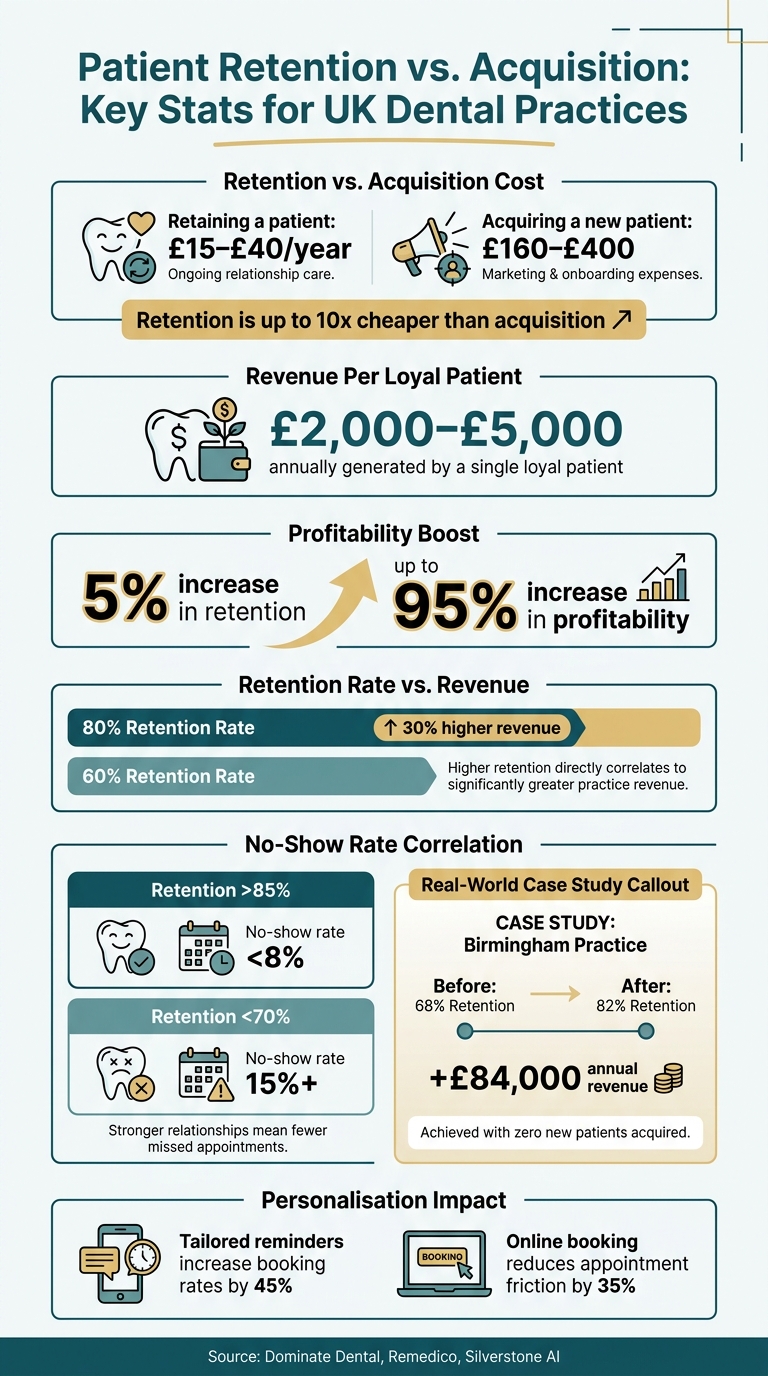
Want to grow your dental practice? Focus on keeping the patients you already have. Retaining patients is up to five times more profitable than acquiring new ones. In fact, a single loyal patient can generate £2,000–£5,000 annually. Practices with an 80% retention rate often see 30% higher revenue compared to those with 60%.
Here’s how to improve patient retention:
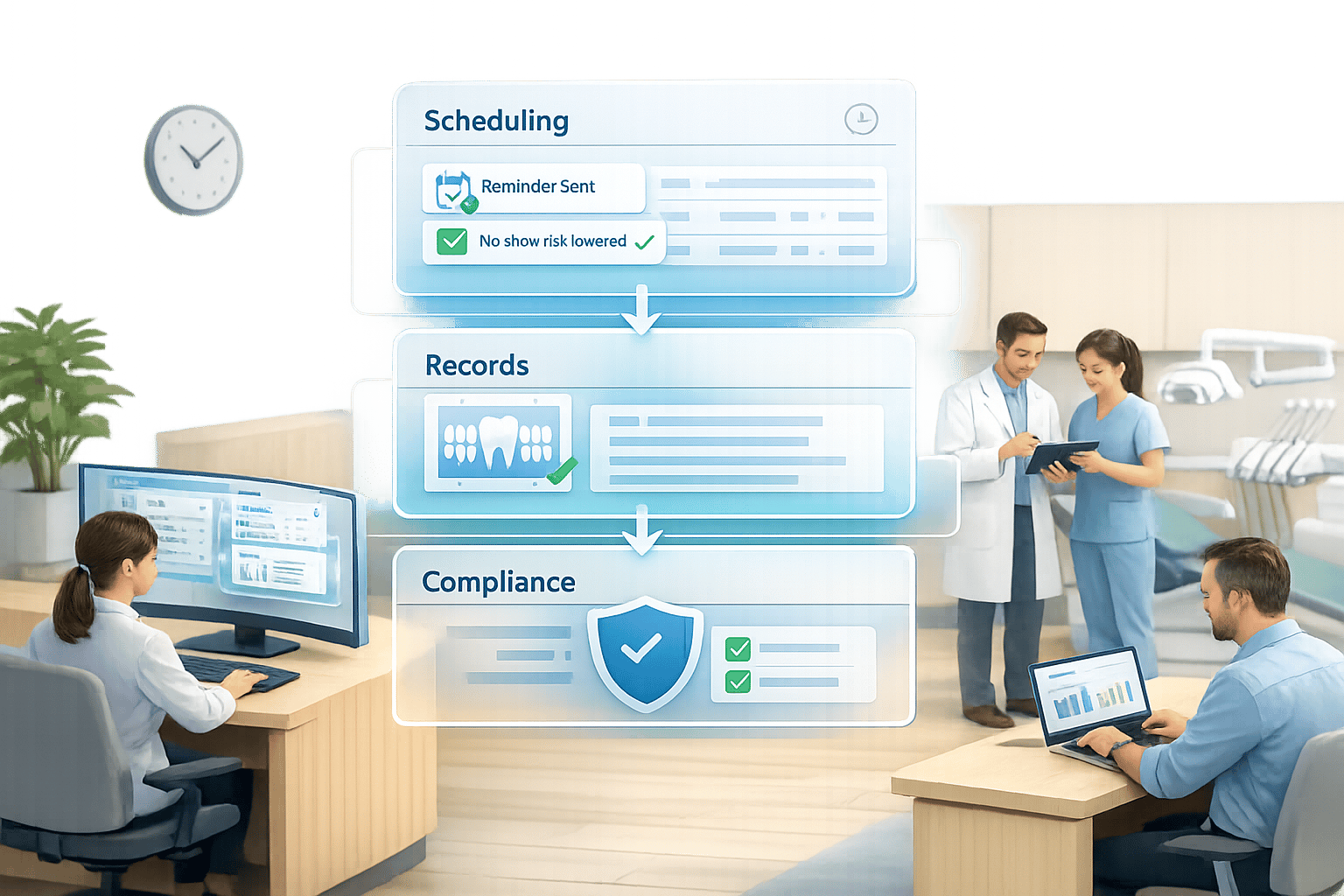
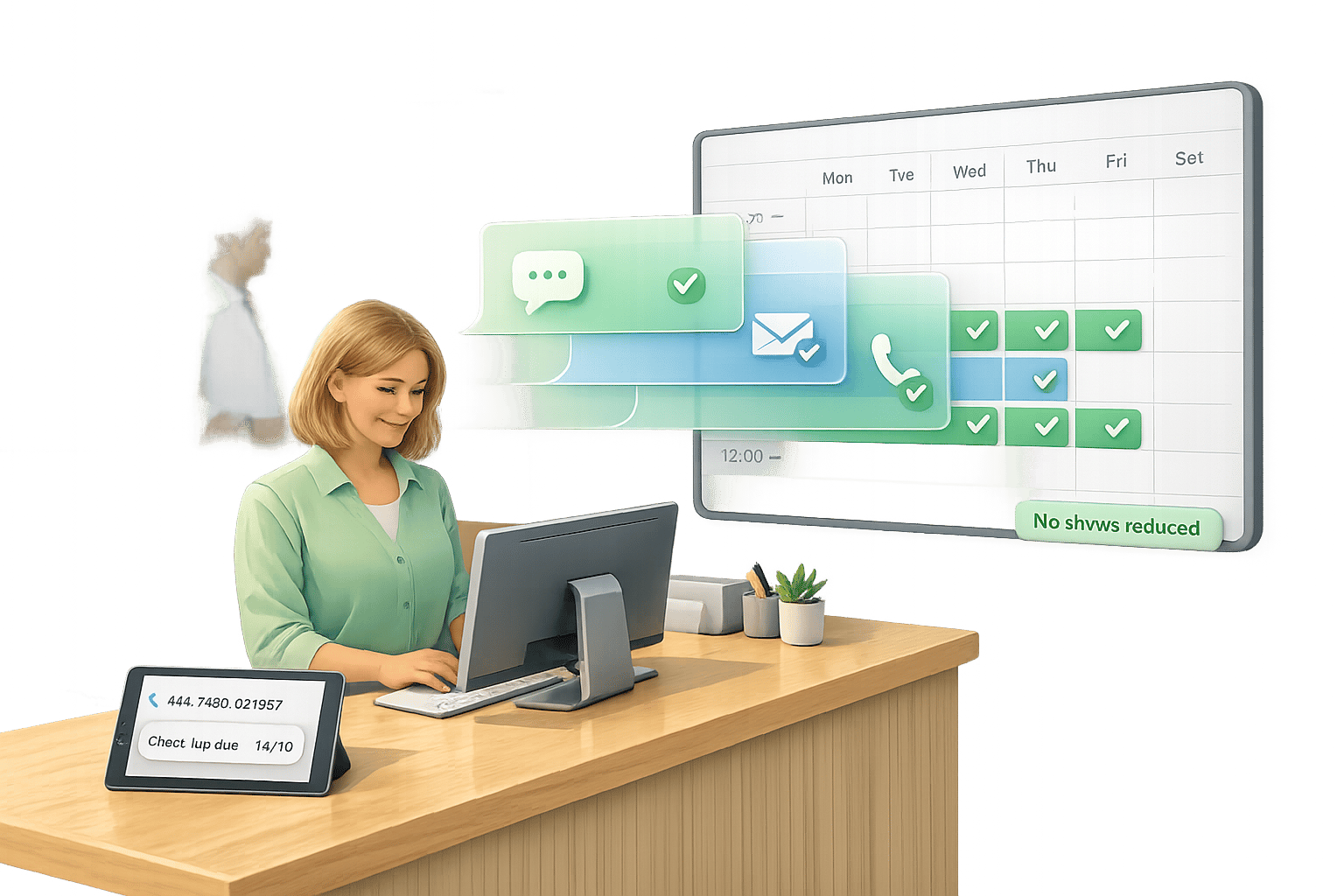
- Automate recalls and reminders: Tools like automated SMS and email systems ensure patients stay on schedule without burdening your staff.
- Track key metrics: Monitor retention rates, no-show rates (aim for <8%), and recall compliance to spot issues early.
- Personalise communication: Tailor reminders and follow-ups to each patient’s needs.
- Rebook before they leave: Secure the next appointment during the current visit to prevent drop-offs.
- Simplify rescheduling: Offer online booking and one-click rescheduling to reduce missed appointments.
Retaining patients doesn’t just keep your schedule full - it builds trust and boosts revenue without increasing marketing costs. Implementing these systems can make a tangible difference in your practice’s growth.
@figure {Patient Retention vs. Acquisition: Key Stats for UK Dental Practices} :::
Why Patient Retention Drives Dental Practice Growth
Patient retention isn’t just a nice-to-have; it’s a core driver of your practice’s monthly revenue. When patients keep coming back, your schedule stays busy without the need for costly advertising or referral campaigns. This steady return of patients translates directly into financial gains.
The Economics of Retention
The financial logic is simple: a patient who comes in for two hygiene appointments and an annual check-up each year generates far more income than someone who visits just once. Additionally, loyal patients are 60% more likely to agree to high-value treatments - like implants or Invisalign - because they already trust your team [2].
Let’s break it down with a real-world example. A dental practice in Birmingham introduced automated recall texts over an eight-month period. Their retention rate jumped from 68% to 82%, leading to an extra £84,000 in annual revenue - all without acquiring a single new patient [2].
“Retaining existing patients delivers five times more profit than acquiring new ones. Full stop.” - Dominate Dental [2]
This impressive improvement didn’t require extra marketing spend but rather a reliable system for patient follow-ups.
Key Metrics to Track Retention
To truly understand the financial impact of retention, you need to track the right metrics. While many practices focus on appointment numbers, they often overlook the data that reveals why patients stop coming back. The three metrics that matter most are your patient retention rate, no-show rate, and recall compliance rate.
Metric | Target for High-Performing Practices | What Poor Performance Signals |
|---|---|---|
Patient Retention Rate | Above 85% | Higher churn, increased marketing costs [2] |
No-Show Rate | Below 8% | Wasted chair time, lost revenue [2] |
Recall Compliance | High (45% improvement with reminders) | Patients drifting to competitors [2] |
Practices with retention rates above 85% tend to keep no-show rates below 8%. By contrast, those with retention rates under 70% often experience no-show rates of 15% or higher [2]. The difference in missed appointments directly impacts your bottom line - and it’s income that can often be recovered.
To make tracking easier, tools like Remedico’s Owner’s Dashboard automatically highlight these metrics. This allows you to identify issues, like a drop in recall attendance, early on - rather than discovering the problem months later when revenue has already taken a hit.
Simple Systems to Improve Patient Retention in UK Dental Practices
Understanding your retention rate is important, but the real key to keeping patients loyal lies in having dependable systems that work quietly in the background.
Setting Up a Consistent Patient Recall System
Relying on manual follow-ups often falls apart during busy periods - when your practice is stretched, recalls are usually the first task to be overlooked.
“A patient who is overdue for hygiene is not only a missed booking. They may also be drifting out of routine care, becoming less loyal to the practice, and more likely to book elsewhere.” - Silverstone AI Editorial Team [3]
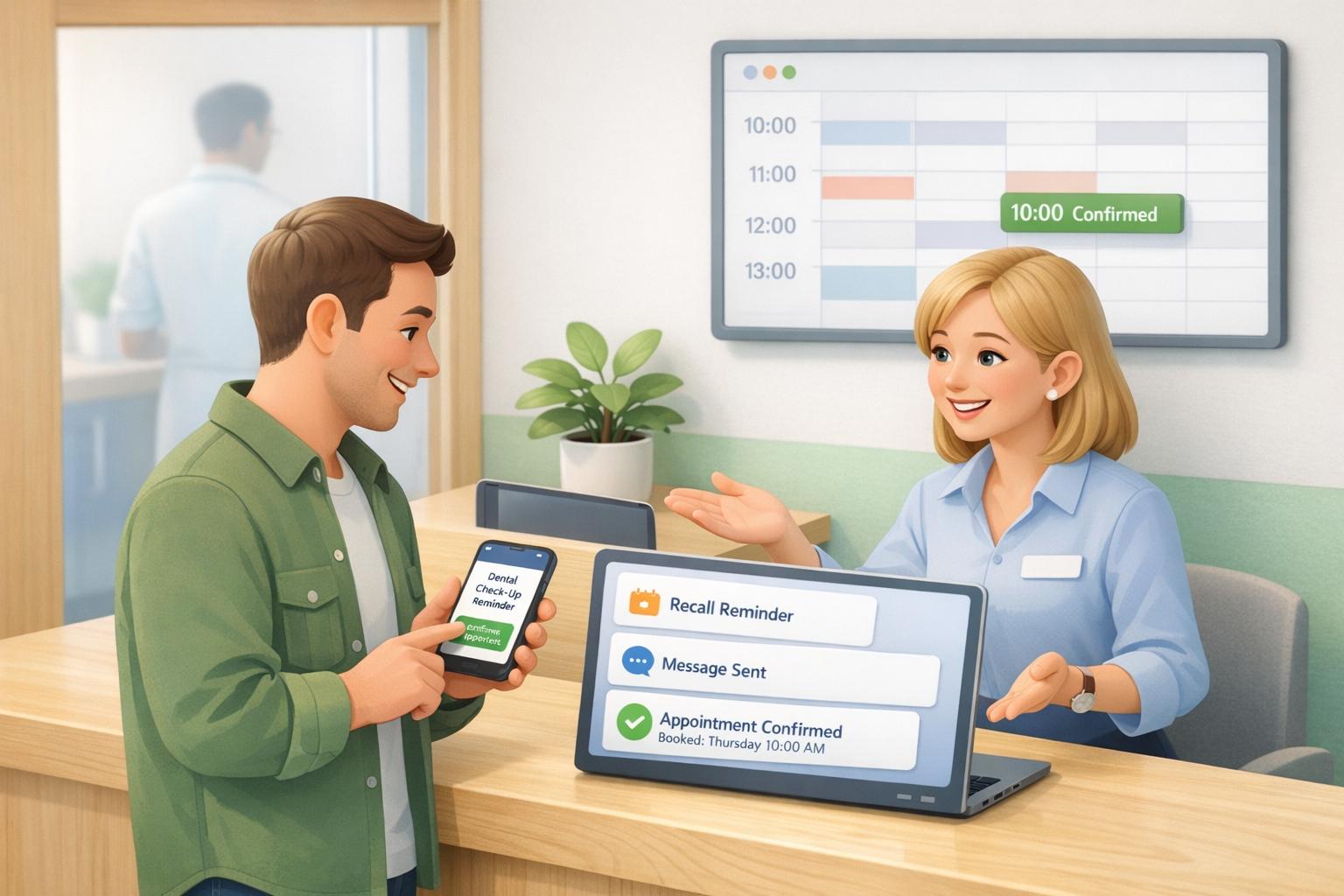
This is where automated tools like Remedico’s Patient Flow™ come in handy. It sends SMS and email reminders automatically once a patient’s recall date is set, requiring no manual input. A phased sequence tends to work best:
Recall Stage | Channel | Approach |
|---|---|---|
Due date | Text + Email | Direct booking link: “Time for your check-up!” |
2 weeks overdue | Phone call | Personal outreach, offering convenient times |
1 month overdue | Text + Email | “We miss you - book today” |
6 months overdue | Letter | Formal recall with scheduling options |
Under UK PECR and GDPR rules, these recall reminders are classified as service communications rather than marketing, as long as they relate directly to the patient’s ongoing treatment. This means you can send them without needing separate marketing consent [3].
Once your recall system is automated, you can take things further by customising how you communicate with patients.
Personalising Patient Communication
Automation is just the first step; personalisation makes patient engagement even stronger. Tailored reminders sent via a patient’s preferred channel can increase booking rates by 45% [2]. And once the system is in place, this doesn’t require much additional effort.
You can use patient tags in your practice management software to segment groups by treatment type - whether it’s Invisalign, implants, or general hygiene. Then, set up different communication journeys for each group. This approach can directly improve treatment completion rates. For instance, a Manchester orthodontic practice that adopted segmented follow-ups saw its completion rate jump from 73% to 91% by May 2026, significantly reducing wasted chair time [2].
Patient portals can also play a big role here. By sharing post-appointment care tips and treatment-specific content, you can remind patients that your practice values them as individuals.
Rebooking Patients Before They Leave
One of the simplest yet most effective strategies is to schedule the next appointment before the patient leaves. High-performing practices aim for a pre-book rate of 85% or higher for hygiene appointments [4].
Combining automated recalls with in-the-moment rebooking keeps patients on track. Patients who leave with their next appointment confirmed are far more likely to attend than those who plan to book later. A straightforward script can make this process seamless: “Let’s get your next visit booked while you’re here - I have [date] at [time], does that work for you?”
Tools like Remedico’s Smart Calendar integrate rebooking into the checkout process, ensuring it becomes standard practice. For those who leave without booking, an automated “failed-to-book” follow-up with a direct booking link should be sent the same day - closing the gap before they consider other options [3].
Reducing No-Shows to Get More From Your Schedule
Missed appointments are inevitable, even with solid recall systems and pre-booking routines in place. The key to minimising their impact lies in how you respond when patients fail to show up.
Why Patients Miss Appointments
Patients often miss appointments due to reasons like forgetting, work conflicts, or anxiety about treatment. Data shows a clear link between patient retention and no-show rates: practices with over 85% retention typically experience no-show rates below 8%, while those with retention below 70% see rates of 15% or higher [2]. This highlights the importance of maintaining consistent communication with patients.
Remedico’s system helps by automatically flagging patients with late cancellations or overdue rebookings. This allows timely follow-up, reducing the chances of losing valuable appointment slots.
These insights form the foundation of a structured reminder workflow, which can significantly lower no-show rates.
Building an Appointment Reminder Workflow
A phased reminder strategy works far better than relying on a single message. For example:
- A 72-hour reminder gives patients enough time to adjust their schedules if necessary.
- A 24-hour reminder with an easy one-tap confirmation ensures the appointment stays on their radar.
“Dental recall automation UK is not about replacing reception. It is about making sure overdue recalls, hygiene reminders, confirmations, and DNA follow-up happen consistently, even when the front desk is busy.” - Silverstone AI Editorial Team [3]
Remedico’s Retention AI™ streamlines this process by sending SMS and email reminders at both stages without manual input. Integrated with the Smart Calendar, it flags unconfirmed appointments after the 24-hour reminder, prompting your reception team to step in only when necessary. This “manage by exception” approach ensures staff focus on meaningful interactions rather than routine tasks.
Under UK PECR regulations, appointment reminders and confirmations are classified as service communications, as long as they relate to agreed care. This means no additional marketing consent is required [3].
When reminders alone aren’t enough, simplifying the rescheduling process becomes crucial.
Making It Easy for Patients to Reschedule
If rescheduling an appointment involves hurdles like calling during practice hours, many patients won’t bother, leaving the slot unfilled. Offering online booking with one-click rescheduling removes this friction. Patients can adjust their appointments at their convenience - even at 10pm on a Sunday - without needing to contact your team. This is especially beneficial for working professionals.
Online booking systems can reduce appointment-related friction by 35% [2]. Additionally, practices that optimise for convenience-focused terms like “evening dental appointments” or “Saturday dentist” report up to 28% fewer missed appointments [2].
For last-minute cancellations, an automated waitlist can step in to fill the gap. The system offers the slot to the next available patient and confirms the booking automatically. Pair this with a DNA reactivation message sent shortly after a missed appointment, and you can keep your diary full while giving patients an easy way to rebook before they consider alternatives.
Simplifying rescheduling not only keeps your schedule running smoothly but also strengthens patient trust and loyalty.
What Most Practices Get Wrong About Patient Retention
To improve patient retention, it’s crucial to understand where many practices fall short. Even with solid reminder systems and workflows, patients can still slip away. The issue often isn’t about effort but about focusing that effort in the right places.
Relying Too Much on Manual Admin
Manual processes can make it nearly impossible to keep track of patients who are gradually disengaging. Patterns like appointment drop-offs or missed follow-ups often go unnoticed. A busy front desk naturally prioritises patients who are physically present, leaving little time to focus on those who haven’t been seen in a while.
“Retaining existing patients is more cost-effective than attracting new ones and helps create a stable, predictable appointment book.” – Admor [1]
Tools like Remedico’s Retention AI™ can automate tasks such as recalls, hygiene reminders, and follow-ups for missed appointments. This frees up your team to focus on providing a personal touch to patients who need it most. On the other hand, using generic communication strategies can further alienate patients.
Sending the Same Message to Every Patient
Generic reminders fail to account for individual patient needs, clinical guidelines, or personal history. Both NICE guidance (CG19) and NHS England emphasise that recall intervals should be tailored to each patient’s risk and clinical situation [3].
“One of the easiest mistakes in dental automation is to treat every patient as if they should be recalled on the same schedule.” – Silverstone AI [3]
When reminders don’t align with a patient’s treatment plan or clinician-recommended recall date, it can lead to disengagement. Patients may feel undervalued and seek care elsewhere. By using targeted automation that integrates with your practice management system, you can send messages that align with each patient’s clinical risk and treatment status [3]. Ignoring this step, combined with overlooking patient feedback, can worsen retention issues.
Ignoring Patient Feedback
Failing to collect and act on patient feedback can mean retention problems go unnoticed until they’re too late. Trends such as missed appointments or a decline in treatment uptake often signal issues that need addressing. Proactive follow-ups after treatments not only make patients feel valued but also reveal potential problems before they impact revenue [1].
“By identifying trends early, your team can re-engage inactive patients, improve appointment availability, and adjust communication strategies.” – Admor [1]
With tools like Remedico’s Owner’s Dashboard, practice owners can gain insights into attendance patterns, inactive patient numbers, and overall performance trends. This allows decisions to be driven by data rather than guesswork, ensuring retention strategies hit the mark.
Key Takeaways for Growing a UK Dental Practice
Here’s a quick recap of the strategies that can help your UK dental practice thrive:
Did you know retaining a patient is far more cost-effective than acquiring a new one? Keeping a patient costs around £15–£40 annually, while attracting a new one can set you back £160–£400 [4]. Even a modest 5% boost in retention can increase your practice’s profitability by up to 95% [4]. Clearly, focusing on retention pays off.
A reliable recall system, timely reminders, and simple rescheduling options are essential for reducing no-shows and keeping your schedule full. Practices with retention rates above 85% generally report no-show rates under 8%. In contrast, those with retention rates below 70% often deal with no-show rates of 15% or more [2]. Automating these processes is key. When recalls, hygiene reminders, and follow-ups for missed appointments depend entirely on your front desk, it’s all too easy for important tasks to slip through the cracks.
That’s where automation tools like Remedico come in. Remedico’s Retention AI™ handles automated follow-ups, its Smart Calendar simplifies the booking process, and the Owner’s Dashboard provides key attendance metrics to help you make informed decisions.
Ultimately, the foundation of sustainable growth lies in retaining and engaging your existing patients effectively.
FAQs
What is a good dental patient retention rate in the UK?
A dental practice in the UK with a patient retention rate of around 80% is considered to be performing well. Practices achieving this level of retention can experience up to 30% higher revenue compared to those with lower retention rates, such as 60%. Keeping patients loyal is crucial for ensuring steady growth and maintaining profitability. :::
Do recall texts and appointment reminders need marketing consent under GDPR?
Yes, sending recall texts and appointment reminders does require GDPR consent in the UK. Since these messages involve handling personal data, dental practices must adhere to GDPR regulations. This means they need to respect patients’ preferences for communication and ensure they have obtained the appropriate consent beforehand. :::
How can I reduce no-shows without creating extra work for reception?
Automated appointment reminders, like SMS or WhatsApp notifications, can help bring no-show rates down to just 1.9%. These systems send out personalised messages, making it simple for patients to confirm, reschedule, or cancel their appointments. Any changes are updated instantly, ensuring everything stays current. When integrated with scheduling software, these reminders streamline the process, save valuable reception time, and eliminate the need for manual follow-ups - all while keeping your calendar on track. :::