Best Dental Practice Software: How It Improves Dentist Workflow
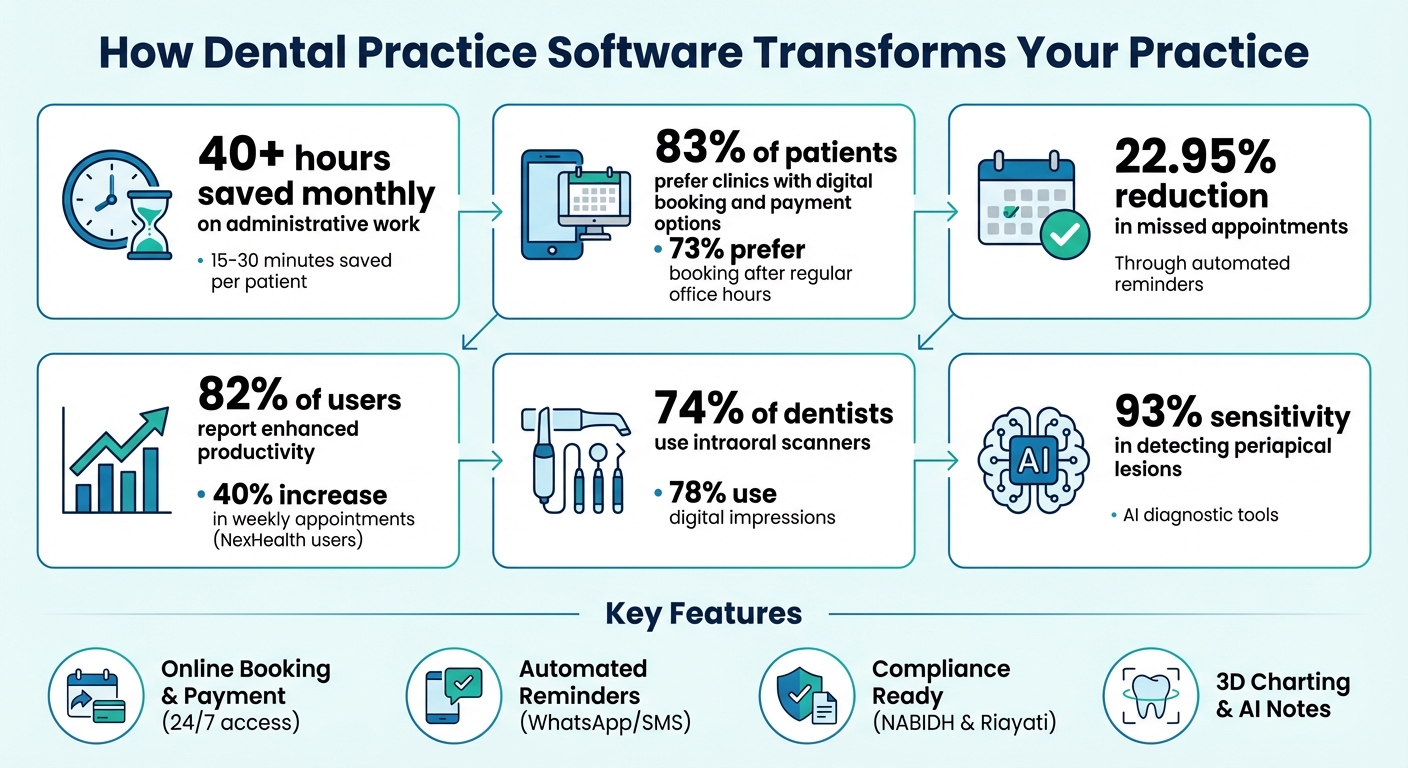
Running a dental clinic can be overwhelming without the right tools. From managing appointments to ensuring compliance, manual processes often lead to inefficiencies and wasted time. Dental practice software simplifies these tasks by automating scheduling, billing, and clinical documentation, saving over 40 hours of admin work monthly.
Here’s why it matters:
- Online Booking & Payment: 83% of patients prefer clinics offering digital options.
- Reduced No-Shows: Automated reminders cut missed appointments by 22.95%.
- Compliance Ready: Essential for UAE clinics to meet NABIDH and Riayati standards.
- Enhanced Efficiency: Features like AI-powered notes and 3D charting improve workflows and patient understanding.
Choosing the right software ensures smoother operations, better patient experiences, and legal compliance. Let’s explore how these systems can transform your clinic.
@figure {Dental Practice Software Benefits: Key Statistics and Time Savings} :::
Top 10 Best Dental Practice Management Systems in 2025
What is Dental Practice Software?
Dental practice software is a comprehensive management tool that combines clinical, administrative, and financial tasks into one streamlined platform [3][6]. By centralising these functions, your team can dedicate more time to patient care instead of juggling multiple systems.
Tasks like appointment confirmations, insurance checks, and invoice generation are automated, cutting down on administrative hours [1]. For practices with multiple locations, cloud-based platforms offer a unified dashboard, allowing clinic owners to monitor performance across branches seamlessly [4]. Interestingly, 82% of Dentrix users report enhanced productivity after adopting such software [3].
This integrated system lays the groundwork for features that simplify and optimise every aspect of running a dental practice.
Core Features of Dental Practice Software
Modern dental software is designed to make everyday operations more efficient. For instance, patient scheduling tools allow 24/7 online booking, while automated WhatsApp and SMS reminders help reduce no-shows [1].
Clinical documentation is also transformed. Paper charts are replaced by digital tools like 3D dental charting, AI-powered voice-to-text notes, and integrated DICOM viewers for X-rays. These features not only speed up documentation but also enhance diagnostic precision. Treatment planning modules let practitioners create detailed digital plans that patients can review and approve.
On the financial side, integrated billing systems handle everything from insurance claims to payment processing. Real-time insurance eligibility verification ensures coverage is confirmed before appointments even begin. Meanwhile, digital payment options - such as pay-by-text and online portals - help maintain a steady cash flow.
These features not only streamline operations but also elevate patient experiences and improve financial accuracy.
Why the Right Software Matters
Choosing the right software is crucial for efficiency, compliance, and seamless integration. Non-integrated systems often create more work instead of simplifying it. Consider this: over 100 million insurance claims are processed annually through Dentrix-connected systems [3], underscoring the importance of proper integration for high-volume practices.
Compliance is especially important in regions like the UAE, where systems must meet standards such as HIPAA, SOC2, and local regulations like NABIDH and Riayati [4][5]. Non-compliant software increases the risk of data breaches and legal issues, but cloud-based solutions with built-in compliance features can significantly reduce those risks.
Patient satisfaction is another key factor. A staggering 83% of patients say online booking and payment options influence their choice of healthcare provider [2].
“I can’t stress it enough: having everything integrated… not only does it make your life easier, it’s cost efficient, too… you’re not paying multiple different vendors” [6].
- Candace Wanat, Office Manager at Dr. Frank B. Wanat, DDS
Understanding these features and benefits is essential when selecting the right software for your dental practice.
How Dental Practice Software Improves Dentist Workflow
Modern dental software takes the load off your team by automating time-consuming tasks, allowing them to focus on what truly matters - patient care. Here’s how automation reshapes routine processes and boosts efficiency.
Automated Patient Scheduling
Online booking systems integrate directly with your scheduling software, ensuring appointments are logged without the risk of double bookings. Patients can book anytime, day or night, and automated reminders via WhatsApp or SMS confirm appointments without staff involvement. This reduces no-shows by 22.95% [9].
Interestingly, 73% of patients prefer booking dental appointments after regular office hours when this option is available [9]. If a cancellation occurs, virtual waitlists step in, alerting patients who are due for follow-ups and filling those gaps in minutes.
Case studies reveal that practices using these tools experience fewer missed appointments and a noticeable increase in online bookings. By eliminating repetitive manual scheduling tasks, practices save 15 to 30 minutes per patient, translating to over 40 hours saved in a single month [8].
Once scheduling is automated, digital tools can also revolutionise clinical documentation.
Digital Clinical Documentation and Charting
Automation doesn’t stop at scheduling; it also enhances the accuracy and efficiency of clinical documentation. Digital charting, powered by tools like intraoral scanners and AI-driven software, replaces traditional paper records. Currently, 74% of dentists have adopted intraoral scanners [14], while 78% use digital impressions to deliver better patient care [12].
Advanced 3D imaging, such as CBCT, offers detailed visuals of bone structures and nerve pathways, significantly reducing risks during complex procedures like implant placements. AI diagnostic tools, like U-Net-based segmentation models, provide an extra layer of precision, achieving 93.0% sensitivity in detecting periapical lesions on 2D CBCT slices [13].
Digital records also ensure a permanent, highly accurate replica of a patient’s anatomy. For instance, if a patient loses their denture, a replacement can be created without needing new impressions. Secure lab transfers further minimise communication errors, leading to better-fitting restorations [11][14].
“Digital workflows standardise processes, potentially reducing errors and improving outcomes.” PMC [10]
Automated Billing and Payment Processing
Billing software streamlines claim processing by eliminating the need for manual paperwork. Integrated EDI (Electronic Data Interchange) submits claims electronically, while real-time eligibility checks verify insurance coverage before treatment. This helps prevent rejected claims and reduces billing errors [2].
Online payment portals, available 24/7, allow patients to settle their balances securely, speeding up collections. Notably, 83% of patients consider online payment options a deciding factor when choosing a healthcare provider [2].
AVA Dental offers a clear example of the impact of automation. By integrating digital forms and automated scheduling tools, they increased patient bookings by 25% and added AED 242,200 ($66,000) in production within three months (Source: Adit Case Studies, 2026) [7]. Additionally, automating consent forms and digital signatures saves clinics 9–10 hours monthly [1].
Billing tools also support compliance by reducing manual errors. Bidirectional integrations between billing software and EHR systems automatically sync clinical notes and billing codes. This eliminates the need for double data entry, minimising errors in both coding and invoicing [2].
Key Features to Look for in Dental Practice Software
Selecting the right dental software is all about finding tools that simplify administrative tasks while enhancing patient care.
Patient Flow and Scheduling Tools
Online self-scheduling is a must-have. Patients today expect the convenience of booking appointments anytime, without needing to call the clinic. The software should seamlessly sync with your calendar to avoid double bookings and let patients pick their preferred time slots. Automated reminders sent via WhatsApp, SMS, or email can significantly reduce no-shows, saving time and effort on manual follow-ups.
A real-time calendar management system is equally critical. It allows you to quickly identify schedule gaps, manage multiple providers or chairs, and optimise your workflow. Features like virtual waitlists can automatically fill last-minute cancellations by notifying patients waiting for earlier appointments, turning potential downtime into revenue. Clinics using advanced platforms like NexHealth have reported a 40% increase in weekly appointments [2].
From scheduling, let’s move to clinical operations, where integration features play a huge role in streamlining processes.
Clinical Tools and EMR Integration
Efficient clinical documentation is just as vital as effective scheduling - it directly influences the quality of patient care. Tools like 3D charting and imaging provide clear visual aids for explaining diagnoses, integrating seamlessly with DICOM and STL viewers. This not only helps patients understand their treatment plans but also boosts acceptance rates. Meanwhile, AI-powered clinical notes can transcribe spoken words into structured documentation during consultations, cutting down on manual charting and post-visit admin tasks.
A robust treatment planning module should break down diagnoses, procedures, timelines, and costs step by step. Integration with your EHR is key to ensuring data flows smoothly between systems, eliminating duplicate entries and minimising errors [2]. For clinics in the UAE, it’s important to confirm compatibility with NABIDH and Riayati systems to ensure compliance without extra manual reporting [1].
Billing, Analytics, and Compliance
Managing billing and compliance efficiently is essential for maintaining a successful practice. Automated billing systems with secure online payment links can speed up collections and minimise human error. Features like integrated EDI for eClaims and real-time insurance eligibility checks help verify coverage before treatment, reducing the risk of rejected claims. Patients increasingly prioritise online payment options when choosing healthcare providers, so this capability is crucial.
KPI dashboards are another valuable feature. They allow you to monitor metrics like revenue, no-show rates, recalls, and staff productivity in real time. For multi-location clinics, centralised reporting ensures consistency across branches. Compliance is also critical - ensure the software is NABIDH and Riayati-ready for UAE practices, with data hosted locally (such as on AWS me-central-1) to meet data residency requirements [1]. Additionally, look for features like detailed audit logs and role-based access controls to track and secure all updates to financial and clinical records.
“Remedico has changed the way we deliver care… every doctor is now in the driver’s seat taking control over important daily admin work from updating patient diagnostics to explaining treatment plans, invoicing and monitoring their own progress.” Dr. Saghi Helmi, General & Cosmetic Dentist, Vilafortuny Clinic [1]
3 Common Mistakes When Choosing Dental Practice Software
Many dental clinics run into avoidable pitfalls when selecting software, leading to compliance headaches and inefficiencies.
Choosing Based on Price Alone
Focusing solely on cost can be a costly mistake. Budget-friendly software often lacks critical features that clinics in the UAE need. For instance, systems without local integrations like NABIDH and Riayati can put your clinic at risk of non-compliance. UAE regulations mandate that patient data must remain within the country, and software without proper data residency could lead to violations [1].
Beyond compliance, cheaper solutions may not meet modern patient expectations. Did you know that 83% of patients value digital scheduling and online payment options when choosing a healthcare provider? [2] Outdated systems relying on manual workflows can also drain your resources, with some clinics losing over 40 hours of administrative time per month [1]. Instead of just looking at the upfront cost, think about the long-term return on investment. A system that automates scheduling, billing, and reminders can save time and reduce no-shows [2].
Ignoring these factors can set your clinic back in more ways than one.
Skipping Training and Support
Even the most advanced software is only as good as its users. Without proper training, your team may struggle to use the system effectively, leading to inconsistent workflows and delays. Complex EMR systems, for example, require thorough onboarding to ensure that everyone is on the same page [1].
When training is skipped, valuable features like AI-powered clinical notes and automated patient recalls often go unused. This lack of understanding can create resistance among staff, lowering adoption rates. Before committing to a vendor, check if they provide interactive onboarding, role-specific training modules, and reliable technical support [2].
Overlooking training not only limits efficiency but also increases the likelihood of compliance missteps.
Ignoring Local Compliance Requirements
Compliance is not optional, especially in the UAE. Choosing software that doesn’t align with local regulations can lead to serious problems. For instance, clinics in Dubai are required to integrate with NABIDH and Riayati from day one to meet government health mandates [1]. International software without these integrations forces clinics into time-consuming manual reporting.
Security is another critical aspect. Features like audit logs, role-based access controls, and e-signatures are essential for protecting patient data and ensuring compliance with standards like HIPAA or GDPR [1][2]. Additionally, it’s vital to select a provider that offers local technical support and understands regional specifics, such as UAE tax reporting and insurance claim formats [1].
Key Takeaways
Here’s a quick recap of how dental practice software can transform clinic operations:
- Save time and streamline admin tasks: By automating processes like reminders, consent forms, and bookings, clinics can save over 40 hours a month. That’s time better spent on patient care [1].
- Enhance patient satisfaction with digital options: Features like online booking and payment systems align with today’s patient expectations, eliminating the hassle of manual scheduling and outdated payment methods [2].
- Stay compliant in the UAE: For clinics in Dubai and across the GCC, integrating with NABIDH and Riayati from the start and ensuring local data hosting is essential. This not only keeps you on the right side of regulations but also creates a more seamless operation [1].
- Boost case acceptance with advanced tools: Features like 3D charting and AI-powered clinical notes make treatment plans easier for patients to understand, increasing their confidence in your recommendations [1].
- All-in-one solution from Remedico: At AED 363 per doctor per month (with a 15% discount for annual plans), Remedico offers tools like Smart Calendar, Patient Flow™, 3D Dental Chart, Dentaverse® VR/AR, and RemedicoGPT™. Plus, it includes full NABIDH and Riayati compliance, free setup and training, and 1,000 WhatsApp reminders every month.
These points highlight how the right software can revolutionise your practice by improving workflows, satisfying patients, and keeping you compliant with regulations.
FAQs
How can dental practice software enhance the patient experience?
Dental practice software improves patient experiences by streamlining essential processes. For instance, automated appointment reminders sent via SMS or WhatsApp help cut down on missed visits while saving patients valuable time. User-friendly online scheduling tools also make it easier for patients to book appointments at their convenience.
On top of that, interactive features like AR/VR treatment visualisation tools, such as Dentaverse, allow patients to visualise their treatment plans in detail. This not only helps them understand procedures better but also builds trust and confidence in the care they receive. By making visits more efficient and engaging, these tools contribute to a smoother and more satisfying experience for patients. :::
What compliance features should dental software have for clinics in the UAE?
Dental software tailored for clinics in the UAE needs to offer automatic compliance checks to align with DHA and NABIDH standards, ensuring adherence to local healthcare regulations. It should also prioritise data protection, featuring encryption and local data storage within the UAE to comply with the country’s health data laws. Another essential feature is a bilingual interface (Arabic and English), making it accessible to a diverse user base. The software should also generate digital reports for submission to regulatory authorities and seamlessly integrate with systems like Riayati for billing and patient management. These capabilities not only ensure compliance but also enhance operational efficiency for clinics. :::
Can dental software really reduce admin work by 40 hours a month?
Dental practice software has the potential to save as much as 40 hours of administrative work every month. For instance, clinics in Dubai have shared that automating tasks such as appointment scheduling, billing, and managing patient records can free up around 10 hours each week. When you add that up, it’s a substantial amount of time saved over the course of a month - time your team can dedicate to delivering better patient care. :::