What a Profitable Independent Dental Practice Looks Like in the UK
Running a profitable independent dental practice in the UK comes down to three things: managing finances, retaining patients, and optimising daily operations.
Here’s the key to success:
- Profit Margins: Target an EBITDA margin of 15–25%. Key costs include salaries, lab fees, rent, and compliance.
- Patient Retention: Keeping patients costs £15–£40 annually, compared to £160–£400 for attracting new ones. Retention drives revenue, with loyal patients contributing £2,000–£5,000 annually.
- Daily Efficiency: Low no-show rates (below 8%) and high pre-booking rates (85%+) ensure better use of chair time.
Private and mixed models often perform better financially than NHS-heavy practices, but each has unique challenges. Using tools like automated recall systems and tracking KPIs (e.g., patient retention, chair occupancy) helps improve profitability.
Focus on retention, track key metrics, and streamline operations to build a thriving practice.
What Defines Success for an Independent Dental Practice in the UK?
Success for an independent dental practice in the UK isn’t just about keeping the appointment book full. The most successful practices pay close attention to their financial metrics and operational KPIs - and take action based on what the numbers reveal.
Key Financial Metrics for UK Dental Practices
While annual turnover is an important indicator, the real focus should be on the operating profit margin. Another key figure is revenue per retained patient, which typically ranges from £2,000 to £5,000 annually [1]. Even a small boost in patient retention can have a noticeable effect on profit margins, highlighting how crucial it is to keep patients coming back [1].
Core KPIs for Measuring Practice Performance
Beyond turnover and profit margins, tracking specific KPIs is essential for smooth daily operations. These metrics help link financial goals with patient care outcomes:
KPI | High-Performing Target | Poor Performance Signal |
|---|---|---|
Patient retention rate | Above 85% | Below 70% |
No-show (DNA) rate | Below 8% | Wasted chair time, lost revenue |
Hygiene pre-book rate | 85% or higher | Gaps in the hygiene schedule |
Treatment acceptance rate | Tracked and improving | Unmonitored or declining |
Efficient chair occupancy plays a pivotal role in increasing revenue. Practices with high utilisation rates see stronger financial returns. Additionally, loyal patients are 60% more likely to opt for high-value treatments like implants or Invisalign, making patient retention even more valuable [1].
How Practice Software Supports Profitability
Given the importance of these metrics, having dedicated practice software is crucial for monitoring and improving performance. Tracking KPIs manually can be time-consuming, and without a clear understanding of trends like retention rates or no-show patterns, critical issues might slip through the cracks.
Tools like Remedico’s Owner’s Dashboard offer real-time insights into revenue, visit numbers, and clinician performance. This allows practice owners to quickly address problems without having to wade through endless spreadsheets.
Automated systems, such as Retention AI™, simplify recall sequences and appointment reminders, significantly reducing the workload for front desk staff. Features like automated SMS and WhatsApp reminders can cut no-show rates to as low as 1.9% [1]. Additionally, structured, phased reminders can improve recall compliance by up to 45% [1], freeing up more chair time and recovering lost revenue. These tools not only help streamline operations but also set the foundation for deeper analysis of profit margins and cost management.
Profit Margins and Cost Structures in UK Dental Practices
Tracking revenue and costs accurately is essential for growing a dental practice. By understanding cost structures, practices can better monitor performance through key performance indicators (KPIs).
Average Revenue and Major Costs for UK Practices
As of March 2026, the UK private dentistry market was valued at £8.4 billion [2]. Revenue for individual practices varies significantly based on factors like location, size, and the range of services offered. For example, the average cost of a routine check-up is £55, while an initial consultation averages £80. These prices increased by 14% and 23%, respectively, between 2022 and 2024 [2].
Key expenses for practices include staffing, lab fees, materials, and premises. Among these, lab fees for restorative and cosmetic procedures are particularly significant, contributing heavily to variable costs. However, fixed overheads can have a substantial impact on profitability if not carefully managed.
How Overhead Costs Affect Profit Margins
Fixed costs - such as rent, utilities, insurance, and compliance expenses - remain steady regardless of patient volume. For instance, a practice with a no-show rate exceeding 15% still incurs the same fixed costs for unused chair time [1].
Regulatory compliance costs can also be a hidden burden. Under the Digital Markets, Competition and Consumers Act 2024, the Competition and Markets Authority (CMA) can impose fines of up to 10% of global turnover for breaches of consumer law. This includes failing to disclose lab fees and material costs upfront [2].
Ways to Improve Profit Margins
Boosting operational efficiency is one of the most effective ways to improve profit margins. Rather than focusing solely on cutting costs, practices can benefit more by reducing wasted capacity. For example, retaining an existing patient costs between £15 and £40 annually, compared to £160 to £400 to acquire a new one [2]. This difference can significantly influence profitability.
Take the example of a Birmingham practice that increased its patient retention rate from 68% to 82% by implementing automated recall texts. This simple change led to an estimated £84,000 increase in annual revenue without additional marketing expenses [1].
Additionally, effective software solutions can help cut unnecessary costs. Tools like Retention AI™ automate reminders and follow-up sequences, reducing wasted chair time and lowering the cost of acquiring new patients.
Patient Retention and Treatment Acceptance as Revenue Drivers
Boosting revenue in an independent dental practice in the UK isn’t just about cutting costs or attracting new patients. Retaining existing patients and ensuring they accept proposed treatments play a crucial role in increasing monthly income.
Why Retention Matters More Than New Patient Numbers
Keeping current patients is far less expensive than bringing in new ones [1]. Plus, loyal patients are 60% more likely to opt for high-value treatments like implants or clear aligners. This means strong retention directly influences treatment acceptance rates [1]. Practices with retention rates above 85% often see no-show rates drop to below 8%, making better use of chair time [1].
A good goal is to maintain recall attendance above 80% and monitor how many patients have visited within the past 18–24 months. A decline in these figures can signal potential revenue issues, giving practices time to address them. With a strong foundation of retained patients, it becomes easier to present treatment options clearly and improve acceptance rates.
How to Improve Treatment Acceptance Rates
Once you’ve built a loyal patient base, the next step is clear communication about treatments. Many practices lose revenue simply because treatment plans aren’t explained effectively. For instance, raising treatment acceptance from 55% to 65% can generate tens of thousands of pounds annually without needing additional patients [1].
The key is to explain treatment plans in plain English during chairside discussions, supported by visual aids like intraoral photos or digital scans. Offering options - such as phased treatments, alternative materials, or flexible timing - helps patients feel in control. When discussing costs, it’s often more effective to delegate this to a trained treatment coordinator or a confident front desk team member. Providing a written fee breakdown and offering regulated finance options for larger treatments can alleviate concerns about upfront costs. Membership plans covering preventive care can also help make costs more manageable.
Tools and Processes That Support Retention and Acceptance
A well-organised recall system is essential. A phased approach works best: send an SMS or email on the due date, follow up with a phone call two weeks later, send another reminder at one month, and mail a formal letter at six months [1]. This ensures patients are reminded without overburdening staff [1].
“A patient who is overdue for hygiene is not only a missed booking. They may also be drifting out of routine care, becoming less loyal to the practice, and more likely to book elsewhere.” - Silverstone AI Editorial Team [1]
Take the example of a Manchester-based orthodontic practice. In May 2026, they started grouping patients by treatment type and sending tailored follow-ups. This approach increased their treatment completion rate from 73% to 91%, significantly reducing wasted chair time [1]. Tools like Retention AI™ and Patient Flow™ can automate these processes, tracking patient progress and improving chair time utilisation. Personalised reminders sent via a patient’s preferred communication channel can boost booking rates by 45%, while online booking options reduce appointment-related friction by 35% [1].
NHS vs Private Dentistry: Which Model Is More Profitable?
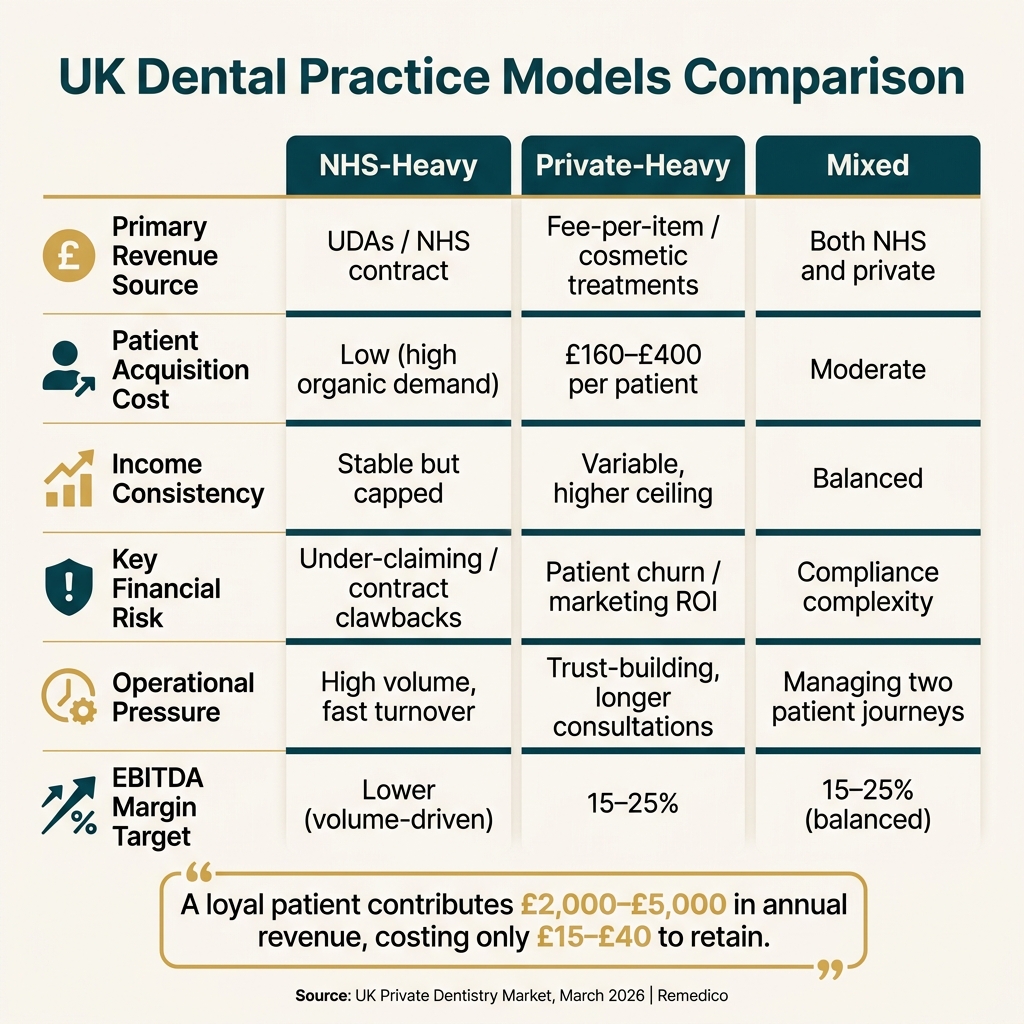
@figure {NHS vs Private vs Mixed Dental Practice: Profitability Comparison UK 2026} :::
NHS, Private, and Mixed Models: How Each Works
NHS practices operate on a system where income is driven by UDAs (Units of Dental Activity) and contract payments from NHS England. The demand for NHS services tends to be naturally high, which keeps patient acquisition costs minimal. However, this comes with challenges: high patient volume, quick appointment turnover, and the administrative burden of managing WebEDI claims and UDA tracking.
Private practices, on the other hand, work on a fee-per-item basis, charging patients directly for each treatment. The private dentistry market in the UK was valued at £8.4 billion as of March 2026 [2]. Average consultation fees have climbed to around £80, with routine check-ups costing approximately £55 [2]. While private practices enjoy better margins on specialised treatments, acquiring new patients can cost between £160 and £400.
Mixed practices combine the stability of NHS income with the opportunities of private treatments. However, mixed practices must adhere to strict GDC (General Dental Council) standards, ensuring patients are offered NHS options where available [2].
How Profit Margins Differ Between Models
Here’s a breakdown of how profitability varies across the three models:
Metric | NHS-Heavy Model | Private-Heavy Model | Mixed Model |
|---|---|---|---|
Primary revenue source | UDAs / NHS contract | Fee-per-item / cosmetic treatments | Both |
Patient acquisition cost | Low (high organic demand) | £160–£400 per patient [1] | Moderate |
Income consistency | Stable but capped | Variable, higher ceiling | Balanced |
Key financial risk | Under-claiming / contract clawbacks | Patient churn / marketing ROI | Compliance complexity |
Operational pressure | High volume, fast turnover | Trust-building, longer consultations | Managing two patient journeys |
Private practices are also under increasing regulatory scrutiny. In March 2026, the Competition and Markets Authority (CMA) launched a study into the private dentistry market, focusing on pricing transparency and practices like “drip pricing”, where additional mandatory fees are added at checkout [2].
This comparison highlights the strengths and risks of each model, helping practices decide on the most suitable approach.
Choosing the Right Practice Mix for Profitability
While there’s no one-size-fits-all answer, mixed practices often strike the best balance for independent dentists. NHS income ensures consistent baseline revenue, while private treatments - such as implants, clear aligners, and cosmetic procedures - provide higher profit margins.
“Retaining existing patients delivers five times more profit than acquiring new ones. Full stop.” - Dominate Dental [1]
Patient retention is the backbone of profitability, no matter the model. A loyal patient can contribute between £2,000 and £5,000 in annual revenue [1], while retaining them costs as little as £15–£40 per year [1]. Tools like Retention AI™ and Patient Flow™ can help practices keep patients engaged, reducing churn and boosting long-term revenue.
Daily Operations That Affect Practice Profitability
The difference between steady growth and stagnation often comes down to what happens during each working day. Profitability is shaped - or lost - through the small decisions made during every session.
Appointment Scheduling and Front Desk Efficiency
Missed appointments are a major drain on practice income. High-performing practices aim for a no-show rate below 8% [1]. Achieving this often involves a phased reminder system: sending a message 72 hours before the appointment to allow for schedule changes, followed by a confirmation reminder 24 hours prior.
Offering evening and Saturday appointments can also make a noticeable difference. Practices that extend their hours in this way report up to 28% fewer missed appointments [1] compared to those sticking to standard weekday hours. Convenience is key to reducing no-shows.
For front desk teams, adopting a “manage by exception” strategy can be highly effective. Automated systems handle routine confirmations and flag unconfirmed appointments, allowing staff to focus on patients who are genuinely at risk of not attending. These scheduling improvements not only reduce no-shows but also directly enhance profit margins.
Making the Most of Chair Time
Every empty chair represents lost revenue. One of the simplest ways to avoid gaps is by instilling a strong pre-booking habit: scheduling a patient’s next hygiene or check-up appointment before they leave the surgery. High-performing practices aim for a pre-booking rate of 85% or higher [1]. Consistently applying this approach leads to better chair utilisation and boosts annual revenue.
To address last-minute cancellations, automated waitlists come into play. These systems contact the next available patient automatically, filling gaps without requiring manual intervention.
How Practice Management Software Supports Daily Operations
Efficient scheduling and chair utilisation are just the beginning. Technology plays a crucial role in streamlining daily operations. Tools like Remedico’s Patient Flow™ track every step of a patient’s journey, ensuring nothing is overlooked. For instance, when a dentist updates a treatment plan, the front desk is instantly notified to arrange financing or book follow-ups - all before the patient leaves the building.
Meanwhile, Retention AI™ automates recall sequences, delivering tailored messages through the most effective channels. A Manchester orthodontic practice that implemented segmented follow-ups based on treatment type saw its treatment completion rate jump from 73% to 91% [1]. This significantly reduced wasted chair time. These gains may seem small at first glance, but they add up across hundreds of patients over the course of a year.
Common Mistakes That Limit Dental Practice Profitability
Once you’ve grasped the keys to running a profitable dental practice, it’s equally important to recognise the common missteps that can quietly eat away at your margins. For many practices, the issue isn’t one glaring problem but a series of small, overlooked inefficiencies that add up over time.
Ignoring Financial Metrics and KPIs
Keeping track of revenue per chair, chair occupancy, treatment acceptance rate, and net profit margin is essential. These numbers highlight where your practice might be bleeding money. Without this data, decisions are often based on guesswork, which can lead to underpricing services, hiring too many staff, or spending on marketing when the real issue lies in patient retention.
One frequent oversight is failing to separate the owner’s clinical income from the practice’s actual profit. To maintain a healthy financial balance, industry standards suggest staff costs should account for around 20–25% of revenue, while total overheads (excluding the owner’s income) should stay within 60–65%. Practices exceeding these thresholds often find themselves struggling to stay afloat.
Tools like Remedico’s Owner’s Dashboard provide real-time insights into revenue, chair utilisation, and performance trends. This makes it easier to detect issues like a drop in hygiene bookings or an increase in cancellations before they snowball into bigger problems. Spotting these early helps lay the groundwork for stronger recall systems and better financial health.
Poor Recall and Patient Follow-Up Systems
Specialist consultants in the UK estimate that 20–40% of a practice’s patient database may not have visited in the past 24 months. These patients aren’t necessarily lost - they’re warm leads who could be encouraged to return with the right approach. Re-engaging them can have a direct impact on chair occupancy and daily revenue.
To fix this, establish a structured recall system. Base recall intervals on clinical needs, send automated reminders at the right time, and follow up with patients who don’t respond. According to UK consultancy data, simply improving recall and hygiene attendance could boost turnover by 10–20%, all without needing to attract new patients.
Underused Staff and Surgery Time
Every empty chair represents lost revenue. While top-performing practices in the UK achieve 85–90% chair occupancy, many underperforming ones hover around 60–70%, leaving a significant portion of their capacity untapped.
To make the most of your surgery time, streamline staff roles and minimise downtime. For example, shifting preventive and periodontal care from dentists to hygienists and therapists allows dentists to focus on more complex, higher-value procedures. This isn’t just about efficiency - it’s a direct way to increase revenue. On the flip side, unclear workflows and poor task delegation can lead to bottlenecks, reducing the overall productivity of your practice.
Conclusion: Building a Profitable Independent Dental Practice in the UK
Creating a profitable independent dental practice in the UK isn’t about making one big decision. Success comes from consistently focusing on three key areas: tracking your finances, keeping patients engaged, and ensuring smooth daily operations. Practices that master these areas tend to enjoy steadier revenue, fewer no-shows, and less financial pressure month after month.
When it comes to finances, you don’t need to think like an accountant - you just need to build a routine. Regularly review metrics like your net profit margin, revenue per chair, and chair utilisation. Set clear, actionable goals, such as increasing your net profit margin from 15% to 22% over a year. Then break it down: perhaps a small fee adjustment, adding one high-value appointment weekly, or streamlining your recall process could make that difference.
On the patient side, retention is where the real value lies. Research shows that practices with an 80% retention rate often generate 30% more revenue than those hovering around 60% [1]. Long-term profitability depends more on keeping existing patients and improving treatment acceptance than constantly chasing new ones. Simple habits like structured recall systems, timely reminders, and clear communication about treatments can significantly boost retention and acceptance rates.
For daily operations, the objective is straightforward: minimise gaps in the schedule, reduce missed appointments, and ensure the front desk team operates efficiently. Practices that use modern software tools often report better recall attendance, fewer no-shows, and a more optimised schedule - all of which directly improve revenue per chair [1].
Remedico integrates these three critical areas into one seamless platform. The Owner’s Dashboard gives you real-time insights into key performance indicators and revenue trends. Patient Flow™ and Retention AI™ automate recall and follow-up processes, eliminating manual tasks. Meanwhile, the Smart Calendar ensures your team can quickly fill gaps and prioritise high-value slots. Instead of juggling multiple systems, you get a single, clear view of your practice’s performance and actionable areas for improvement.
“Retaining existing patients delivers five times more profit than acquiring new ones. Full stop.” - Dominate Dental [1]
Try Remedico for free and manage your dental practice more effectively, without adding to your workload.
FAQs
What KPIs should I monitor weekly?
To maintain profitability in your independent dental practice, it’s essential to keep an eye on these key performance indicators (KPIs) every week:
- No-show rates: This helps you pinpoint scheduling gaps and evaluate how effective your reminder system is at reducing missed appointments.
- Patient retention rate: A clear indicator of how well you’re keeping your existing patients, which is crucial for long-term financial health.
- Recall compliance rate: Tracks how often patients return for follow-ups, allowing you to address attendance challenges before they impact your schedule.
- Chair-time utilisation: A measure of how efficiently your surgery time is being used. This can highlight areas where productivity could improve or where additional training might be needed. :::
How can I reduce no-shows quickly?
To reduce no-shows, consider using automated two-way communication tools such as SMS or WhatsApp reminders. Send reminders 72 hours and 24 hours before appointments to keep them fresh in patients’ minds. Make sure patients can easily confirm or cancel their appointments, with any changes updated instantly. For missed visits, set up automated follow-ups to encourage rescheduling while the patient is still engaged. :::
Should I choose NHS, private, or mixed for my practice?
When working with the NHS, you can expect a steady flow of patients, but efficient claims management is a must to keep things running smoothly. On the other hand, private practices often bring in higher-value appointments and improved case acceptance rates. If you’re looking for a balance, a mixed practice might be the way to go - but only if your software is up to the task.
It’s crucial that your system can clearly separate NHS and private bookings, track patient recalls, and handle claims without a hitch. Tools like a Smart Calendar can make scheduling more straightforward, while NHS WebEDI integration ensures claims are processed seamlessly. :::