
Hidden Costs of Running a Dental Practice Most Clinics Miss
Running a dental practice is more expensive than it seems. Beyond obvious costs like rent and salaries, hidden expenses can quietly drain profits. These include rising staff wages, increasing supply and lab fees, revenue loss from patient no-shows, and delayed insurance payments. Left unchecked, these costs can significantly impact your bottom line.
Key Takeaways:
- Staff turnover is costly: Recruitment, training, and lost productivity add up.
- Supplies and lab fees fluctuate: Prices for essentials like gloves and crowns often exceed budgets.
- Missed appointments hurt: Empty slots mean lost income, even as fixed costs remain.
- Cash flow suffers from delays: NHS and private insurance payments aren’t always prompt.
Switching to digital tools like RemedicoGPT can help track and reduce these hidden expenses, saving time and money. For example, automating lab invoice processing can cut admin time from 20 hours to just 2–3 hours a month while recovering lost revenue.
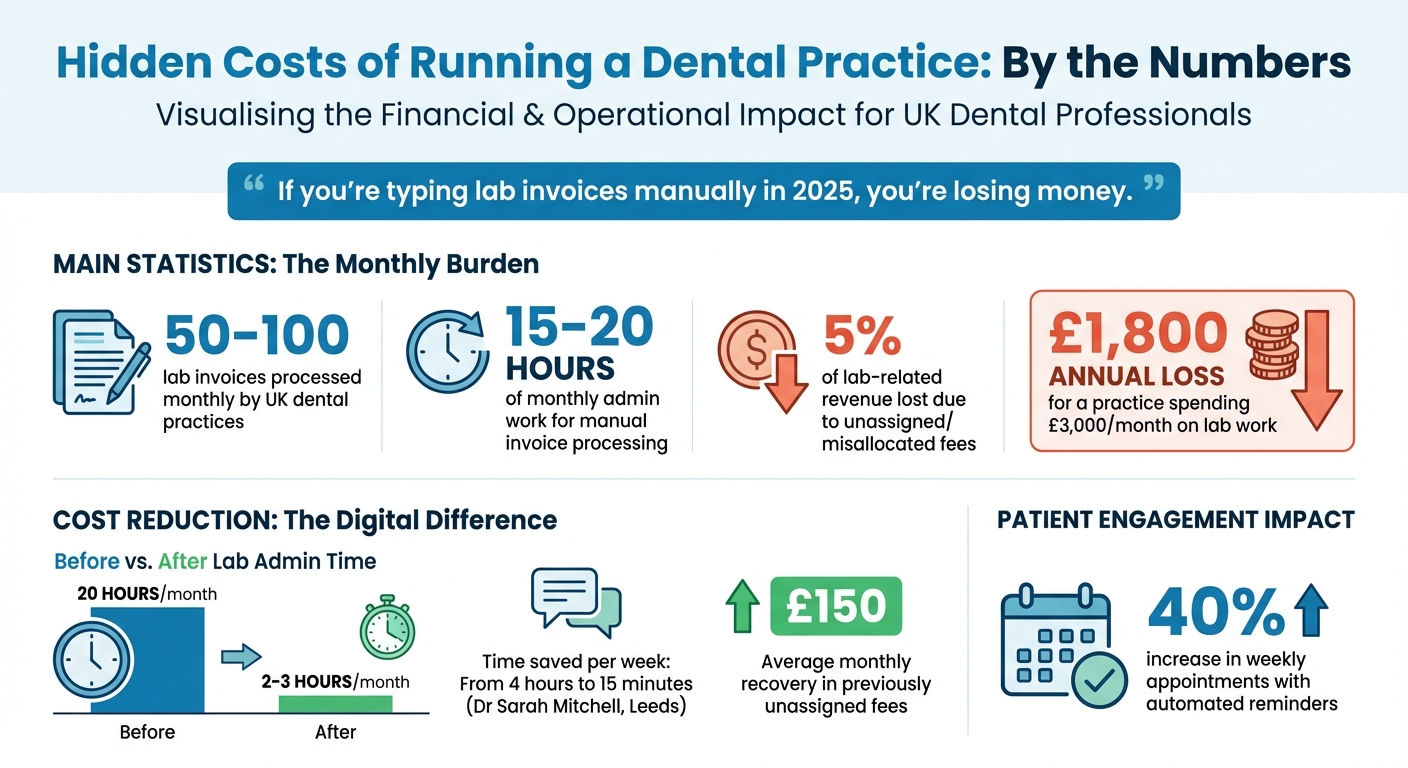
@figure {Hidden Costs Impact on Dental Practices: Key Statistics and Savings} :::
Stop The Hidden Fees Draining Your Dental Practice | Mandy Madeline | The Dental Brief | #305
Hidden Costs of Running a Dental Practice: What Most Clinics Overlook
Many dental practice owners focus on obvious expenses, but it’s the less apparent, incremental costs that often sneak under the radar. These hidden expenses can quietly chip away at profits, making it harder to maintain a healthy bottom line.
Here’s a closer look at some of the overlooked costs that can impact your practice’s finances.
Staff Wages Keep Rising
In areas like London, where living costs are high, retaining staff often means offering competitive wages. But when employees leave, the hidden costs pile up. Advertising for new hires, conducting interviews, and training replacements can cost thousands of pounds. And it doesn’t end there - new employees take time to reach full productivity, adding to the financial strain.
Rising Dental Supplies and Lab Fees
The cost of essential supplies like gloves, masks, and sterilisation materials has been steadily increasing. On top of that, lab fees for items like crowns, bridges, and dentures often exceed initial budget projections. Practices also face additional costs for compliance-related consumables required to meet CQC standards. These are expenses that many clinics underestimate when planning their yearly budgets.
Rent and Utility Bills Stay High
Fixed costs such as rent, electricity, water, and heating don’t fluctuate with patient numbers. Even when patient flow slows, these bills remain constant. Energy costs, in particular, can be unpredictable, and outdated contracts may leave practices overpaying.
Patient No-Shows Create Revenue Gaps
Missed appointments are a silent drain on revenue. While the fixed costs of running the practice remain, empty appointment slots mean lost income. Inefficient scheduling systems can also lead to “missed recalls”, where patients fail to return for follow-ups, leaving chairs empty and profit margins shrinking. These unfilled gaps often go unnoticed but can significantly impact overall earnings.
In addition to no-shows, delays in receiving payments add another layer of financial stress.
Insurance Payment Delays Hurt Cash Flow
NHS claims often take months to process, and private insurance payments don’t always arrive promptly. Errors in claims processing, such as under-claimed UDAs or software issues, can result in treatments being completed but payments being delayed. Meanwhile, suppliers and staff still need to be paid on time, creating cash flow challenges that put further pressure on your practice’s finances.
These hidden costs highlight the importance of staying vigilant and proactive in managing your practice’s expenses. Without careful tracking, they can quietly erode your profitability over time.
How to Track and Manage Hidden Costs Effectively
Start by distinguishing between fixed costs (like rent, insurance, and salaries) and variable costs (such as gloves, sterilisation supplies, and lab fees). Keeping these categories separate makes it easier to identify spending patterns and pinpoint where money might be slipping through the cracks. Accurate tracking is the first step to addressing revenue leaks head-on.
Relying on manual tracking can be a major drain on time and resources, often leading to errors. On average, UK dental practices handle 50–100 lab invoices every month [1]. This process can add 15–20 hours of administrative work monthly. Even more concerning, around 5% of lab-related revenue is lost due to unassigned or misallocated fees [1]. For a practice spending £3,000 a month on lab work, that translates to an annual loss of £1,800 [1]. Digital tools offer a way to eliminate these inefficiencies.
“If you’re typing lab invoices manually in 2025, you’re losing money.” - Dentistry Dashboard [1]
Switching to a digital approach can transform this process. Remedico’s Owner’s Dashboard provides instant insights into your practice’s revenue, expenses, and performance metrics - no spreadsheets required. With AI-powered scanners, the system digitises invoices, extracts data, and assigns lab fees to the correct associate in seconds. Dr Sarah Mitchell from Leeds shared that her practice reduced the time spent on lab invoices from 4 hours to just 15 minutes per week, all while improving accuracy [1].
But it doesn’t stop at invoice management. Additional AI-driven tools tackle other common revenue drains. For instance, Retention AI™ sends automated reminders to reduce no-shows, while Patient Flow™ tracks every patient interaction, from their first visit to follow-ups, ensuring no recalls are missed. Instead of waiting for monthly reconciliations to uncover issues, these tools provide real-time updates, allowing you to address problems immediately. Practices using AI automation report recovering an average of £150 per month in previously unassigned fees and cutting lab admin time from 20 hours to just 2–3 hours monthly [1].
Real Example: A UK Practice That Cut Hidden Costs
A UK dental practice has embraced digital cost tracking to tackle hidden expenses - a challenge many clinics face. Although specific case study data isn’t readily available, the growing adoption of digital management tools across UK clinics showcases how effective this approach can be.
Manual invoice processing often leads to misplaced fees and heavier administrative workloads. By switching to automated systems, clinics have not only saved time but also recovered revenue that might have slipped through the cracks. These systems work in real time, identifying and fixing hidden costs as they arise, making financial management far more efficient.
For example, clinics that have adopted digital tracking tools report noticeable reductions in hidden expenses. Automated processes help pinpoint and address revenue leaks instantly. The transition from manual to digital tracking has resulted in measurable financial benefits, such as reclaiming lost fees and significantly reducing the time spent on lab administration.
This example underscores the financial advantages of replacing outdated manual processes with automated systems, paving the way for more streamlined and accurate financial management.
Key Takeaways: Protect Your Practice from Hidden Costs
Hidden costs can quietly chip away at your profits, turning what could be a thriving practice into one that struggles to stay afloat. The key difference often lies in taking a proactive approach to cost management rather than simply reacting to issues as they arise. Here are some practical steps to help you safeguard your margins:
- Audit your software subscriptions: It’s easy to accumulate tools that overlap in functionality, leading to unnecessary spending. Regularly reviewing your subscriptions and consolidating operations into a single, integrated platform can help eliminate waste. Plus, it saves your team valuable time by reducing manual tasks.
- Automate patient engagement: Using automated reminders and follow-ups can make a big difference. Studies show that these tools can boost weekly appointments by up to 40% [2], ensuring a steady flow of revenue.
- Keep an eye on marketing ROI and transaction fees: Marketing campaigns and credit card processing fees can quietly drain your budget if not carefully monitored. Make sure to track these costs and adjust your pricing strategy accordingly to maintain healthy margins.
- Plan for routine equipment maintenance: Skipping regular servicing to save money often backfires. Emergency repairs are usually more expensive, and unplanned downtime can cost you in lost appointments. Digital tracking tools can help you stay on top of maintenance schedules and avoid unexpected costs.
FAQs
How can I quickly identify hidden costs in my dental practice?
To spot hidden costs effectively, take a closer look at overheads that go beyond basic staff wages and supplies. Expenses like equipment maintenance, patient no-shows, and delays in insurance payments can quietly chip away at your revenue without drawing much attention.
Leverage financial tools to keep track of all expenditures and ensure vendor charges are transparent from the outset to prevent unexpected surprises. Regularly assess areas where revenue might be slipping through the cracks, such as missed appointments. Additionally, explore digital tools to simplify cost tracking and enhance overall profitability. :::
What’s the quickest way to reduce losses from no-shows?
The quickest way to cut down on losses caused by no-shows is by establishing clear policies and sharing them openly with patients. Let them know about any charges for missed appointments and request at least 24 hours’ notice for cancellations. Automated reminders can help reduce forgetfulness, and following up with patients after missed appointments ensures you can reschedule promptly. Consistently enforcing these policies not only discourages no-shows but also lessens their financial toll. :::
How can I improve cash flow when NHS or insurers pay late?
To handle cash flow challenges caused by delayed payments from the NHS or insurers, it’s essential to keep a close eye on your practice’s expenses. This helps pinpoint any revenue shortfalls early. Implementing systems that automate payment reminders and optimise billing processes can significantly cut down delays. For example, tools like Remedico’s practice management features can make collections much easier. Additionally, regularly analysing financial data and tackling issues like patient no-shows or insurance payment delays can go a long way in ensuring your cash flow remains steady and your practice stays financially secure. :::